A collection of essays by an awarding-winning memoirist, meditating upon identity, dreams, travel, life, love, heartbreaks, and redemption.
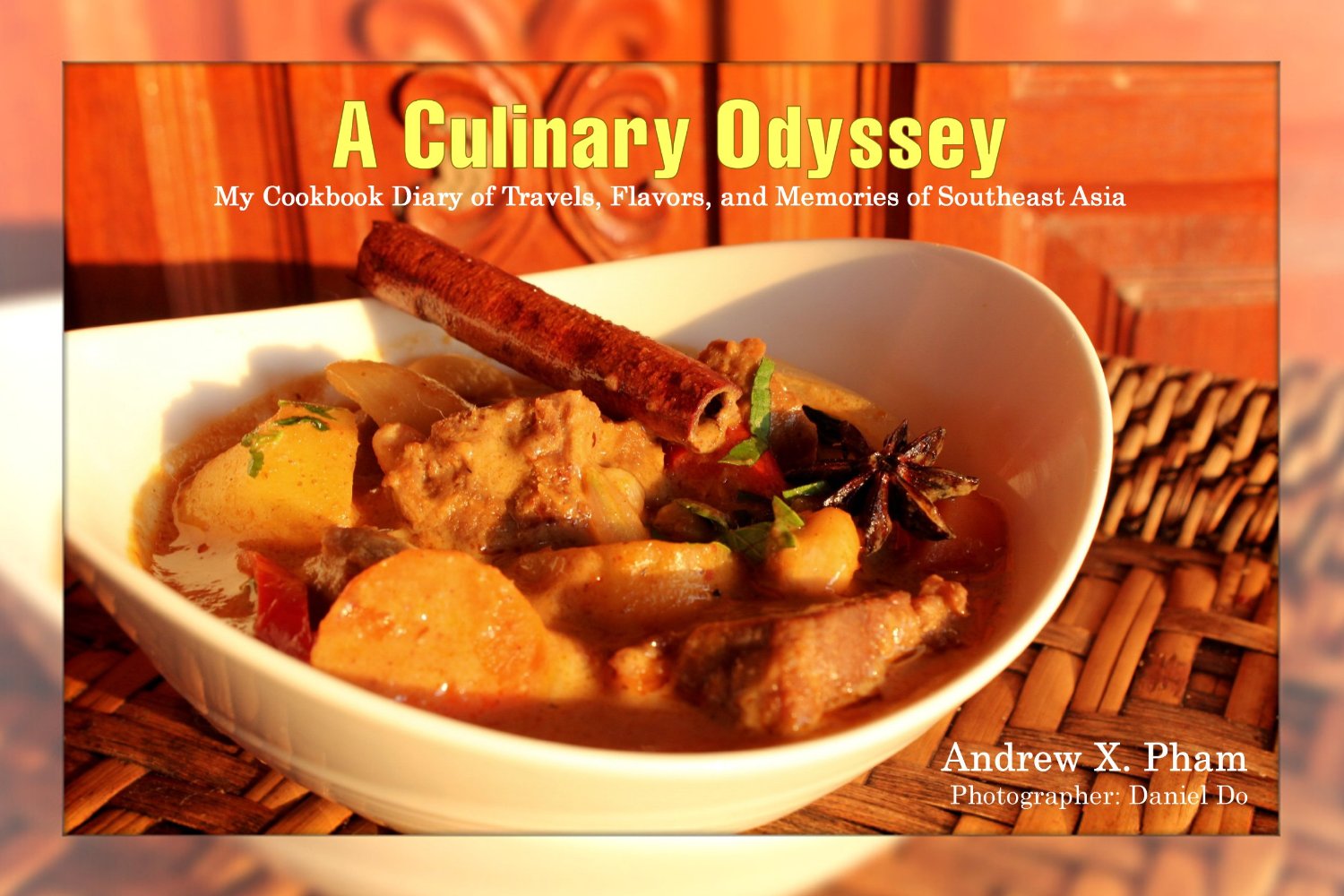
This is the culmination of a lifetime of passionate eating, traveling, writing, and cooking: 45 of my favorite and simplest recipes from the cuisines of my roots, then and now. But it's so much more than a cookbook. It's love, it's life. It's everything I know about living, culture, and food from the land of my birth and my chosen home for the past decade.
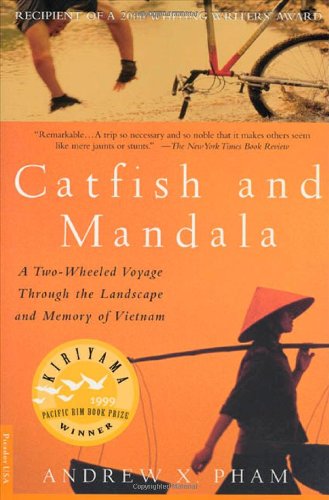
Catfish and Mandala is the story of an American odyssey—a solo bicycle voyage around the Pacific Rim to Vietnam—made by a young Vietnamese-American man in pursuit of both his adopted homeland and his forsaken fatherland. Andrew X. Pham was born in Vietnam and raised in California. His father had been a POW of the Vietcong; his family came to America as "boat people." Following the suicide of his sister, Pham quit his job, sold all of his possessions, and embarked on a year-long bicycle journey that took him through the Mexican desert, around a thousand-mile loop from Narita to Kyoto in Japan; and, after five months and 2,357 miles, to Saigon, where he finds "nothing familiar in the bombed-out darkness." In Vietnam, he's taken for Japanese or Korean by his countrymen, except, of course, by his relatives, who doubt that as a Vietnamese he has the stamina to complete his journey ("Only Westerners can do it"); and in the United States he's considered anything but American. A vibrant, picaresque memoir written with narrative flair and an eye-opening sense of adventure, Catfish and Mandala is an unforgettable search for cultural identity.
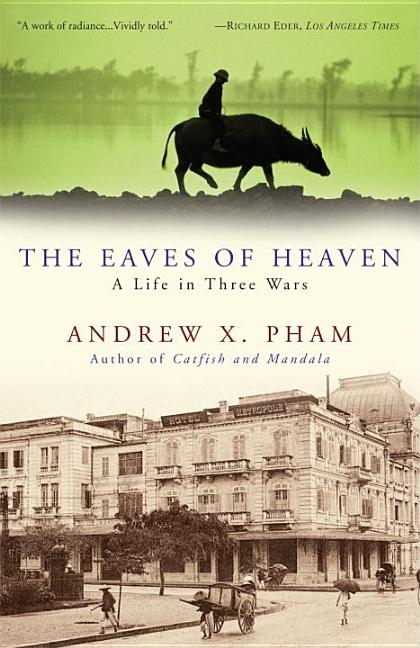
From Andrew X. Pham, the award-winning author of Catfish and Mandala, comes a son’s searing memoir of his Vietnamese father’s experiences over the course of three wars. Once wealthy landowners, Thong Van Pham’s family was shattered by the tumultuous events of the twentieth century: the festering French occupation of Indochina, the Japanese invasion during World War II, and the Vietnam War. Told in dazzling chapters that alternate between events in the past and those closer to the present, The Eaves of Heaven brilliantly re-creates the trials of everyday life in Vietnam as endured by one man, from the fall of Hanoi and the collapse of French colonialism to the frenzied evacuation of Saigon. Pham offers a rare portal into a lost world as he chronicles Thong Van Pham’s heartbreaks, triumphs, and bizarre reversals of fortune, whether as a South Vietnamese soldier pinned down by enemy fire, a prisoner of the North Vietnamese under brutal interrogation, or a refugee desperately trying to escape Vietnam after the last American helicopter has abandoned Saigon. This is the story of a man caught in the maelstrom of twentieth-century politics, a gripping memoir told with the urgency of a wartime dispatch by a writer of surpassing talent.
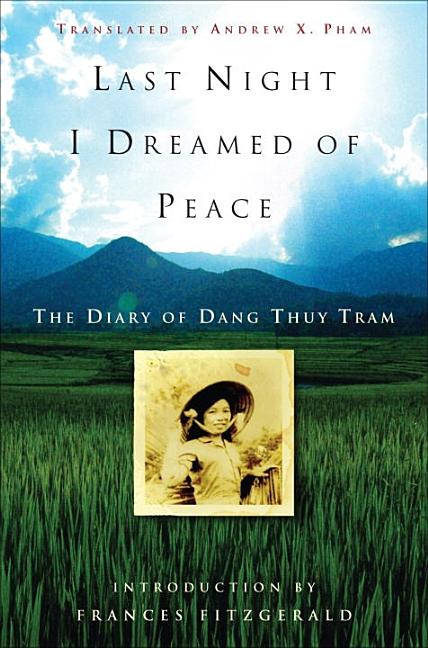
At the age of twenty-four, Dang Thuy Tram volunteered to serve as a doctor in a National Liberation Front (Viet Cong) battlefield hospital in the Quang Ngai Province. Two years later she was killed by American forces not far from where she worked. Written between 1968 and 1970, her diary speaks poignantly of her devotion to family and friends, the horrors of war, her yearning for her high school sweetheart, and her struggle to prove her loyalty to her country. At times raw, at times lyrical and youthfully sentimental, her voice transcends cultures to speak of her dignity and compassion and of her challenges in the face of the war’s ceaseless fury. The American officer who discovered the diary soon after Dr. Tram’s death was under standing orders to destroy all documents without military value. As he was about to toss it into the flames, his Vietnamese translator said to him, “Don’t burn this one . . . It has fire in it already.” Against regulations, the officer preserved the diary and kept it for thirty-five years.
In the spring of 2005, a copy made its way to Dr. Tram’s elderly mother in Hanoi. The diary was soon published in Vietnam, causing a national sensation. Never before had there been such a vivid and personal account of the long ordeal that had consumed the nation’s previous generations. Translated by Andrew X. Pham and with an introduction by Pulitzer Prize winner Frances FitzGerald, Last Night I Dreamed of Peace is an extraordinary document that narrates one woman’s personal and political struggles. Above all, it is a story of hope in the most dire of circumstances—told from the perspective of our historic enemy but universal in its power to celebrate and mourn the fragility of human life.