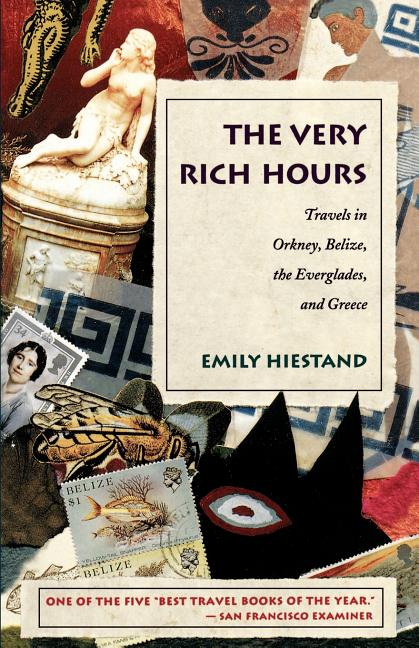
The author of Green the Witch-Hazel Wood describes her travels to the Orkneys, Belize, the Everglades, and the Greek Islands, sharing her observations on the human history of the regions and the diverse landscapes of the world.
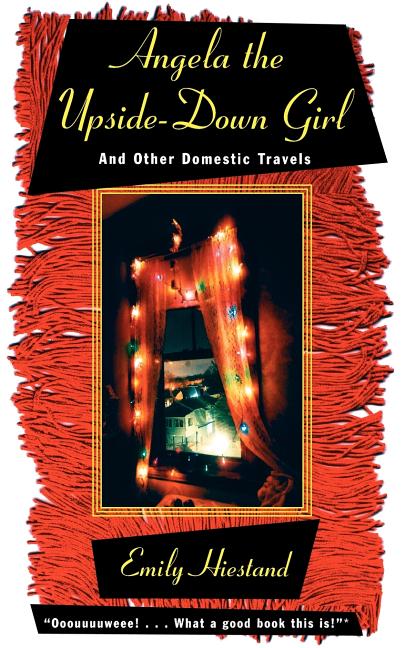
A childhood shaped by her zestful aunt Nan Dean of Tuscaloosa County, Alabama; a girlhood spent in Oak Ridge ("Atom City"), Tennessee; a journey north to a seedy seaside town where a stripper named Angela the Upside-Down Girl is her first neighbor—these are only some of the geographical and spiritual journeys in this dazzling, seriously funny guide to the art of being human.
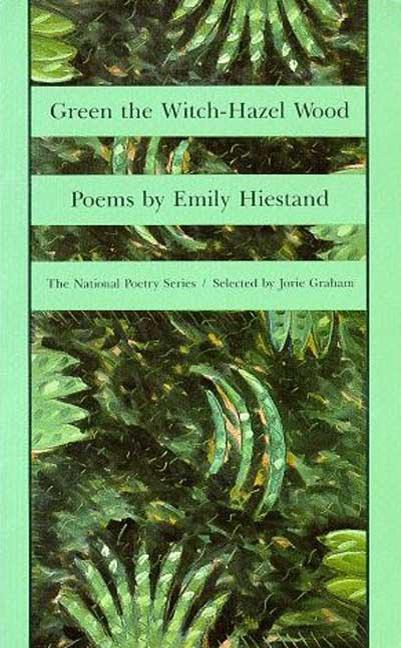
"Determined to extract pleasure and meaning from every experience, Hiestand looks for magic properties in familiar objects. Staring out the window of her apartment, she advises herself: 'but be alert / as though you were seeing all new, / as Balboa awakened by the Pacific.' Particularly in the impressive book's first section, the poems share the mechanisms of fairy tales: 'The last summer we lived in a picture book,' Hiestand says, and asks in all seriousness, 'Is our cat in heaven?'; just as naturally, she refers to Dante or the philosophy of Spinoza. By the middle of the volume, princes depart from their storybook models and desert their maidens. In one of the final poems, 'Birthday Party,' enchanting imagery suddenly produces a forceful political statement, all the more potent given the innocence of the poet's vision. Hiestand manipulates words with uncommon playfulness and precision, and her enjoyment is highly infectious. Jorie Graham selected this first collection for the National Poetry Series." —Publishers Weekly
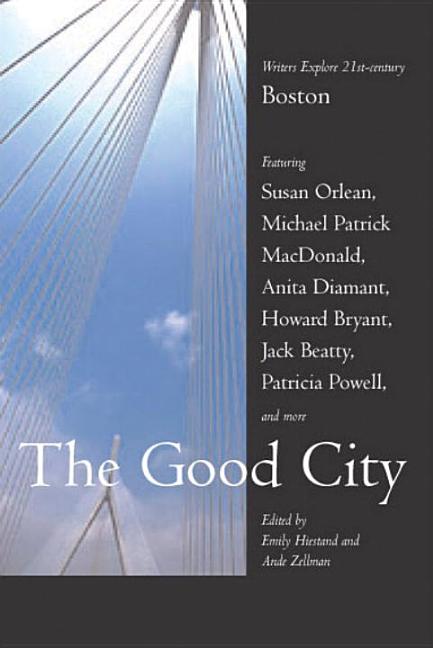
The Good City presents a vivid new profile of Boston through the work of fifteen of the city's finest writers.
Robert Campbell and Jane Holtz Kay on Boston's embrace of lively urban density;
James Miller on the city's intellectual history;
Jack Beatty on Boston's colorful political past and present;
Patricia Powell on the literary landscape and the immigrant experience;
Susan Orlean on the city she left and now loves;
John Hanson Mitchell on how nature revives the metropolis;
Anita Diamant on Boston as a spiritual home;
Scott Kirsner on Boston as a powerhouse of scientific and technological innovation;
Alan Chong on the Isabella Stewart Gardner Museum and the arts in Boston;
Lynda Morgenroth on the city's neighborhoods;
Michael Patrick MacDonald on gentrification and what it means to old neighborhoods like Southie;
Derrick Jackson on Boston as a laboratory for advancing race relations;
Howard Bryant on the city's obsession with sports;
Irene Smalls on seeing the city through the eyes of a child.