Karen Hao
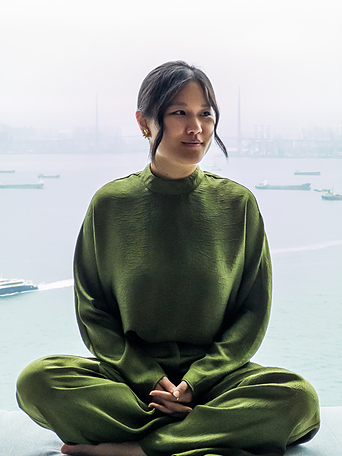
Karen Hao is an author and journalist covering the impacts of artificial intelligence on society. She is the author of Empire of AI (Penguin Press, 2025). She contributes to publications including the BBC, More Perfect Union, and The Atlantic and co-created the Pulitzer Center’s AI Spotlight Series, a program that has trained thousands of journalists around the world on how to cover AI. She was formerly a reporter for the Wall Street Journal, covering American and Chinese tech companies, and a senior editor for AI at MIT Technology Review. She has received an American Humanist Media Award, an American National Magazine Award for Journalists Under 30, and a TIME100 AI honor. She received her Bachelor of Science in mechanical engineering from MIT.
-
Empire of AI
Over the years, I’ve found only one metaphor
that encapsulates the nature of what these AI
power players are: empires. During the long
era of European colonialism, empires seized
and extracted resources that were not their
own and exploited the labor of the people
they subjugated to mine, cultivate, and
refine those resources for the empire’s
enrichment. They projected racist,
dehumanizing ideas of their own superiority
and modernity to justify—and even entice the
conquered into accepting—the invasion of
sovereignty, the theft, and the subjugation.
They justified their quest for power by the
need to compete with other empires: In an
arms race, all bets are off. All this
ultimately served to entrench each empire’s
power and to drive its expansion and
progress. In the simplest terms, empires
amassed extraordinary riches across space and
time, through imposing a colonial world
order, at great expense to everyone else.
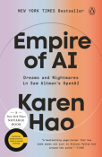 Empire of AI: Dreams and Nightmares in Sam Altman's OpenAI
- Print Books
- Bookshop
-
Empire of AI
It’s hard to fully convey the tragedy of losing a language. For the same reasons AI researchers first gravitated toward language to build their technologies, the loss of a language extends far beyond the loss of a form of communication. Each language encodes within it rich histories, cultures, knowledge; it is the collective product of millions of people across time grasping for the sounds and written forms to capture the subtlest observations about the universe, about life, about the human experience; to share with one another stunning beauty and painful failure; to teach a child, to learn from an elder; to express love.
To lose a language is a global tragedy; it’s also a personal one. To be severed from your inheritance and forced to preserve someone else’s, or risk being beaten, is to establish, in one of the rawest ways possible, a clear hierarchy between whose history, whose culture, whose knowledge deserves to be passed down and whose is so insignificant it deserves to be erased.
Large language models accelerate language loss...there are only a few languages in the world that are spoken by enough people and documented online at sufficient scale to fulfill the data imperative of these models...As these models become digital infrastructure, the internet’s accessibility to different language communities—and the accessibility of the economic opportunities it provides—will continue to shrink, incentivizing more and more of those communities to prioritize learning and speaking a dominant language like English over their own.
Empire of AI: Dreams and Nightmares in Sam Altman's OpenAI- Print Books
- Bookshop
Selected Works
- Print Books
- Bookshop
Karen Hao’s work is evidence of the literary art of investigative journalism at a time when it’s increasingly threatened. Through her precise storytelling, Hao offers a clarifying perspective amid the AI mania and lays bare the ravenous, profit-seeking egos driving it. Lucid and tenacious, her writing reveals the hubris and moral bankruptcy of those who seek to alter the fabric of human existence.