WHITING WHITING WHITING WHITING WHITING
  • Foundation ▼ ▲
    • Home
    • People
    • History
    • Contact
  • Literature ▼ ▲
    • Whiting Award
      • About
      • Current Winners
      • Browse Winners
      • Search All Winners
      • Keynotes
    • Nonfiction Grant
      • About
      • Grantees
    • Magazine Prizes
      • About
      • Winners
    • Discover Writing
      • New Books
      • Chapbooks
      • Videos
      • Random Winner
  • Humanities ▼ ▲
    • Preserving Heritage
    • High Schools
    • Past Programs
      • About
      • PEP Fellows
      • PEP Seed Grantees
      • Dissertation Fellows
Be With
Poems

Be With is a startling look through loss, grief, and regret into the exquisite nature of intimacy.

Drawing from his experience as a translator, Forrest Gander includes in the first, powerfully elegiac section a version of a poem by the Spanish mystical poet St. John of the Cross. He continues with a long multilingual poem examining the syncretic geological and cultural history of the U.S. border with Mexico. The poems of the third section―a moving transcription of Gander’s efforts to address his mother dying of Alzheimer’s―rise from the page like hymns, transforming slowly from reverence to revelation. Gander has been called one of our most formally restless poets, and these new poems express a characteristically tensile energy and, as one critic noted, “the most eclectic diction since Hart Crane.”

  • Print Books
  • Find your local bookstore (via IndieBound)
  • Barnes & Noble
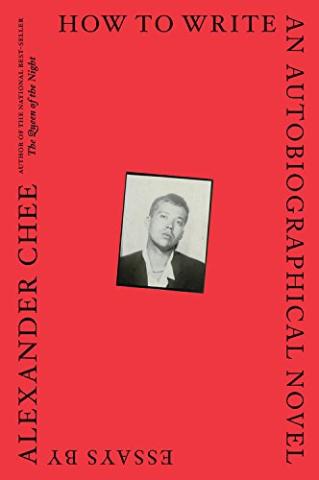
How to Write an Autobiographical Novel
Essays

How to Write an Autobiographical Novel is Alexander Chee’s manifesto on the entangling of life, literature, and politics, and how the lessons learned from a life spent reading and writing fiction have changed him. In these essays, he grows from student to teacher, reader to writer, and reckons with his identities as a son, a gay man, a Korean American, an artist, an activist, a lover, and a friend. He examines some of the most formative experiences of his life and the nation’s history, including his father’s death, the AIDS crisis, 9/11, the jobs that supported his writing—Tarot-reading, bookselling, cater-waiting for William F. Buckley—the writing of his first novel, Edinburgh, and the election of Donald Trump.
 
By turns commanding, heartbreaking, and wry, How to Write an Autobiographical Novel asks questions about how we create ourselves in life and in art, and how to fight when our dearest truths are under attack.

  • Print Books
  • Find your local bookstore (via IndieBound)
  • Powell's
  • Barnes & Noble
  • Alibris
  • Abe Books
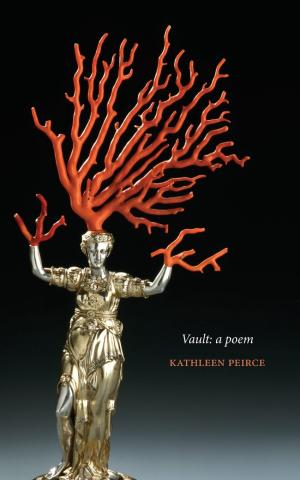
Vault
A Poem

Poet Liz Waldner has written of Vault: A Poem, “Find here: poetry’s virtues/pleasures. Gorgeous witness. Silence muscled with qualities. Net of attentiveness rippling outward from the meeting of the seer and the seen. Kin to The Tempest: the wondrous woven of the mundane. The strength of purpose and hearkening needed to walk in beauty’s strangeness. Its sensuousness; its intimacy (especially with necessity) that supples its language. Patience of soul spun into physical brilliance. Time present and antique, interior and exterior, “feather of hair in one hand, / scissors in another, not the heart / beating but what might return over the heart.” These are the most beautiful poems I know." 

  • Print Books
  • Find your local bookstore (via IndieBound)
  • Powell's
  • Barnes & Noble
  • Alibris
  • Abe Books
Double Talk
The Erotics of Male Literary Collaboration: Volume 1

Sigmund Freud and Josef Breuer on hysteria, J.A. Symonds and Havelock Ellis on sexuality, a novel by Ford Madox Ford and Joseph Conrad, The Waste Land of T.S. Eliot (and Ezra Pound), even the Lyrical Ballads of Wordsworth and Coleridge: men making books together. Wayne Koestenbaum's startling interpretation of literary collaboration focuses on homosexual desire: men write together, he argues, in order either to express or to evade homosexual feelings. Their writing becomes a textual intercourse, the book at once a female body they can share and the child of their partnership. These man-made texts steal a generative power that women's bodies seem to represent.

  • Print Books
  • Find your local bookstore (via IndieBound)
  • Barnes & Noble
  • Alibris
  • Abe Books
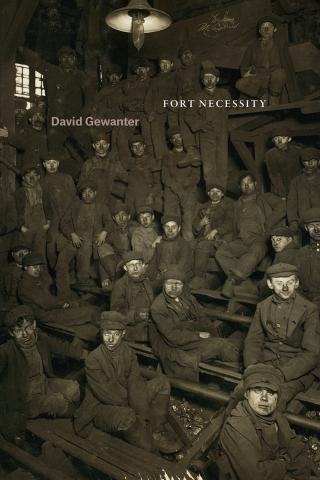
Fort Necessity

Haunted by his father’s autopsy of a workman he witnessed as a child, David Gewanter forges intensely personal poems that explore the fate of our laboring bodies, from the Carnegie era’s industrial violence and convict labor to our present day of broken trust, profiteering, and the Koch brothers. Guided by a moral vision to document human experience, this unique collection takes raw historical materials—newspaper articles, autobiography and letters, court testimony, a convict ledger, and even a menu—and shapes them into sonnets, ballads, free verse, and prose poems. The title poem weaves a startling lyric sequence from direct testimony by steelworkers and coal-miners, strikers and prisoner chain-gangs, owners and anarchists, revealing an American empire that feeds not just on oil and metal, but also on human energy, impulse, and flesh. Hanging in this gallery alongside Gewanter’s family are all the hapless souls who dream of fortune, but cannot make their fates, confronting instead the dark outcomes of love, loyalty, fantasy, and betrayal. 

  • Print Books
  • Find your local bookstore (via IndieBound)
  • Barnes & Noble
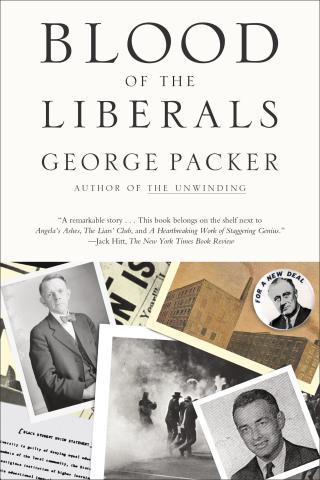
Blood of the Liberals

George Packer's maternal grandfather, George Huddleston, was a populist congressman from Alabama in the early part of the century--an agrarian liberal in the Jacksonian mold who opposed the New Deal. Packer's father was a Kennedy-era liberal, a law professor and dean at Stanford whose convictions were sorely--and ultimately fatally--tested in the campus upheavals of the 1960s. The inheritor of two sometimes conflicting strains of the great American liberal tradition, Packer discusses the testing of ideals in the lives of his father and grandfather and his own struggle to understand the place of the progressive tradition in our currently polarized political climate. Searching, engrossing, and persuasive, this is an original, intimate examination of the meaning of politics in American lives.

  • Print Books
  • Find your local bookstore (via IndieBound)
  • Powell's
  • Barnes & Noble
  • Alibris
  • Abe Books
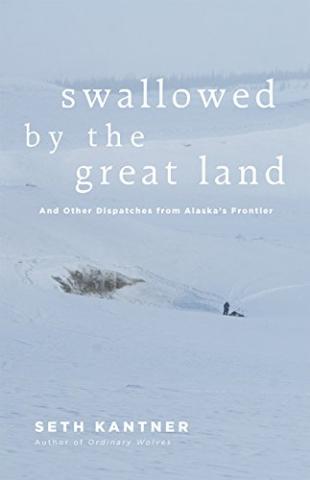
Swallowed by the Great Land
And Other Dispatches from Alaska's Frontier

Swallowed by the Great Land features slice-of-life essays that further reveal the duality in the author's own life today, and also in the village and community that he inhabits: a mosaic of all life on the tundra. Unique characters, village life, wilderness and the larger landscape, a warming Arctic, and hunting and other aspects of subsistence living are all explored in varied yet intimate stories.

  • Print Books
  • Find your local bookstore (via IndieBound)
  • Powell's
  • Barnes & Noble
  • Alibris
  • Abe Books
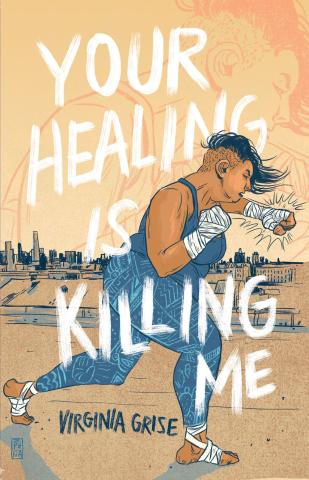
Your Healing is Killing Me

A performance manifesto based on lessons learned in San Antonio free health clinics and New York acupuncture schools; from the treatments and consejos of curanderas, abortion doctors, Marxist artists, community health workers, and bourgie dermatologists. One artist's reflections on living with post-traumatic stress disorder, ansia, and eczema in the new age of trigger warnings, the master cleanse, and crowd-funded self-care. Unprocessed, gluten, and guilt-free. Capitalism is toxic but the Revolution is not in your body butter.

  • Print Books
  • Find your local bookstore (via IndieBound)
  • Barnes & Noble
  • Small Press Distribution
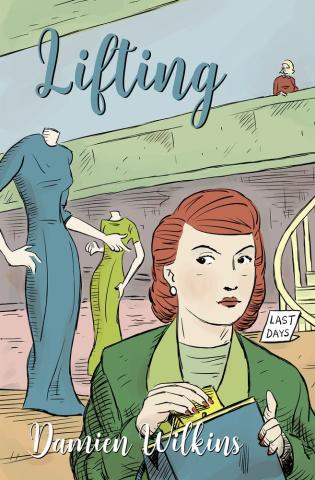
Lifting

Amy is a store detective at Cutty’s, the oldest and grandest department store in the country. She’s good at her job. She can read people and catch them. But Cutty’s is closing down. Amy has a young baby, an ailing mother, and a large mortgage. She also has a past as an activist. This compelling novel opens in a police interview room, with Amy narrating the weeks leading up to the chaotic close of Cutty’s, a time when the store moves from permanent feature to ruin and when people under stress do strange things. An intense exploration of the moment when the solid ground of a life is taken away, this swiftly told novel shows again how unerringly and vividly Damien Wilkins traces the stress fractures of contemporary living.

  • Print Books
  • Find your local bookstore (via IndieBound)
  • Alibris
  • Abe Books
  • Victoria University Press
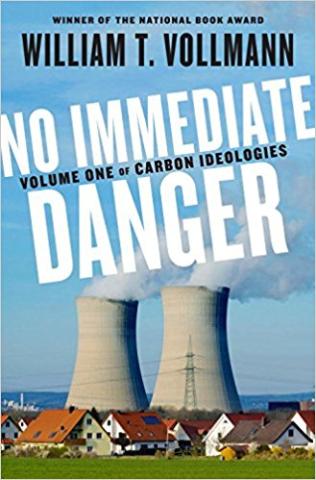
No Immediate Danger
Volume One of Carbon Ideologies

In his nonfiction, William T. Vollmann has won acclaim as a singular voice tackling some of the most important issues of our age, from poverty to violence to the dark soul of American imperialism as it has played out on the U.S./Mexico border. Now, Vollmann turns to a topic that will define the generations to come--the factors and human actions that have led to global warming. Vollmann begins No Immediate Danger, the first volume of Carbon Ideologies, by examining and quantifying the many causes of climate change, from industrial manufacturing and agricultural practices to fossil fuel extraction, economic demand for electric power, and the justifiable yearning of people all over the world to live in comfort. Turning to nuclear power first, Vollmann then recounts multiple visits he made at significant personal risk over the course of seven years to the contaminated no-go zones and sad ghost towns of Fukushima, Japan, beginning shortly after the tsunami and reactor meltdowns of 2011. Equipped first only with a dosimeter and then with a scintillation counter, he measured radiation and interviewed tsunami victims, nuclear evacuees, anti-nuclear organizers and pro-nuclear utility workers. Featuring Vollmann's signature wide learning, sardonic wit, and encyclopedic research, No Immediate Danger, whose title co-opts the reassuring mantra of official Japanese energy experts, builds up a powerful, sobering picture of the ongoing nightmare of Fukushima.

  • Print Books
  • Find your local bookstore (via IndieBound)
  • Barnes & Noble

Pagination

  • Previous page ‹‹
  • Page 28
  • Next page ››
Subscribe to M

Sitemap Menu

  • Foundation
    • Home
    • People
    • History
    • Contact
  • Literature
    • Whiting Award
    • Nonfiction Grant
    • Magazine Prizes
    • Discover Writing
  • Humanities
    • Preserving Heritage
    • High Schools
    • Past Programs


  • Accessibility Notice Accessibility Notice
  • PRIVACY & TERMS
  • © WHITING FOUNDATION
  •  
Site by PASTPRESENTFUTURE, with design by Language Arts