WHITING WHITING WHITING WHITING WHITING
  • Foundation ▼ ▲
    • Home
    • People
    • History
    • Contact
  • Literature ▼ ▲
    • Whiting Award
      • About
      • Current Winners
      • Browse Winners
      • Search All Winners
      • Keynotes
    • Nonfiction Grant
      • About
      • Grantees
    • Magazine Prizes
      • About
      • Winners
    • Discover Writing
      • New Books
      • Chapbooks
      • Videos
      • Random Winner
  • Humanities ▼ ▲
    • Preserving Heritage
    • High Schools
    • Past Programs
      • About
      • PEP Fellows
      • PEP Seed Grantees
      • Dissertation Fellows
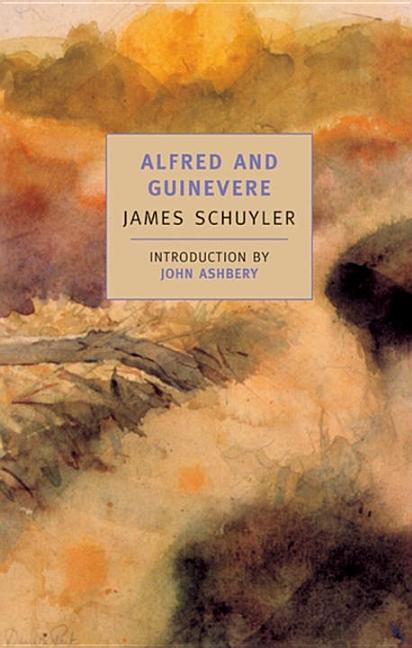
Alfred and Guinevere
A Novel

One of the finest American poets of the second half of the twentieth century, James Schuyler was at the same time a remarkable novelist. Alfred and Guinevere are two children who have been sent by their parents to spend the summer at their grandmother's house in the country. There they puzzle over their parents' absence and their relatives' habits, play games and pranks, make friends and fall out with them, spat and make up. Schuyler has a pitch-perfect ear for the children's voices, and the story, told entirely through snatches of dialogue and passages from Guinevere's diary, is a tour de force of comic and poetic invention. The reader discovers that beneath the book's apparently guileless surface lies a very sophisticated awareness of the complicated ways in which words work to define the often perilous boundaries between fantasy and reality, innocence and knowledge. First published in 1958.

  • Print Books
  • Find your local bookstore (via IndieBound)
  • Powell's
  • Barnes & Noble
  • Alibris
  • Abe Books
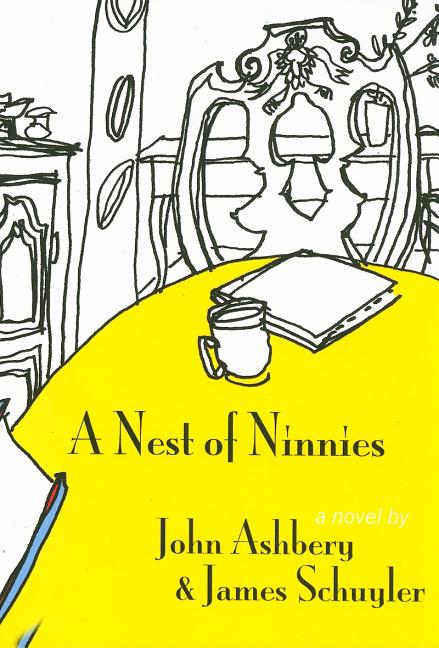
A Nest of Ninnies
A Novel by James Schuyler and John Ashbery

"James Schuyler and I began writing A Nest of Ninnies purely by chance," writes John Ashbery in his new introduction to this classic of American comic fiction. "We were in a car being driven by the young cameraman, Harrison Starr, with his father as a passenger in the front seat . . . Jimmy said, 'Why don't we write a novel?' And how do we do that, I asked. 'It's easy—you write the first line,' was his reply." The result is one of the strangest and most exuberant experiments in American literary history, a verbal tour de force of suburban Americana.

First published in 1969, A Nest of Ninnies is a true gem-in-the-rough, the decades-long collaborative project from two of the great poetic minds of the twentieth century.

  • Print Books
  • Find your local bookstore (via IndieBound)
  • Powell's
  • Barnes & Noble
  • Alibris
  • Abe Books
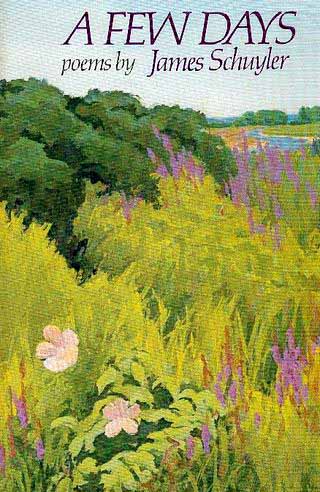
A Few Days
Poems

Schuyler's follow-up to The Morning of the Poem, from 1985.

  • Print Books
  • Find your local bookstore (via IndieBound)
  • Powell's
  • Barnes & Noble
  • Alibris
  • Abe Books
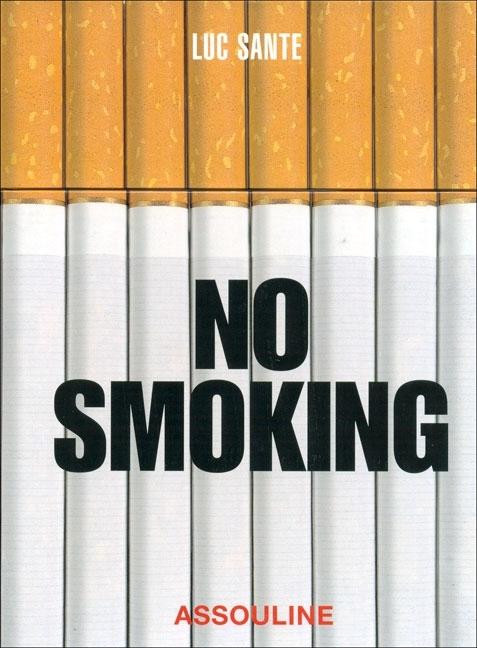
No Smoking
An Art Book

Can you imagine Groucho Marx without a cigar? Do you remember that a few years ago smoking was allowed in airplanes? Can you tell when New York stopped smoking? In the not so distant past, posing seductively with a cigarette was de rigueur for Hollywood types. How many celebrities today dare to even hold one? No Smoking is a tribute to the 20th century, a century that created, promoted and glorified the cigarette and then suddenly declared war on it.

  • Print Books
  • Find your local bookstore (via IndieBound)
  • Powell's
  • Barnes & Noble
  • Alibris
  • Abe Books
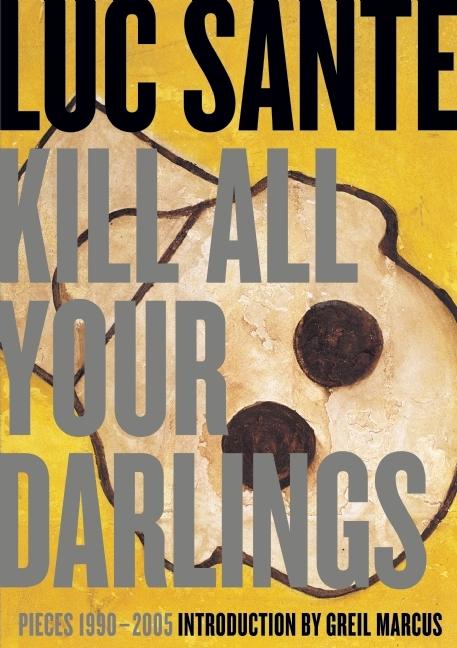
Kill All Your Darlings
Pieces 1990-2005

In his books and in a string of wide-ranging and inventive essays, Luc Sante has shown himself to be not only one of our pre-eminent stylists, but also a critic of uncommon power and range. He is “one of the handful of living masters of the American language, as well as a singular historian and philosopher of American experience,” says the New Yorker’s Peter Schjeldahl.

Kill All Your Darlings is the first collection of Sante’s articles—many of which first appeared in the New York Review of Books and the Village Voice—and offers ample justification for such high praise. Sante is best known for his groundbreaking work in urban history (Low Life), and for a particularly penetrating form of autobiography (The Factory of Facts). These subjects are also reflected in several essays here, but it is the author’s intense and scrupulous writing about music, painting, photography, and poetry that takes center stage. Alongside meditations on cigarettes, factory work, and hipness, and his critical tour de force, “The Invention of the Blues,” Sante offers his incomparable take on icons from Arthur Rimbaud to Bob Dylan, René Magritte to Tintin, Buddy Bolden to Walker Evans, Allen Ginsberg to Robert Mapplethorpe.

  • Print Books
  • Find your local bookstore (via IndieBound)
  • Powell's
  • Barnes & Noble
  • Alibris
  • Abe Books
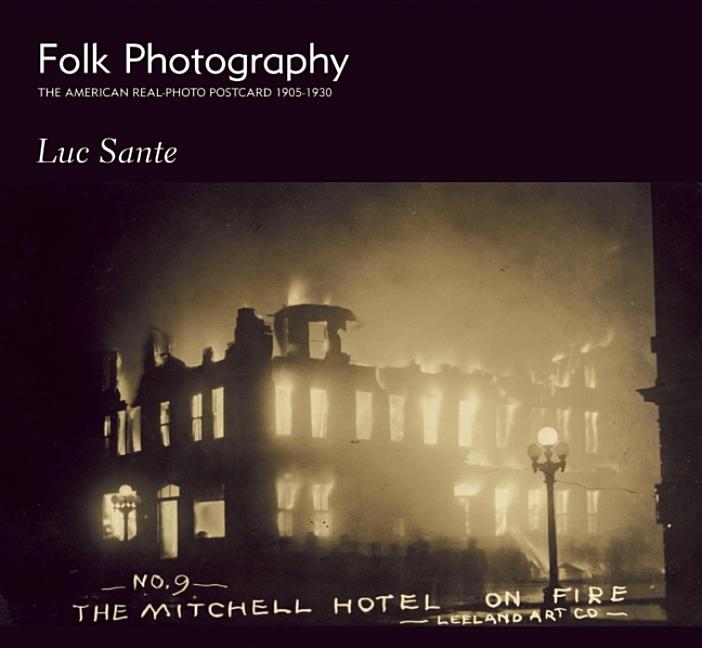
Folk Photography
The American Real-Photo Postcard 1905-1930

In rural America at the beginning of the twentieth century, the worldwide postcard craze coincided with the spread of light, cheap photographic equipment. The result was the real-photo postcard, so-called because the cards were printed in darkrooms rather than on litho presses, usually in editions of a hundred or fewer, the work of amateurs and professionals alike. They were not intended for tourists, but as a medium of communication for the residents of small towns, isolated on the plains and in the hills. The cards document everything about their time and place, from intimate matters to events that qualified as news. They show people from every walk of life and the whole panorama of human activity: eating, sleeping, labor, worship, animal husbandry, amateur theatrics, barn-raising, spirit-rapping, dissolution, riot, disaster, death. Uncountable millions of them were made in the peak years, 1905 to 1912.

Previous books on the subject have been content to dwell on the nostalgia value of the images. This book takes a broader and deeper view. The 122 postcards it reproduces cover the vast range of subjects encompassed by the medium—sometimes lyrical and sometimes bracingly harsh—while Luc Sante’s pathbreaking introductory essay places them in their full historical and artistic context. Sante argues that the cards were a medium of expression very much like the folk music being made in the same places at the same time—open to the complete and unvarnished experience of life, and enacting tradition even as they embody modernity. Besides that, he demonstrates that they represent a crucial stage in the evolution of photography, as the essential link between the plain style of the Civil War photographers and the vision of the great midcentury documentarians, Walker Evans above all. Combining his gifts as a chronicler of early twentieth-century America, a historian of photography, and a clear-eyed and eloquent critic, Sante shows how the postcards’ “vast, teeming, borderless body of work” add up to a “self-portrait of the American nation.”
  • Print Books
  • Find your local bookstore (via IndieBound)
  • Powell's
  • Barnes & Noble
  • Alibris
  • Abe Books
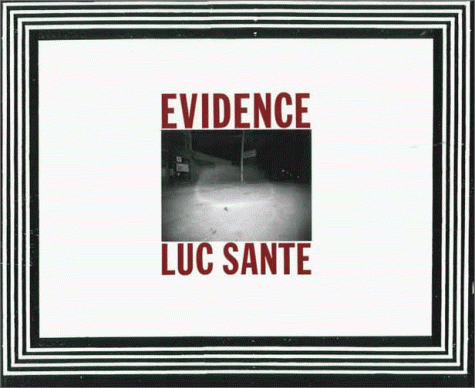
Evidence
A Book of Photos

A collection of evidence photographs taken by the New York City Police between 1914 and 1918 is minutely annotated to express the social fabric of the times, the texture of the lives depicted, and the progress of the forensic use of photography.

  • Print Books
  • Find your local bookstore (via IndieBound)
  • Powell's
  • Barnes & Noble
  • Alibris
  • Abe Books
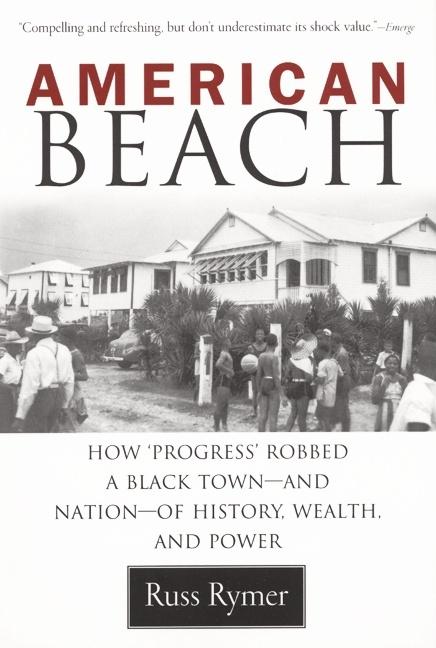
American Beach
How "Progress" Robbed a Black Town—And Nation—Of History, Wealth, and Power

"First we had segregation. Then integration. Then disintegration." —resident, American Beach.

Avoiding the easy clichés of victimhood and oppression, award-winning journalist Russ Rymer brings to life the stark conflict between whites and blacks in the United States today. Through three connected lives in and around northeast Florida's black resort town of American Beach—an unarmed black motorist killed by a white policeman; the great-grandfather of Florida's first black millionaire, who lives on the beach with next to nothing; and prominent Harlem Renaissance writer Zora Neale Hurston—Rymer presents a vision of a nation where the futures of both races are as linked as their histories, where the lost record of heroic black enterprise and prominence offers a key to the struggles of every modern American.

  • Print Books
  • Find your local bookstore (via IndieBound)
  • Powell's
  • Barnes & Noble
  • Alibris
  • Abe Books
Threats Instead of Trees
Poems

Line after line from Threats Instead of Trees, the 1974 collection that won Ryan the Yale Series of Younger Poets Award, suggests a harrowed soul: ''I'm speaking again / as the invalid in a dark room,'' ''I'm afraid of marriage,'' ''So close you're defenseless, / you inhale your father's last breath,'' and so on. As in a horror movie, it's as though the speakers in these poems were shot in extreme close-up so that we can't see the threat just outside the frame. Threats Instead of Trees contains many poems of this kind, ones that recall the anxious utterances of Anne Sexton and the early Mark Strand, as well as a number of more open, discursive poems that look ahead to the narrative experiments of the 80's and beyond . . .

Freud said that love and work are the cornerstones of our humanness. But love by itself comes up short in Ryan's poetry, and work is a subject he doesn't discuss. Poems make life bearable here, especially big long talky poems that include pain and fear but also surprise, joy, laughter, everything human.

  • Print Books
  • Find your local bookstore (via IndieBound)
  • Powell's
  • Barnes & Noble
  • Alibris
  • Abe Books
This Morning
Poems

“The twin ancient powers of poetry are story and song,” Michael Ryan said in a recent interview. “I like a lot of both.”

And both are here in This Morning in glorious abundance: graceful complex narratives and tight formal lyrics, edgy humor, affecting music, and insistent clarity always in the service of the heart. He can be deeply funny and extremely moving, often at the same time. No other living poet possesses Ryan’s range of tone and technique in rendering the great subjects of art and life: sex, mortality, loss, and love (both conjugal and paternal). Even his most apparently autobiographical writing penetrates to the universal subject within it. Like Dickinson in her poetry, his personal life interests him primarily as an instance of human life. His artistic discipline is thus a spiritual discipline, and the vital spirit infusing these poems rises from the depths of isolation transformed by the joy of loving other people persistently and generously. This Morning is the work of a contemporary American master.

  • Print Books
  • Find your local bookstore (via IndieBound)
  • Powell's
  • Barnes & Noble
  • Alibris
  • Abe Books

Pagination

  • Previous page ‹‹
  • Page 66
  • Next page ››
Subscribe to M

Sitemap Menu

  • Foundation
    • Home
    • People
    • History
    • Contact
  • Literature
    • Whiting Award
    • Nonfiction Grant
    • Magazine Prizes
    • Discover Writing
  • Humanities
    • Preserving Heritage
    • High Schools
    • Past Programs


  • Accessibility Notice Accessibility Notice
  • PRIVACY & TERMS
  • © WHITING FOUNDATION
  •  
Site by PASTPRESENTFUTURE, with design by Language Arts