WHITING WHITING WHITING WHITING WHITING
  • Foundation ▼ ▲
    • Home
    • People
    • History
    • Contact
  • Literature ▼ ▲
    • Whiting Award
      • About
      • Current Winners
      • Browse Winners
      • Search All Winners
      • Keynotes
    • Nonfiction Grant
      • About
      • Grantees
    • Magazine Prizes
      • About
      • Winners
    • Discover Writing
      • New Books
      • Chapbooks
      • Videos
      • Random Winner
  • Humanities ▼ ▲
    • Preserving Heritage
    • High Schools
    • Past Programs
      • About
      • PEP Fellows
      • PEP Seed Grantees
      • Dissertation Fellows
What Is Left the Daughter
A Novel

Howard Norman, widely regarded as one of this country’s finest novelists, returns to the mesmerizing fictional terrain of his major books—The Bird Artist, The Museum Guard, and The Haunting of L—in this erotically charged and morally complex story.

Seventeen-year-old Wyatt Hillyer is suddenly orphaned when his parents, within hours of each other, jump off two different bridges—the result of their separate involvements with the same compelling neighbor, a Halifax switchboard operator and aspiring actress. The suicides cause Wyatt to move to small-town Middle Economy to live with his uncle, aunt, and ravishing cousin Tilda. Setting in motion the novel’s chain of life-altering passions and the wartime perfidy at its core is the arrival of the German student Hans Mohring, carrying only a satchel. Actual historical incidents—including a German U-boat’s sinking of the Nova Scotia–Newfoundland ferry Caribou, on which Aunt Constance Hillyer might or might not be traveling—lend intense narrative power to Norman’s uncannily layered story. Wyatt’s account of the astonishing—not least to him—events leading up to his fathering of a beloved daughter spills out twenty-one years later. It’s a confession that speaks profoundly of the mysteries of human character in wartime and is directed, with both despair and hope, to an audience of one. An utterly stirring novel. This is Howard Norman at his celebrated best.

  • Print Books
  • Find your local bookstore (via IndieBound)
  • Powell's
  • Barnes & Noble
  • Alibris
  • Abe Books
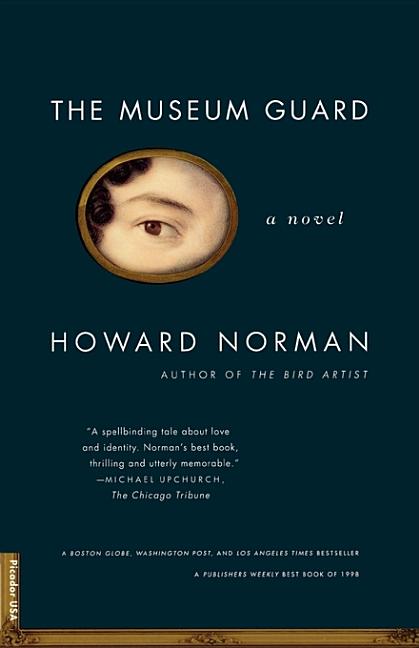
The Museum Guard
A Novel

Orphaned by a zeppelin crash at age nine, DeFoe Russet was raised in a Halifax, Nova Scotia, hotel by his magnetic uncle Edward. Now thirty, DeFoe works with Edward as a guard in Halifax's three-room Glace Museum. He and his uncle disturb the silence of the museum with heated conversations that prove them to be "opposites at life." Away from the museum, DeFoe courts the affection of Imogen Linny, the young caretaker of the small Jewish cemetery. Everything changes when Imogen, inspired by the arrival of a painting, Jewess on a Street in Amsterdam, abandons Halifax for the ennobled life she imagines for the painting's subject—even amid the growing perilousness of being a Jew in Amsterdam. Set against the impending events of World War II, The Museum Guard, the second book of Norman's Canadian trilogy, explores the mysteries of identity and self-determination, and the desire to step out of the ordinary into an alluring and dangerous sphere of action.

  • Print Books
  • Find your local bookstore (via IndieBound)
  • Powell's
  • Barnes & Noble
  • Alibris
  • Abe Books
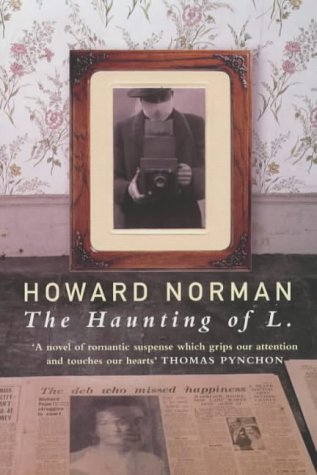
The Haunting of L
A Novel

The final book is Howard Norman's Canadian Trilogy: a novel about spirit-photographs, adultery, and greed.

It is 1927. Young Peter Duvett has accepted a job as an assistant to the elusive portraitist, Vienna Linn, in the remote town of Churchill, Manitoba. Peter's life is about to change in ways he scarcely could have imagined. Across Canada, Linn has been arranging and photographing gruesome accidents for the private collection, in London, of a Mr. Radin Heur—theirs is a macabre duet of art and violence.

After a strenuous journey, Peter arrives in Churchill on the very night of his employer's wedding only to fall under the spell of Vienna's brilliant and beautiful wife, Kala Murie. Several months later, the uneasy menage a trois moves to Peter's native Halifax. Peter is drawn more and more deeply to Kala as he reluctantly comes to share her obsession with "spirit pictures," photographs in which the faces of the long-dead or forgotten mysteriously appear—and as he sees more and more terrifying scenes come to life in the darkroom.

  • Print Books
  • Find your local bookstore (via IndieBound)
  • Powell's
  • Barnes & Noble
  • Alibris
  • Abe Books
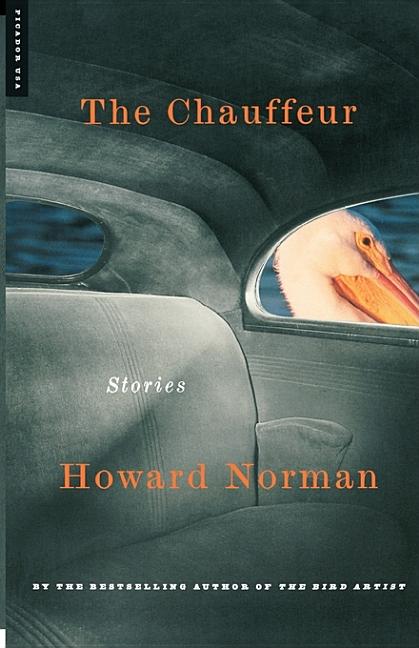
The Chauffeur
Stories

Bringing together eight previously published stories, the bestselling author of The Bird Artist explores the lives of a range of characters who share a sense of loneliness and obsession. In the title story, Tokyo-born Mrs. Moro is driven every day by her chauffeur, Tuttle Albers, so that she can walk the beach in hope of seeing white pelicans while her driver reads the Japanese authors she lends him and falls in love with a zoologist; in "Jenny Aloo" an Eskimo woman believes her missing son's soul is trapped inside a jukebox; and in "Kiss in the Hotel Joseph Conrad" the narrator keeps track of a woman by whom he once spurned for nearly a decade while everything around him changes.

  • Print Books
  • Find your local bookstore (via IndieBound)
  • Powell's
  • Barnes & Noble
  • Alibris
  • Abe Books
Next Life Might Be Kinder
A Novel

Sam Lattimore meets Elizabeth Church in 1970s Halifax, in an art gallery. Their brief, erotically charged marriage is extinguished with Elizabeth’s murder. Sam’s life afterward is complicated. In a moment of desperate confusion, he sells his life story to a Norwegian filmmaker named Istvakson, known for the stylized violence of his films, whose artistic drive sets in motion an increasingly intense cat-and-mouse game between the two men. Furthermore, Sam has begun “seeing” Elizabeth—not only seeing but holding conversations with her, almost every evening, and what at first seems simply hallucination born of terrible grief reveals itself, evening by evening, as something else entirely.

  • Print Books
  • Find your local bookstore (via IndieBound)
  • Powell's
  • Barnes & Noble
  • Alibris
  • Abe Books
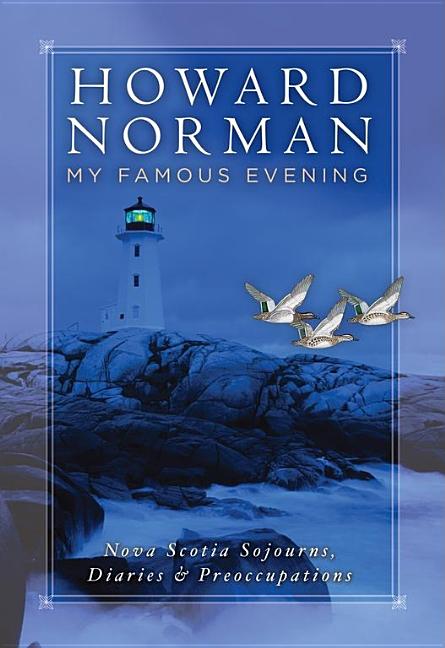
My Famous Evening
Nova Scotia Sojourns, Diaries, and Preoccupations

Master storyteller Howard Norman draws on more than 30 years of visiting Nova Scotia for this remarkable ''book of selective memories.'' Combining stories, folklore, memoir, nature, poetry, and expository prose, the chapters of My Famous Evening ''may be seen as intersecting facets of reminiscence; there are certain refrains, themes, and preoccupations and I placed birds into as many of the book's nooks and crannies as possible.'' His goal: to portray the emotional dimensions of his experience.

Illustrated with photographs from Norman's own collection, this book offers a delightful, witty, and characteristically quirky take on a curious and beguiling region. Read the story of Marlais Quire, a young woman who scandalously left her home in Nova Scotia in 1923 to travel to New York in an ill-fated attempt to attend a public reading by Joseph Conrad. Enjoy the delightful ''Birder's Notebook,'' a collection of stories about the Mi'kmaq cultural hero, Glooskap, and an account of Leon Trotsky's 1915 visit to Halifax, after a year in exile in New York, ''on his way to the October Revolution.'' For Norman, Nova Scotia is a place that provides a deep calm but also a ''sudden noir of the heart.''

  • Print Books
  • Find your local bookstore (via IndieBound)
  • Powell's
  • Barnes & Noble
  • Alibris
  • Abe Books
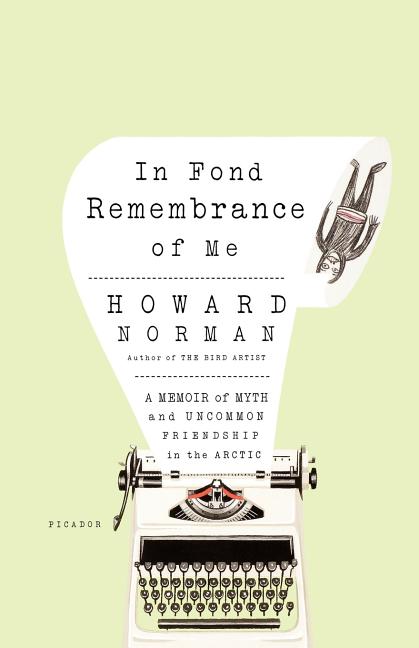
In Fond Remembrance of Me
A Memoir of Myth and Uncommon Friendship in the Arctic

In the fall of 1977, Howard Norman went to Churchill, Manitoba, to translate Inuit folktales, and there he met Helen Tanizaki, an extraordinary linguist translating the same tales into Japanese. In Fond Remembrance of Me recaptures their intimacy, and the remarkable influence that she, and the tales themselves, would have on the future novelist. Through a series of overlapping panels of reality and memory, Norman evokes with vivid immediacy their brief but life-shifting encounter, and the earthy, robust Inuit folklore that occasioned it.

  • Print Books
  • Find your local bookstore (via IndieBound)
  • Powell's
  • Barnes & Noble
  • Alibris
  • Abe Books
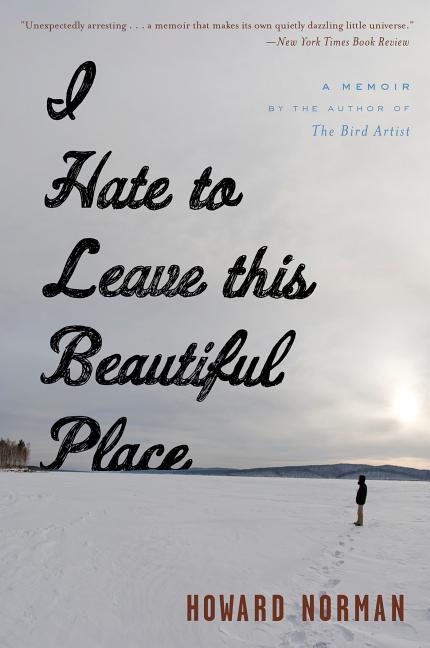
I Hate to Leave This Beautiful Place
A Memoir

Howard Norman’s spellbinding memoir begins with a portrait, both harrowing and hilarious, of a Midwest boyhood summer working in a bookmobile, in the shadow of a grifter father and under the erotic tutelage of his brother’s girlfriend. His life story continues in places as far-flung as the Arctic, where he spends part of a decade as a translator of Inuit tales—including the story of a soapstone carver turned into a goose whose migration-time lament is “I hate to leave this beautiful place”—and in his beloved Point Reyes, California, as a student of birds. Years later, in Washington, D.C., an act of deeply felt violence occurs in the form of a murder-suicide when Norman and his wife loan their home to a poet and her young son. In Norman’s hands, life’s arresting strangeness is made into a profound, creative, and redemptive story.

  • Print Books
  • Find your local bookstore (via IndieBound)
  • Powell's
  • Barnes & Noble
  • Alibris
  • Abe Books
Devotion
A Novel

Like many of Howard Norman’s celebrated novels, this intense and intriguingly unconventional love story begins with a crime. David Kozol has assaulted his father-in-law on a London street. What could possibly enrage David enough that he would strike the father of his new bride? Why would William, the gentle caretaker of an estate in Nova Scotia—along with its flock of swans—be so angry at the man who has just married his beloved daughter Maggie? And what would lead Maggie to believe that David has been unfaithful to her? At its core, Devotion is an elegantly constructed, unsparing examination of love in its various forms—romantic, filial—and of course, love for the vast open spaces of the natural world.

  • Print Books
  • Find your local bookstore (via IndieBound)
  • Powell's
  • Barnes & Noble
  • Alibris
  • Abe Books
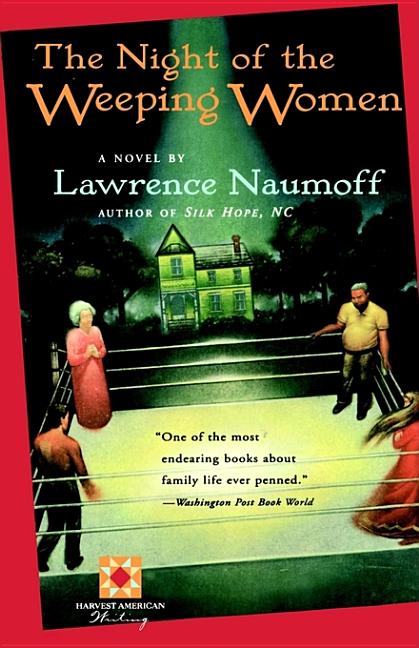
Night of the Weeping Women
A Novel

Originally published in 1988, this first novel by Lawrence Naumoff is often called his most recognizably Southern. It follows the lives of a young woman, married to who she believes is a good man, living outside of Chapel Hill, and how she has thought that she has escaped her childhood, and all the things that happened, mostly relating to her father, who lives in a darkly comic world of what he would call 'benign' racism, and a total misunderstanding and obliviousness to his long suffering—also rendered in a darkly comic way—wife. The book moves between humor and the serious business of Sally trying so hard to fix her life. The lives of the daughter, her husband, their parents, and an endearing street girl, all eventually enter the zone of truth and courage and responsibility of the events in their past, and they can then move on.

  • Print Books
  • Find your local bookstore (via IndieBound)
  • Powell's
  • Barnes & Noble
  • Alibris
  • Abe Books

Pagination

  • Previous page ‹‹
  • Page 74
  • Next page ››
Subscribe to M

Sitemap Menu

  • Foundation
    • Home
    • People
    • History
    • Contact
  • Literature
    • Whiting Award
    • Nonfiction Grant
    • Magazine Prizes
    • Discover Writing
  • Humanities
    • Preserving Heritage
    • High Schools
    • Past Programs


  • Accessibility Notice Accessibility Notice
  • PRIVACY & TERMS
  • © WHITING FOUNDATION
  •  
Site by PASTPRESENTFUTURE, with design by Language Arts