WHITING WHITING WHITING WHITING WHITING
  • Foundation ▼ ▲
    • Home
    • People
    • History
    • Contact
  • Literature ▼ ▲
    • Whiting Award
      • About
      • Current Winners
      • Browse Winners
      • Search All Winners
      • Keynotes
    • Nonfiction Grant
      • About
      • Grantees
    • Magazine Prizes
      • About
      • Winners
    • Discover Writing
      • New Books
      • Chapbooks
      • Videos
      • Random Winner
  • Humanities ▼ ▲
    • Preserving Heritage
    • High Schools
    • Past Programs
      • About
      • PEP Fellows
      • PEP Seed Grantees
      • Dissertation Fellows
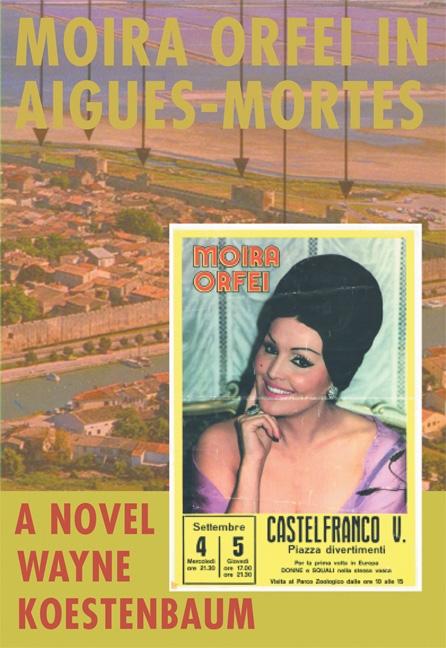
Moira Orfei in Aigues-Mortes
A Novel

Five years of breakdown separate pianist Theo Mangrove’s last recital in Europe from his planned comeback in Aigues-Mortes, "the town of dead water." At home in tiny East Kills, NY, Theo begins jotting in 25 notebooks, purchased all at once and addressed to his mother. Theo’s wife, aside from servicing two of Theo’s twenty daily erections, will have nothing to do with him. The other eighteen—taken care of by male hustlers, random strangers in YMCA locker-rooms and naked piano students—contribute to Theo’s sense of dissolution as his "comeback" approaches. Overcome with the belief that Moira Orfei, queen of the Italian circus during the 1960’s, must perform with him, Theo begins to write to her and to pen what may or may not be her cryptic replies into his notebooks. In a fugue of notes and troubling memories, Theo prepares for Aigues-Mortes, struggling with Moira’s guidance towards one final, full celebration of "the partial, the flawed, the almost, the not quite." Peopled by piano playing relatives, prostitutes, muses and manipulators; poet and cultural critic Wayne Koestenbaum’s first novel shines a hot light on the treacherous crossroads of sex, death, family and popular culture.
  • Print Books
  • Find your local bookstore (via IndieBound)
  • Powell's
  • Barnes & Noble
  • Alibris
  • Abe Books
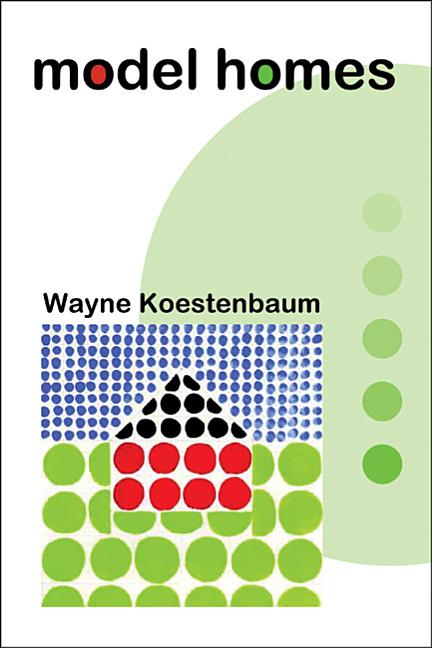
Model Homes
Poems

Wayne Koestenbaum knows how to drop the language in the blender of the imagination and hit frappe! The 13 ottava rima cantos in Model Homes present a neo-Freudian tale of the goings-on in the poet’s present home and various events from his childhood. Modulating a voice that is urbane and ribald, melancholic and wry, Koestenbaum puts a memorable spin on the status quo notion of domestic arrangements.

  • Print Books
  • Find your local bookstore (via IndieBound)
  • Powell's
  • Barnes & Noble
  • Alibris
  • Abe Books
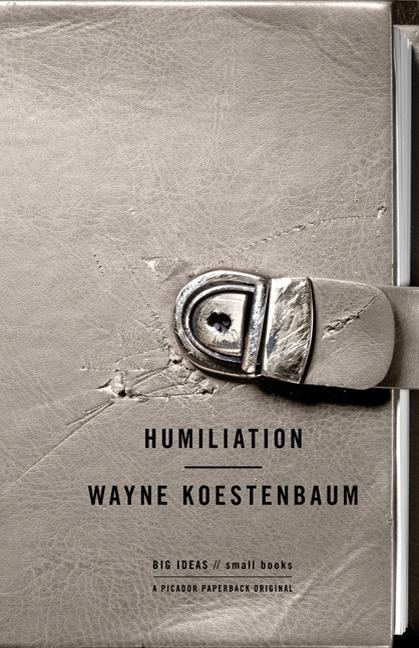
Humiliation
BIG IDEAS/small books

Wayne Koestenbaum considers the meaning of humiliation in this eloquent work of cultural critique and personal reflection. The lives of people both famous and obscure are filled with scarlet-letter moments when their dirty laundry sees daylight. In these moments we not only witness the reversibility of “success,” of prominence, but also come to visceral terms with our own vulnerable selves. We can’t stop watching the scene of shame, identifying with it and absorbing its nearness, and relishing our imagined immunity from its stain, even as we acknowledge the universal, embarrassing predicament of living in our own bodies. With an unusual, disarming blend of autobiography and cultural commentary, noted poet and critic Wayne Koestenbaum takes us through a spectrum of mortifying circumstances—in history, literature, art, current events, music, film, and his own life. His generous disclosures and brilliant observations go beyond prurience to create a poetics of abasement. Inventive, poignant, erudite, and playful, Humiliation plunges into one of the most disquieting of human experiences, with reflections at once emboldening and humane.

  • Print Books
  • Find your local bookstore (via IndieBound)
  • Powell's
  • Barnes & Noble
  • Alibris
  • Abe Books
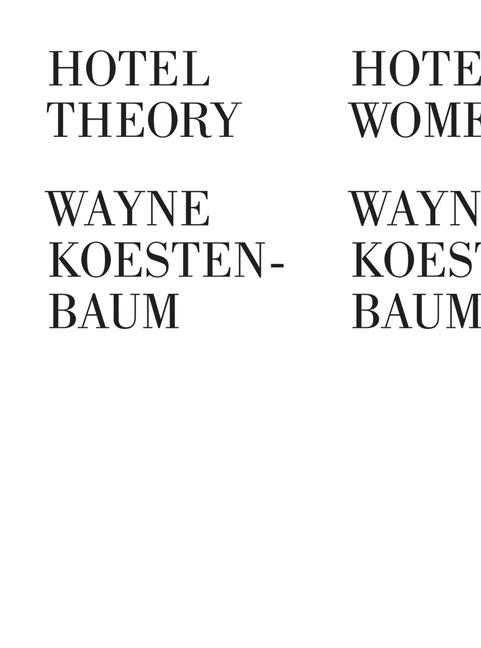
Hotel Theory

Hotel Theory is two books in one: a meditation on the meaning of hotels, and a dime novel (Hotel Women) featuring Lana Turner and Liberace. Typical of Wayne Koestenbaum’s invigoratingly inventive style, the two books—one fiction, one nonfiction—run concurrently, in twin columns, and the articles “a,” “an,” and “the” never appear. The nonfiction ruminations on hotels are divided into eight dossiers, composed of short takes on the presence of hotels in the author’s dreams as well as in literature, film, and history. Guest stars include everyone from Oscar Wilde to Marilyn Monroe. Hotel Theory gives (divided) voice to an aesthetic of hyperaesthesia, of yearning. It is an oblique manifesto, the place where writing disappears. A new mode of theorizing—in fiction, in fragment, through quotation and palimpsest—arises in this dazzling work.

  • Print Books
  • Find your local bookstore (via IndieBound)
  • Powell's
  • Barnes & Noble
  • Alibris
  • Abe Books
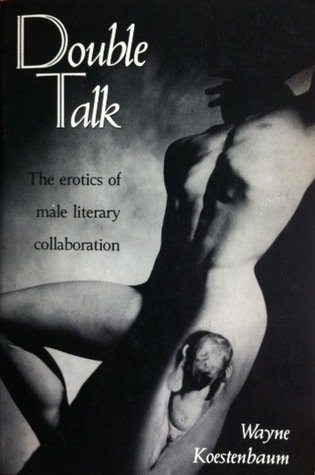
Double Talk
The Erotics of Male Literary Collaboration

Sigmund Freud and Josef Breuer on hysteria, J.A. Symonds and Havelock Ellis on sexuality, a novel by Ford Madox Ford and Joseph Conrad, The Waste Land of T.S. Eliot (and Ezra Pound), even the Lyrical Ballads of Wordsworth and Coleridge: men making books together.

Wayne Koestenbaum's startling interpretation of literary collaboration focuses on homosexual desire: men write together, he argues, in order either to express or to evade homosexual feelings. Their writing becomes a textual intercourse, the book at once a female body they can share and the child of their partnership. These man-made texts steal a generative power that women's bodies seem to represent.

Seen as the site of a struggle between homosexual and homophobic energies, the texts Koestenbaum explores—works of psychoanalysis, sexology, fiction, and poetry—emerge as more complex, more revealing. They crystallize and refract the anxiety of male sexuality at the end of the last century, and open up a deeper understanding of connections today between the erotic and the literary.

  • Print Books
  • Find your local bookstore (via IndieBound)
  • Powell's
  • Barnes & Noble
  • Alibris
  • Abe Books
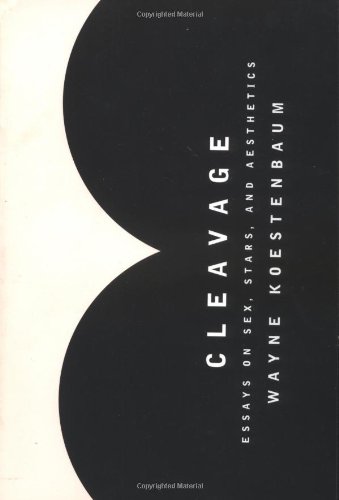
Cleavage
Essays on Sex, Stars, and Aesthetics

In this brilliantly shrewd, hilarious collection of essays, cultural critic and acclaimed writer Wayne Koestenbaum exposes all that provokes, intimidates, heartens, and arouses us in matters of style, celebrity, obscenity, and art.

Armed with a bold curiosity, a stinging wit, and a subversive sense of wordplay, Koestenbaum reflects on a dazzling array of subjects. Here are the outsized emotions inflamed by Sophia Loren, Robert Mapplethorpe, and locker-room nudity . . . vivid dreams of flirting with Bill Clinton and resurrecting Bette Davis from the dead . . . the intangible joys of thrifting . . . the true meaning of masculinity . . . and the indelible sensation that two scoops of vanilla flesh, heaving incongruously in a 70-millimeter musical, made on a young boy of impressionable age. From the rigors of a day spent with Melanie Griffith ("Melanie Time") to the healing powers of a gray Prada suit ("Diary of a Suit") to moving meditations on the importance of reading ("Why I Read"), this volume is an irresistible exploration of culture and identity in America. If celebrity is—as Koestenbaum suggests—an earthquake, then Cleavage is the aftershock.

  • Print Books
  • Find your local bookstore (via IndieBound)
  • Powell's
  • Barnes & Noble
  • Alibris
  • Abe Books
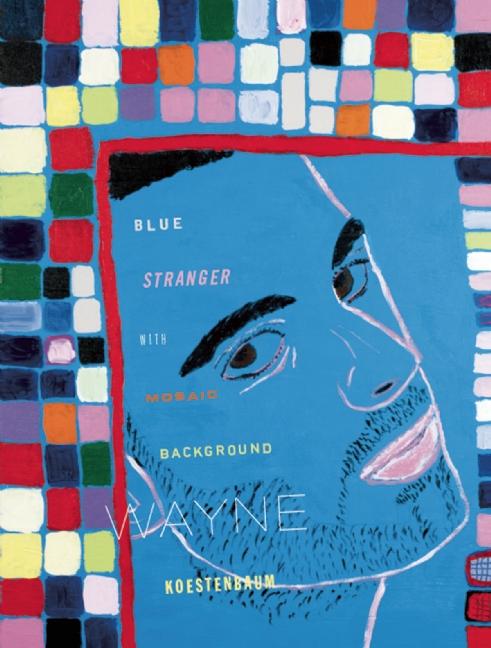
Blue Stranger with Mosaic Background
Poems

Fast, obsessive, jumpy, tender, and joyful, the poems in Wayne Koestenbaum's Blue Stranger With Mosaic Background take his signature themes—stardom, scapegoating, aestheticism, nudism, exaltation—and cut them into serial strips: tidbits that employ techniques of pointillism, mosaic, grid, aphorism, litany, and philosophical investigation. The luminaries in this memory-theater range from Yvonne de Carlo to Hannah Arendt. A trip to Venice and an invocation to an eschatological ice-cream man are the two longest trysts in a book exquisitely composed of "bits" that betoken a new brutalism in a writer known for svelte cadences and artful dodges.

  • Print Books
  • Find your local bookstore (via IndieBound)
  • Powell's
  • Barnes & Noble
  • Alibris
  • Abe Books
Best-Selling Jewish Porn Films
New Poems

"These latest poems reach swoony, unforeseen heights of mental raucousness and worshipful style." —Dennis Cooper

"With a nod to Woody Allen's story 'The Whore of Mensa' Koestenbaum proffers that largest of sex organs—the mind—and entices with erudite and smuttily trenchant wit. Charming, teasing, brainy and slightly Seder-Masochistic, this collection asks that age old question, 'is Crisco Kosher?' The answer might surprise you." —D.A. Powell

  • Print Books
  • Find your local bookstore (via IndieBound)
  • Powell's
  • Barnes & Noble
  • Alibris
  • Abe Books
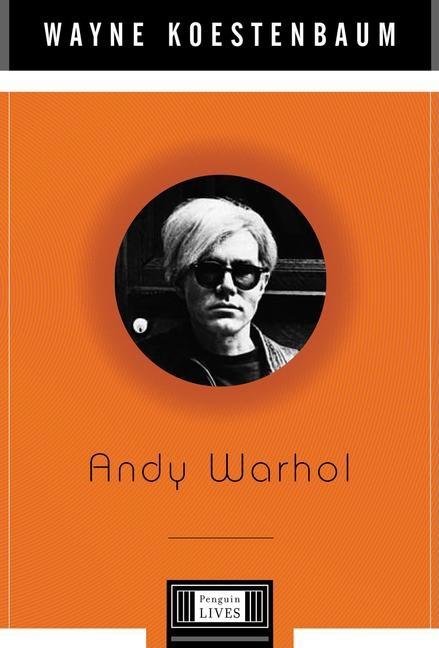
Andy Warhol
Penguin Lives

The sixties were the "sex, drugs, and rock-and-roll" era, and Andy Warhol was its cultural icon. Painter, filmmaker, photographer, philosopher, Warhol was both celebrity and celebrant, the man who put the "pop" in art. His studio, The Factory, where his free-spirited cast of "superstars" mingled with the rich and famous, was ground zero for the explosions that rocked American cultural life. And yet for all his fame, Warhol was an enigma: a participant in the excesses of his time who remained a faithful churchgoer, a nearly inarticulate man who was also a great aphorist ("In the future everybody will be world famous for fifteen minutes"), an artist whose body of work sizzles with sexuality but whose own body was a source of shame and self-hatred.

In his bravura account of Warhol's life and work, scholar and culture critic Wayne Koestenbaum gets past the contradictions and reveals the man beneath the blond wig and dark glasses. Nimbly weaving brilliant and witty analysis into an absorbing narrative, Koestenbaum makes a convincing case for Warhol as a serious artist, one whose importance goes beyond the sixties. Focusing on Warhol's provocative, powerful films (many of which have been out of circulation since their initial release), Koestenbaum shows that Warhol's oeuvre, in its variety of form (films, silkscreens, books, "happenings"), maintains a striking consistency of theme: Warhol discovered in classic American images (Brillo boxes, Campbell soup cans, Marilyn's face) a secret history, the erotic of time and space.

  • Print Books
  • Find your local bookstore (via IndieBound)
  • Powell's
  • Barnes & Noble
  • Alibris
  • Abe Books
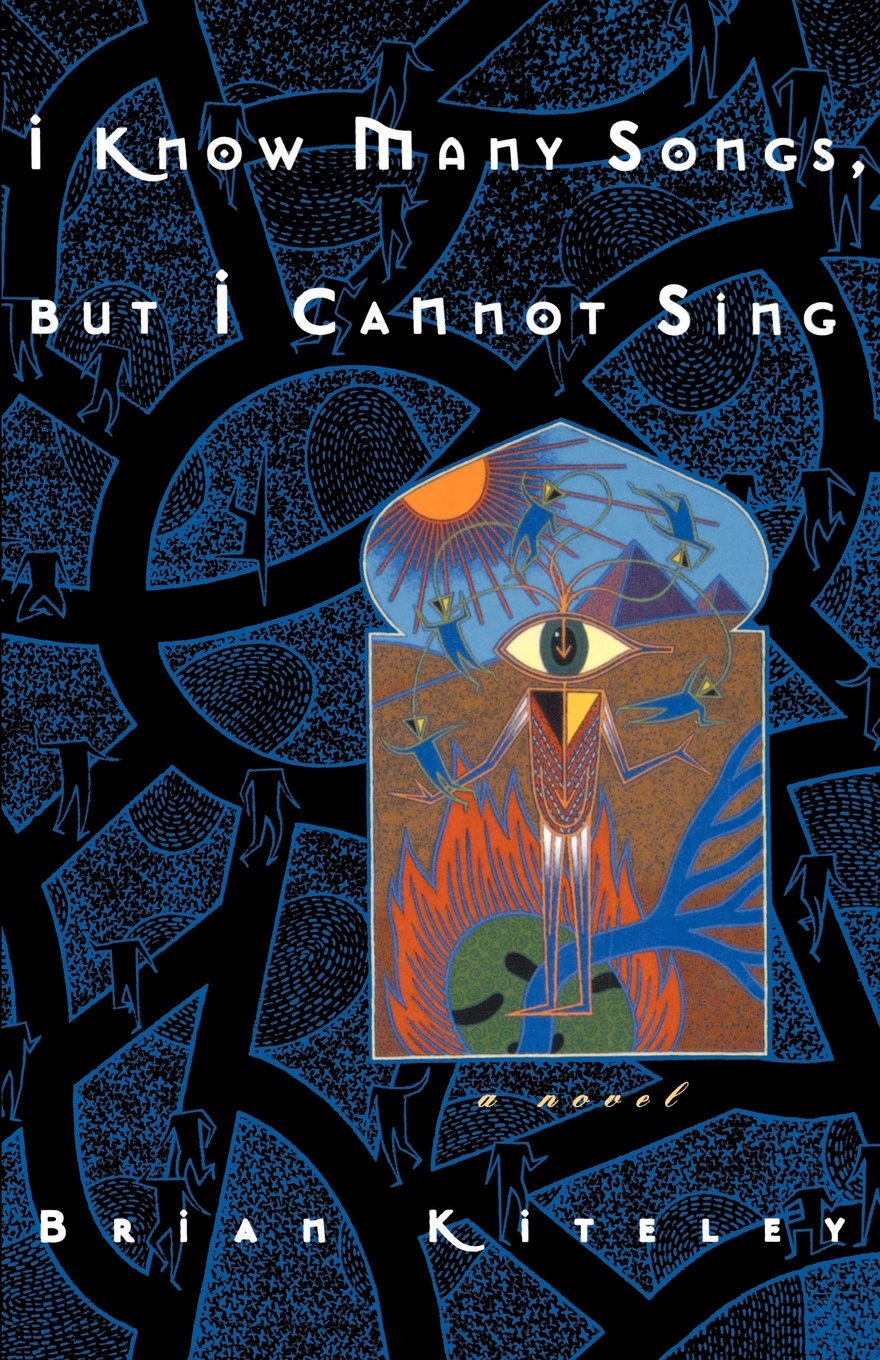
I Know Many Songs, But I Cannot Sing
A Novel

While exploring Cairo, Ib, an American, is taken up with by Armenian Gamal-Leon, who follows him by way of a practical joke during the Muslim Ramadan fast period. Humorous cultural misunderstandings ensue.

  • Print Books
  • Find your local bookstore (via IndieBound)
  • Powell's
  • Barnes & Noble
  • Alibris
  • Abe Books

Pagination

  • Previous page ‹‹
  • Page 83
  • Next page ››
Subscribe to M

Sitemap Menu

  • Foundation
    • Home
    • People
    • History
    • Contact
  • Literature
    • Whiting Award
    • Nonfiction Grant
    • Magazine Prizes
    • Discover Writing
  • Humanities
    • Preserving Heritage
    • High Schools
    • Past Programs


  • Accessibility Notice Accessibility Notice
  • PRIVACY & TERMS
  • © WHITING FOUNDATION
  •  
Site by PASTPRESENTFUTURE, with design by Language Arts