The Sacraments of Desire
Poems
Gregg's third book of poetry.
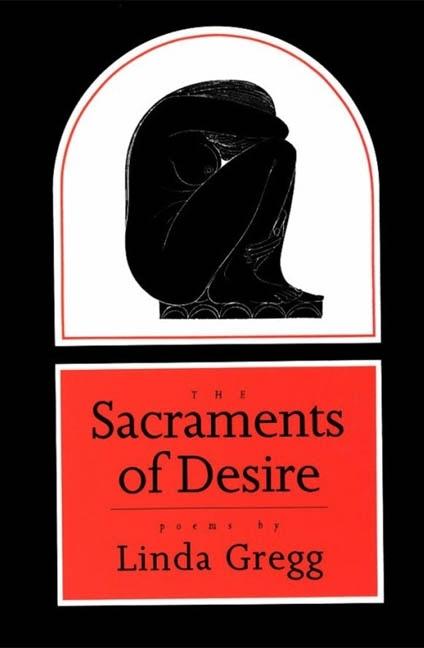
Gregg's third book of poetry.
A new and resplendent collection by Linda Gregg, whose poems “have the elegance of Greek statuary and the good-humored poise of haiku” (Poetry). This collection brings Gregg’s passion and intensity together with a new wisdom and vitality that is unmistakably original.

Chosen by the Lion is Linda Gregg's fourth collection, and her most eloquent, bespeaking a deeply personal reconciliation with the loss of love. Gregg is able to take common experience, to see it clearly, in all its mundane and ordinary complexity. But in her poetry, that experience is also explored in its affinity to the gods, to the ways of nature. The result is an experience that is firmly grounded in the ordinary, yet transformed spiritually.

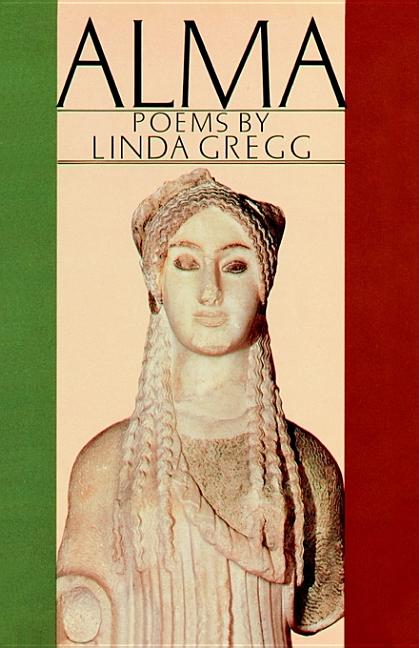
Gregg's second volume of poems.
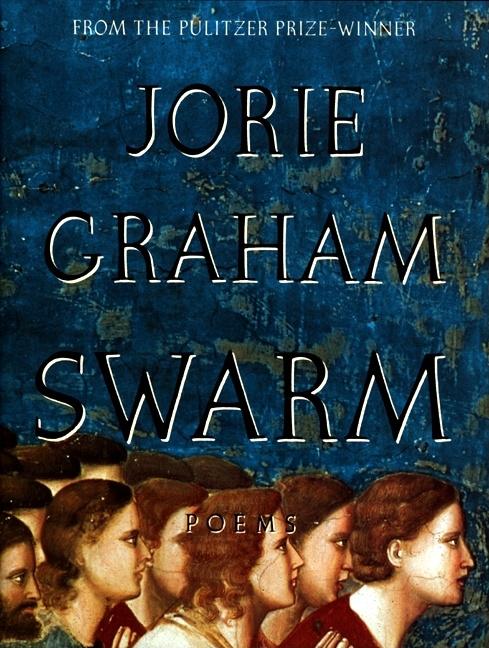
T S. Eliot, Elizabeth Bishop, John Ashbery—and Jorie Graham. The New Yorker places Ms. Graham in this distinguished line of poets, heralding the Pulitzer Prize winner as a profound voice in American poetry. Now, in her eighth collection, she further enhances her reputation with a book-length sequence of verse that is a stunning work of grandeur.
The New York Times has said that "Jorie Graham's poetry is among the most sensuously embodied and imaginative writing we have," and this new collection is a reminder of how startling, original, and deeply relevant her poetry is. In Sea Change, Graham brings us to the once-unimaginable threshold at which civilization as we know it becomes unsustainable. How might the human spirit persist, caught between its abiding love of beauty, its acknowledgment of continuing injury and damage done, and the realization that the existence of a "future" itself may no longer be assured? There is no better writer to confront such crucial matters than Jorie Graham. In addition to her recognized achievements as a poet of philosophical, aesthetic, and moral concerns, Graham has also been acknowledged as "our most formidable nature poet" (Publishers Weekly). As gorgeous and formally inventive as anything she has written, Sea Change is an essential work speaking out for our planet and the world we have known.
In this stunning sequence of poems, first published in 1991, Pulitzer Prize-winner Jorie Graham peels away at the "ever-tighter wrappings/of the layers of the/real" to expose the intimate interactions of our inner and outer lives. It is metaphysical poetry of the first order where questions of Being and Time fully inhabit the mundane world of nursing homes, cabarets, elevators, and insane asylums.
P L A C E begins with a poem dated 5 June 2009, located at St Laurent Sur Mer, better known by its code name Omaha Beach, one of the sites of the American landings in Normandy on 6 June 1944. It is the starting point for a book of poems written in the uneasy lull of a world moving towards an unknowable future. Jorie Graham explores the ways in which imagination, intuition and experience help us to navigate a life we will have no choice but to live. How does one think ethically as well as emotionally in such a world? How does one think of one's child—of having brought a child into this world? How does love continue? As we look back, and are compelled to try to see ahead, P L A C E calls us, in poems of great force and beauty, to inhabit and rejoice in a more responsive and responsible place in the world.
What does it mean to be fully present in a human life? How—in the face of the carnage of war, the no longer merely threatened destruction of the natural world, the faceless threat of spiritual oversimplification and reactive fear—does one retain one's capacity to be both present and responsive? And to what extent does our capacity to be present, to be fully ourselves, depend on our relationship to an other and our understanding of and engagement with otherness itself? With what forces does the sheer act of apprehending make us complicit? What powers lord over us and what do we, as a species, and as souls, lord over?
These are among the questions Jorie Graham, in her most personal and urgent collection to date, undertakes to explore, often from a vantage point geographically, as well as historically, other. Many of the poems take place along the coastline known as Omaha Beach in Normandy, and move between visions of that beach during the Allied invasion of Europe (whose code name was Operation Overlord) and that landscape of beaches, fields, and hedgerows as it is known to the speaker today. In every sense the work meditates on our new world, ghosted by, and threatened by, competing descriptions of the past, the future, and what it means to be, as individuals, and as a people, "free."

Jorie Graham's ninth collection of poems, Never, primarily addresses concern over our environment in crisis. One of the most challenging poets writing today, Graham is no easy read, but the rewards are well worth the effort. While thematically present, her concern is not exclusively the demise of natural resources and depletion of species, but the philosophical and perceptual difficulty in capturing and depicting a physical world that may be lost, or one that we humans have limited sight of and into.
As she notes in "The Taken-Down God": "We wish to not be erased from the / picture. We wish to picture the erasure. The human earth and its appearance. / The human and its disappearance." With a style that is fragmented and somewhat whirling—language dips and darts and asides are taken—Graham stays on point and presents an honest intellect at work, fumbling for an accurate understanding (or description) of the natural world, self-conscious about the limitations of language and perception.