India Becoming
A Portrait of Life in Modern India
Poetry. Literary Nonfiction. A meandering and dead-serious meditation challenging the centrality of Black Music to black poetry and black critical theory, Dear Angel of Death proposes disinvestment in the idea of the Music as the highest form of what blackness "is." This long essay includes many forms: philosophical divergence on the problem of folds for black life, a close reading of Nathaniel Mackey's neverending novel From a Broken Bottle Traces of Perfume Still Emanate, and an impassioned defense-cum-dismissal of contemporary hip hop's convergence with capitalism.
The third book in Tommy Pico’s Teebs trilogy, Junk is a breakup poem in couplets: ice floe and hot lava, a tribute to Janet Jackson and nacho cheese. In the static that follows the loss of a job or an apartment or a boyfriend, what can you grab onto for orientation? The narrator wonders what happens to the sense of self when the illusion of security has been stripped away. And for an indigenous person, how do these lost markers of identity echo larger cultural losses and erasures in a changing political landscape? In part taking its cue from A.R. Ammons’s Garbage, Teebs names this liminal space “Junk,” in the sense that a junk shop is full of old things waiting for their next use; different items that collectively become indistinct. But can there be a comfort outside the anxiety of utility? An appreciation of “being” for the sake of being? And will there be Chili Cheese Fritos?
IRL is a sweaty, summertime poem composed like a long text message, rooted in the epic tradition of A.R. Ammons, ancient Kumeyaay Bird Songs, and Beyoncé’s visual albums. It follows Teebs, a reservation-born, queer NDN weirdo, trying to figure out his impulses/desires/history in the midst of Brooklyn rooftops, privacy in the age of the Internet, street harassment, suicide, boys boys boys, literature, colonialism, religion, leaving one's 20s, and a love/hate relationship with English. He’s plagued by an indecision, unsure of which obsessions, attractions, and impulses are essentially his, and which are the result of Christian conversion, hetero-patriarchal/colonialist white supremacy, homophobia, Bacardi, gummy candy, and not getting laid.
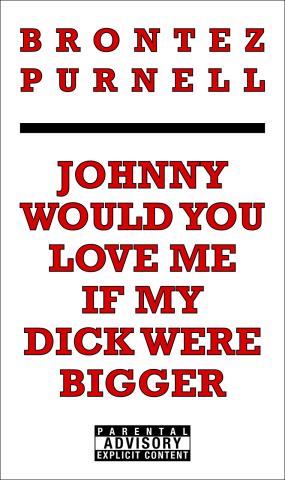
Johnny Would You Love Me If My Dick Were Bigger recounts the life of an artist and “old school homosexual” who bears a big resemblance to author Brontez Purnell. Our hero doesn’t trust the new breed of fags taking over San Francisco, though. They wear bicycle helmets, seat belts, and condoms. Meanwhile, he sabotages his relationships, hallucinating affection while cruising in late night parks, bath-houses, and other nooks and crannies of a newly-conservative, ruined city.
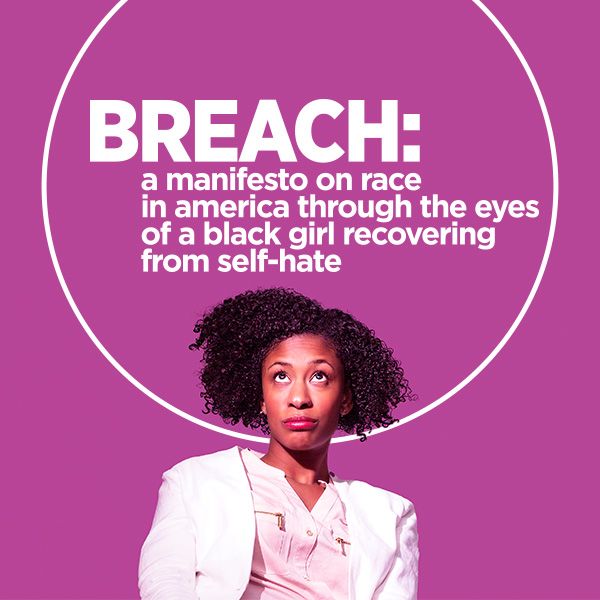
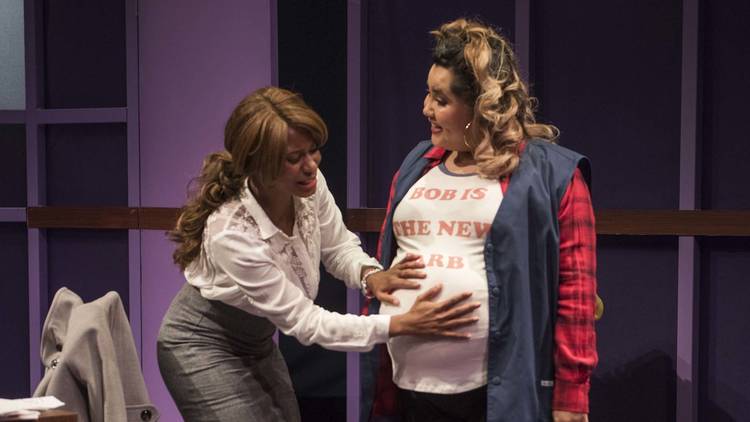
In Antoinette Nwandu’s “love letter to black women,” Margaret uproots her life, including her dead-end job and fizzling relationship, after finding out that she is unexpectedly expecting. She finds support and humor from her sassy and sharp Aunt Sylvia and her new friendship with Carolina, a pregnant cleaning lady at her office. BREACH is a smart comedy about friendship, motherhood, and family, and tackles the mother of all challenges: learning to love yourself.
Cast: Caren Blackmore, Linda Bright Clay, Karen Rodriguez, Al’Jaleel McGhee, and Keith D. Gallagher; Director: Lisa Portes
A Handbook of Disappointed Fate highlights a decade of Anne Boyer’s interrogative writing on poetry, death, love, lambs, and other impossible questions.