Now restored to print with a new Foreword by Philip Gourevitch and an Afterword by the author, this book is a frank, moving, and vivid account of contemporary life in West Africa. Stationed as a Peace Corps instructor in the village of Lavié (the name means "wait a little more") in tiny and underdeveloped Togo, Packer reveals his own schooling at the hands of an unforgettable array of townspeople--peasants, chiefs, charlatans, children, market women, cripples, crazies, and those who, having lost or given up much of their traditional identity and fastened their hopes on "development," find themselves trapped between the familiar repetitions of rural life and the chafing monotony of waiting for change.
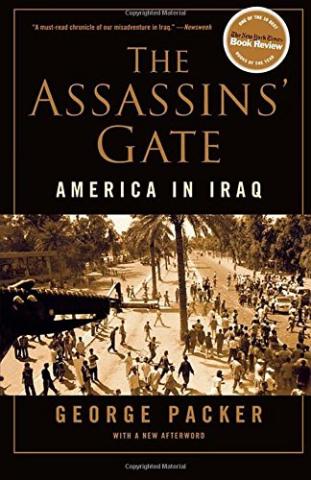
The Assassins' Gate: America in Iraq recounts how the United States set about changing the history of the Middle East and became ensnared in a guerrilla war in Iraq. It brings to life the people and ideas that created the Bush administration's war policy and led America to the Assassins' Gate―the main point of entry into the American zone in Baghdad.
The Assassins' Gate also describes the place of the war in American life: the ideological battles in Washington that led to chaos in Iraq, the ordeal of a fallen soldier 's family, and the political culture of a country too bitterly polarized to realize such a vast and morally complex undertaking. George Packer's best-selling first-person narrative combines the scope of an epic history with the depth and intimacy of a novel, creating a masterful account of America's most controversial foreign venture since Vietnam.
In this epic account of an extraordinary life lived during remarkable times, Jay Kirk follows the adventures of legendary explorer and taxidermist Carl Akeley, who revolutionized taxidermy and environmental conservation and created the famed African Hall at New York's Museum of Natural History. Akeley risked death time and again in the jungles of Africa as he stalked animals for his dioramas and hobnobbed with outsized personalities of the era, such as Theodore Roosevelt and P. T. Barnum. Kingdom Under Glass is "a rollicking biography…an epic adventure…[and] a beguiling novelistic portrait of a man and an era straining to hear the call of the wild" (Publishers Weekly).
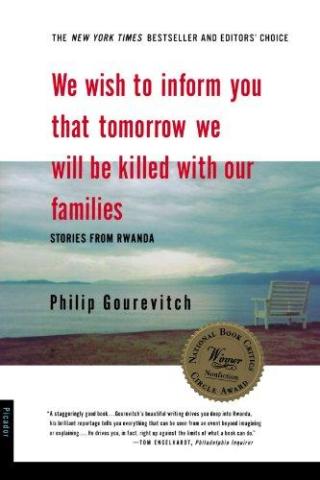
Philip Gourevitch’s debut book, winner of the National Book Critics Circle Award for Nonfiction, chronicles events in Rwanda and neighboring states since 1994, when the Rwandan government called on everyone in the Hutu majority to murder everyone in the Tutsi minority. Though the killing was low-tech--largely by machete--it was carried out at shocking speed: some 800,000 people were exterminated in a hundred days. A Tutsi pastor, in a letter to his church president, a Hutu, used the chilling phrase that gives Philip Gourevitch his title.
Through intimate portraits of Rwandans in all walks of life, he focuses on the psychological and political challenges of survival and on how the new leaders of postcolonial Africa went to war in the Congo when resurgent genocidal forces threatened to overrun central Africa. This moving contribution to the literature of witness tells us much about the struggle everywhere to forge sane, habitable political orders, and about the stubbornness of the human spirit in a world of extremity.
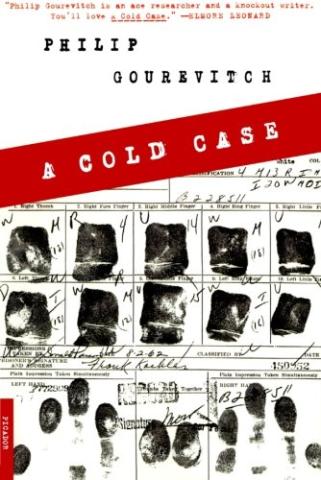
A masterfully written and gripping tale of a determined investigator who reopens an unresolved case of double homicide in New York nearly thirty years after the brutal event. Philip Gourevitch vividly evokes the almost vanished gangland of New York in the sixties, and carries us deep into the lives and minds, the passions and perplexities, of two extraordinary men who embody opposing but quintessentially American codes of being—the lawman Andy Rosenzweig and the outlaw Frankie Koehler. With A Cold Case, Gourevitch masterfully transforms a criminal investigation into a searching literary reckoning with the urges that drive one man to murder and another to hunt murderers.
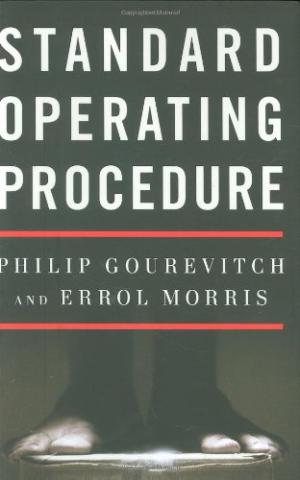
A relentlessly surprising and perceptive account of the front lines of the war on terror, Standard Operating Procedure is a war story that takes its place among the classics. Acclaimed author Philip Gourevitch presents the story behind a defining moment in the war, and a defining moment in our understanding of ourselves: the infamous Abu Ghraib photographs of prisoner abuse. Drawing on Academy Award-winning filmmaker Errol Morris’s astonishing interviews with the Americans who took and appeared in the pictures, Standard Operating Procedure stands to endure as essential reading long after the current war in Iraq passes from the headlines.
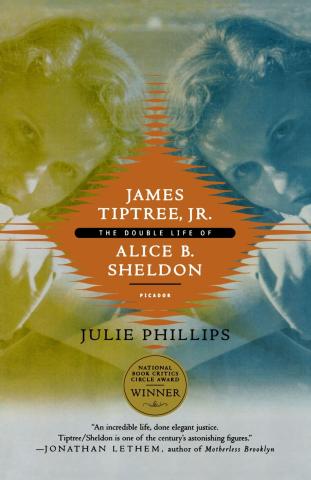
James Tiptree, Jr., burst onto the science fiction scene in the late 1960s with a series of hard-edged, provocative stories. He redefined the genre with such classics as Houston, Houston, Do You Read? and The Women Men Don't See. For nearly ten years he wrote and carried on intimate correspondences with other writers--Philip K. Dick, Harlan Ellison, and Ursula K. Le Guin, though none of them knew his true identity. Then the cover was blown on his alter ego: "he" was actually a sixty-one-year-old woman named Alice Bradley Sheldon. A feminist, she took a male name as a joke--and found the voice to write her stories.
Based on extensive research, exclusive interviews, and full access to Alice Sheldon's papers, Julie Phillips has penned a biography of a profoundly original writer and a woman far ahead of her time.
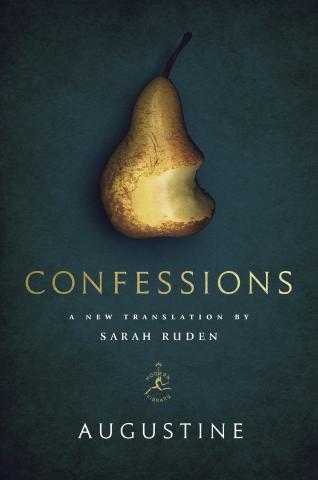
Sarah Ruden’s fresh, dynamic translation of Confessions brings us closer to Augustine’s intent than any previous version. It puts a glaring spotlight on the life of one individual to show how all lives have meaning that is universal and eternal.
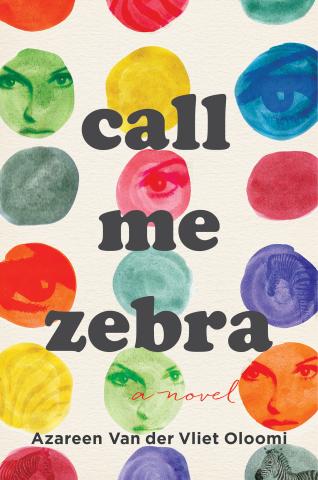
Zebra is the last in a line of anarchists, atheists, and autodidacts. When war came, her family didn’t fight; they took refuge in books. Now alone and in exile, Zebra leaves New York for Barcelona, retracing the journey she and her father made from Iran to the United States years ago.
Books are Zebra’s only companions—until she meets Ludo. Their connection is magnetic; their time together fraught. Zebra overwhelms him with her complex literary theories, her concern with death, and her obsession with history. He thinks she’s unhinged; she thinks he’s pedantic. Neither are wrong; neither can let the other go. They push and pull their way across the Mediterranean, wondering with each turn if their love, or lust, can free Zebra from her past.