WHITING WHITING WHITING WHITING WHITING
  • Foundation ▼ ▲
    • Home
    • People
    • History
    • Contact
  • Literature ▼ ▲
    • Whiting Award
      • About
      • Current Winners
      • Browse Winners
      • Search All Winners
      • Keynotes
    • Nonfiction Grant
      • About
      • Grantees
    • Magazine Prizes
      • About
      • Winners
    • Discover Writing
      • New Books
      • Chapbooks
      • Videos
      • Random Winner
  • Humanities ▼ ▲
    • Preserving Heritage
    • High Schools
    • Past Programs
      • About
      • PEP Fellows
      • PEP Seed Grantees
      • Dissertation Fellows
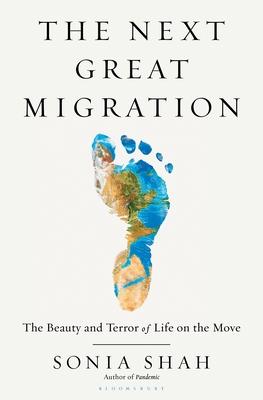
The Next Great Migration
The Beauty and Terror of Life on the Move

Far from being a disruptive behavior to be quelled at any cost, migration is an ancient and lifesaving response to environmental change, a biological imperative as necessary as breathing. Climate changes triggered the first human migrations out of Africa. Falling sea levels allowed our passage across the Bering Sea. Unhampered by barbed wire, migration allowed our ancestors to people the planet, catapulting us into the highest reaches of the Himalayan mountains and the most remote islands of the Pacific, creating and disseminating the biological, cultural, and social diversity that ecosystems and societies depend upon. In other words, migration is not the crisis--it is the solution. Conclusively tracking the history of misinformation from the 18th century through today's anti-immigration policies, The Next Great Migration makes the case for a future in which migration is not a source of fear, but of hope.
  • Print Books
  • Bookshop
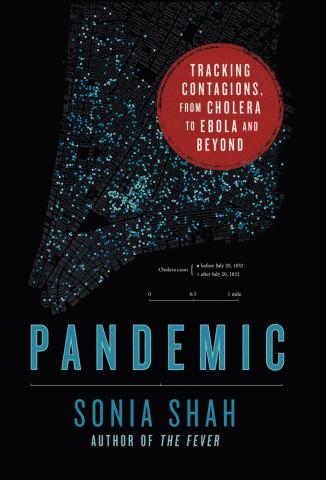
Pandemic
Tracking Contagions, from Cholera to Ebola and Beyond

In Pandemic: Tracking Contagions, from Cholera to Ebola and Beyond, Sonia Shah interweaves history, original reportage, and personal narrative to explore the origins of epidemics, drawing parallels between cholera―one of history’s most deadly and disruptive pandemic-causing pathogens―and the new diseases that stalk humankind today. She tracks each stage of cholera’s dramatic journey, from its emergence in the South Asian hinterlands as a harmless microbe to its rapid dispersal across the nineteenth-century world, all the way to its latest beachhead in Haiti. Along the way she reports on the pathogens now following in cholera’s footsteps, from the MRSA bacterium that besieges her own family to the never-before-seen killers coming out of China’s wet markets, the surgical wards of New Delhi, and the suburban backyards of the East Coast.

  • Print Books
  • Amazon
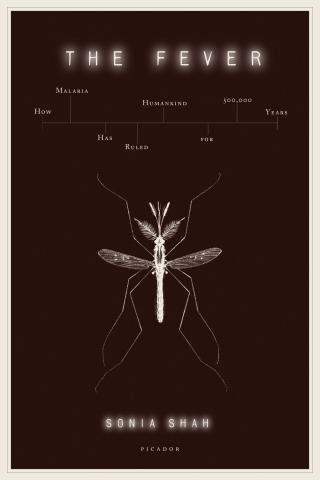
The Fever
How Malaria Has Ruled Humankind for 500,000 Years

In The Fever, journalist Sonia Shah sets out to answer those questions, delivering a timely, inquisitive chronicle of the illness and its influence on human lives. Through the centuries, she finds, we've invested our hopes in a panoply of drugs and technologies, and invariably those hopes have been dashed. From the settling of the New World to the construction of the Panama Canal, through wartimes and the advances of the Industrial Revolution, Shah tracks malaria's jagged ascent and the tragedies in its wake, revealing a parasite every bit as persistent as the insects that carry it.  With distinguished prose and original reporting from Panama, Malawi, Cameroon, India, and elsewhere, The Fever captures the curiously fascinating, devastating history of this long-standing thorn in the side of humanity.

  • Print Books
  • Amazon
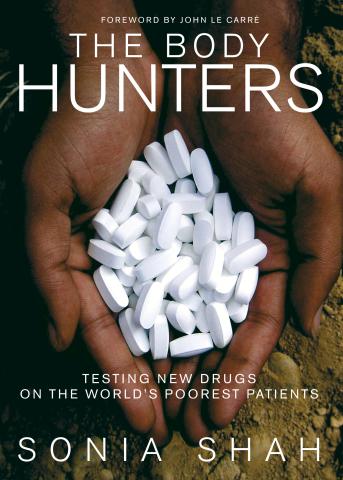
The Body Hunters
Testing New Drugs on the World’s Poorest Patients

Hailed by John le Carré as "an act of courage on the part of its author" and singled out for praise by the leading medical journals in the United States and the United Kingdom, The Body Hunters uncovers the real-life story behind le Carré's acclaimed novel The Constant Gardener and the feature film based on it. Drawing on years of original research and reporting in Africa and Asia, Shah examines how the multinational pharmaceutical industry, in its quest to develop lucrative drugs, has begun exporting its clinical research trials to the developing world, where ethical oversight is minimal and desperate patients abound. As the New England Journal of Medicine notes, "it is critical that those engaged in drug development, clinical research and its oversight, research ethics, and policy know about these stories," which tell of an impossible choice being faced by many of the world's poorest patients―be experimented upon or die for lack of medicine.

  • Print Books
  • Bookshop
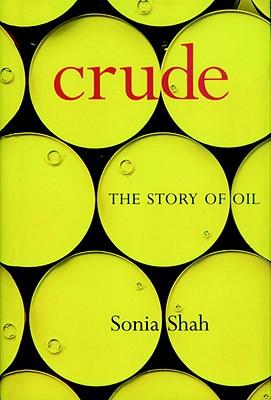
Crude
The Story of Oil

Crude is the unexpurgated story of oil, from the circumstances of its birth millions of years ago to the spectacle of its rise as the indispensable ingredient of modern life. In addition to fueling our SUVs and illuminating our cities, crude oil and its byproducts fertilize our produce, pave our roads, and make plastic possible. “Newborn babies,” observes author Sonia Shah, “slide from their mothers into petro-plastic-gloved hands, are swaddled in petro-polyester blankets, and are hurried off to be warmed by oil-burning heaters.” The modern world is drenched in oil; Crude tells how it came to be. A great human drama emerges, of discovery and innovation, risk, the promise of riches, and the power of greed.

  • Print Books
  • Bookshop
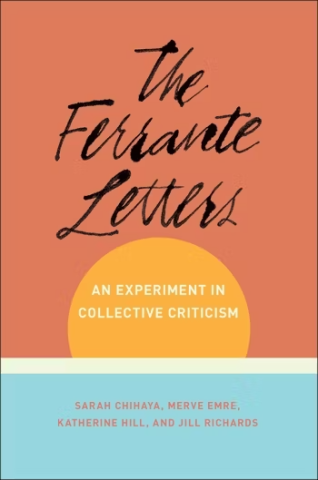
The Ferrante Letters
An Experiment in Collective Criticism

In a series of intertwined, original, and daring readings of Ferrante’s work and her fictional world, Sarah Chihaya, Merve Emre, Katherine Hill, and Juno Jill Richards strike a tone at once critical and personal, achieving a way of talking about literature that falls between the seminar and the book club. Their letters make visible the slow, fractured, and creative accretion of ideas that underwrites all literary criticism and also illuminate the authors’ lives outside the academy. The Ferrante Letters offers an improvisational, collaborative, and cumulative model for reading and writing with others, proposing a new method the authors call collective criticism. A book for fans of Ferrante and for literary scholars seeking fresh modes of intellectual exchange, The Ferrante Letters offers incisive criticism, insouciant riffs, and the pleasure of giving oneself over to an extended conversation about fiction with friends.

  • Print Books
  • Bookshop
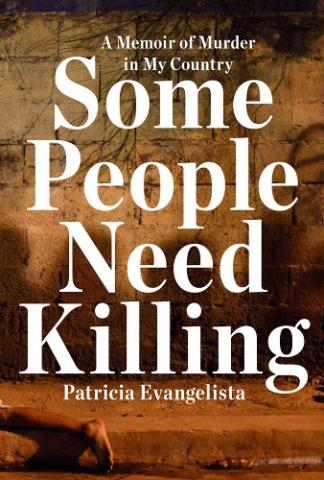
Some People Need Killing
A Memoir of Murder in My Country

For six years, Evangelista had the distinctive beat of chronicling the killings carried out by police and vigilantes in the name of Duterte’s war on drugs – a war that has led to the slaughter of thousands – immersing herself in the world of killers and survivors and capturing the atmosphere of fear created when an elected president decides that some lives are worth less than others. Some People Need Killing is Evangelista’s meticulously reported and deeply human chronicle of the Philippines’ drug war and Duterte’s assault on the country’s struggling democracy. 

  • Print Books
  • Bookshop
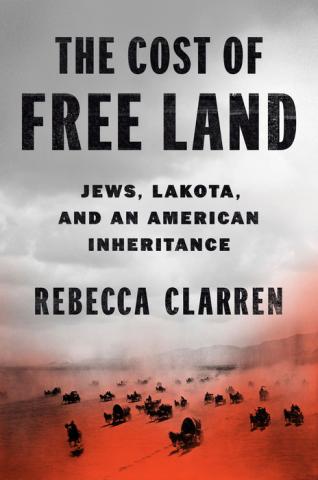
The Cost of Free Land
Jews, Lakota, and an American Inheritance

In The Cost of Free Land, Clarren melds investigative reporting with personal family history to reveal the intertwined stories of her family and the Lakota, and the devastating cycle of loss of Indigenous land, culture, and resources that continues today. With deep empathy and clarity of purpose, Clarren grapples with the personal and national consequences of this legacy of violence and dispossession. What does it mean to survive oppression only to perpetuate and benefit from the oppression of others?

  • Print Books
  • Bookshop
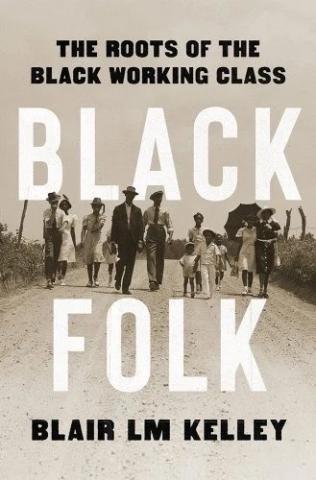
Black Folk
The Roots of the Black Working Class

In Black Folk, historian Blair LM Kelley restores the Black working class to the center of the American story. Spanning two hundred years—from one of Kelley’s earliest known ancestors, an enslaved blacksmith, to the essential workers of the Covid-19 pandemic—Black Folk highlights the lives of the Black working class as a force in the late nineteenth and early twentieth centuries.

  • Print Books
  • Bookshop
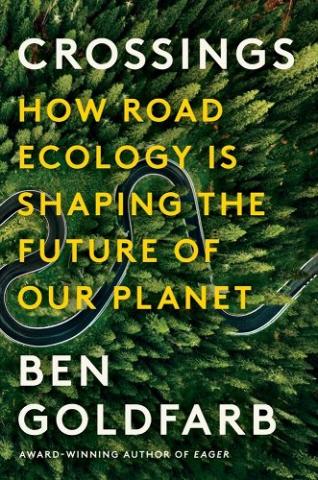
Crossings
How Road Ecology Is Shaping the Future of Our Planet

In Crossings, Ben Goldfarb delves into the new science of road ecology to explore how roads have altered the natural world, from fragmenting wildlife populations and disrupting migration to bending the arc of evolution itself. But road ecologists are seeking innovative solutions: Goldfarb meets with conservationists building bridges for mountain lions and tunnels for toads, engineers deconstructing logging roads, and citizens undoing the havoc highways have wreaked upon cities, all working toward a better future for all living beings.

  • Print Books
  • Bookshop

Pagination

  • Previous page ‹‹
  • Page 8
  • Next page ››
Subscribe to Y

Sitemap Menu

  • Foundation
    • Home
    • People
    • History
    • Contact
  • Literature
    • Whiting Award
    • Nonfiction Grant
    • Magazine Prizes
    • Discover Writing
  • Humanities
    • Preserving Heritage
    • High Schools
    • Past Programs


  • Accessibility Notice Accessibility Notice
  • PRIVACY & TERMS
  • © WHITING FOUNDATION
  •  
Site by PASTPRESENTFUTURE, with design by Language Arts