Grace Paley: A Life
The project:
Grace Paley: A Life is a biography of Grace Paley, a critical figure in mid- and late-century American and Jewish-American literature, in the women’s liberation movement, in radical Left politics, and in the intersections between these streams. “There’s a case to be made that Grace Paley was first and foremost an antinuclear, antiwar, antiracist feminist activist who managed, in her spare time, to become one of the truly original voices of American fiction in the twentieth century,” wrote New Yorker critic Alexandra Schwartz. Drawing on unpublished archival material, on new interviews, and on the latest scholarship, this biography is the broadest investigation to date of Paley’s life and work.
From Grace Paley:
In early 1955, Grace Paley began to show three stories—her only three stories—to the women of her West Village neighborhood. One of her friends, Elizabeth Tibbetts, had recently divorced her husband, Ken McCormick, who just happened to be the Editor-in-Chief and, since 1942, an Executive Vice President of Doubleday & Company. McCormick, after a meteoric rise at Doubleday in the 1930s, would eventually be regarded as a legend in the field, mostly for editing the presidential memoirs of Truman, Eisenhower, and Nixon. In the 1950s, he was already widely respected as one of the architects of the trade paperback, and for acquiring authors like Wallace Stegner, Daphne du Maurier and W. Somerset Maugham, and soon thereafter, Ishmael Reed and Alex Haley.
Despite his position, McCormick, in 1955, didn’t present himself to Paley as anything other than the distracted and often exhausted ex-husband of one of her friends, and the father to two children who were friends of her children. Similarly, McCormick viewed Paley as the mother of Nora and Danny, and had no inkling of her literary ambitions. While they approached each other through the significantly wide power dynamic that separated a male publishing executive from a completely unknown female writer, their relationship within their shared social sphere in the Village was somewhat more equal. If the playing field was hardly level, McCormick nonetheless appeared to Paley, and others in her circle, as less than authoritative when his ex-wife would pointedly criticize him in front of the group. In order to keep the score even between herself and her powerful ex-husband, Tibbetts “liked to give him hard tasks,” as Paley approvingly described it.
In a scene reminiscent of a Paley fiction, Tibbetts, one afternoon, grew exasperated with McCormick and decided to publicly assign him yet another hard task. McCormick had arrived too early to collect his children from Paley’s, to take them back to his apartment for the evening. Tibbetts just happened to be there, too, visiting with Paley, and she beheld the scene of her ex-husband standing in the doorway, timidly asking to remove his children early—much to the children’s collective consternation. Irritated by her husband’s self-interested request to end the playdate early, Tibbetts shouted out another idea. “Well since you’re here,” she told him, in front of everyone, “why don’t you finally read Grace’s stories?”
Tibbetts herself had loved the stories she’d read, and had immediately mentioned them to her ex-husband, for his professional opinion. McCormick, however, had delayed. But now he found himself standing in front of the skeptical and amused eyes of his ex-wife’s friends, and a group of children that included both his own and Paley’s. He admitted that he could very well take a look at the stories. It was a study of mid-1950s power dynamics, in which a person like McCormick might be held somewhat accountable within a powerful circle of women, and in which those women, in solidarity, could advocate for each other.
From the opening lines of “Goodbye and Good Luck,” McCormick realized that he had, from social interactions alone, only dimly perceived Paley’s talent. “I would never have guessed in a thousand years that this woman had such an ear for dialogue or this facility for short story telling,” McCormick wrote in a Doubleday internal memo. “There’s a curious kind of blatant honesty in these stories that reflects the sturdy soul of Grace Paley who, with a husband and two children, has had the thinnest sort of time for years. How she has been able to get enough time to write these stories is beyond me.” What had been an awkward favor for his ex became a very real literary find. Shortly after writing this memo, McCormick excitedly approached Paley with an offer. “Write me seven more of these,” he said to Paley, “and we’ll make a book of it.”
The grant jury: Avi Steinberg’s Grace Paley situates the celebrated Jewish-American author within her literary and political context, spotlighting Paley’s roles in feminist activism, antiwar efforts, and anti-imperialist advocacy. This biography dissects the patriarchal and anti-Semitic currents influencing mid-20th-century literary culture, sifting through the past to harvest insights on the present. Steinberg effectively reintroduces Paley in vivid, engaging language, providing a close, relatable perspective on her life and times. His meticulous analysis of the social and cultural constraints on women and Jewish émigrés enriches our understanding of her world, making this a necessary work.
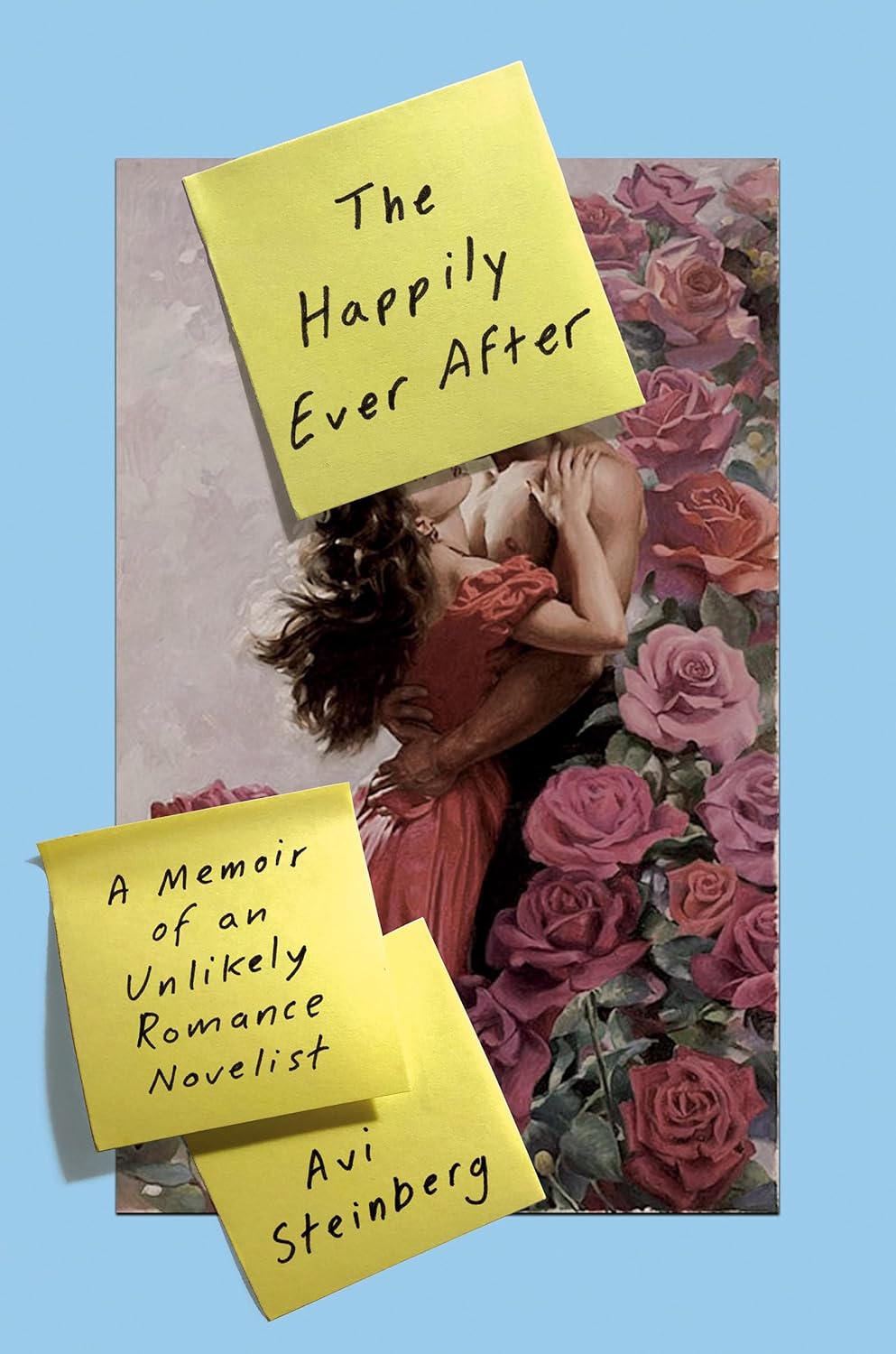
Avi Steinberg is the author of three books of creative nonfiction published by Knopf Doubleday: Running the Books (2010), The Lost Book of Mormon (2014), and The Happily Ever After (2020). His books have been translated into five languages and cited as Best of the Year by the SF Chronicle and New Yorker, as a “Notable Paperback” by the New York Times, and longlisted for the Thurber Prize for American Humor. He has been a features writer for the New York Times Magazine, and contributor to the New Yorker’s Culture Desk. His essays have appeared in the Guardian, Salon, The Paris Review, and n+1.
Selected Works