How to See the Sky: The Newest Science, the Oldest Questions, and Why They Matter for Life
The project:
How to See the Sky showcases the sky in ways never before possible, teaches us the skills to interpret it for ourselves, and reveals how, through this process of rediscovery, we can better the world and deepen our personal experience. Brimming with fascinating science, history, culture, and religion, How to See the Sky inspires us to look up from our phones and reorient our lives.
From the work of Paul Bogard:
The most beautiful starry night I have ever seen was more than twenty years ago, when I was backpacking through Europe as an eighteen-year-old high school graduate. I had traveled south from Spain into Morocco and from there south to the Atlas Mountains, at the edge of the Sahara desert, to a place that when I look on a map I can no longer find, where nomadic tribes came in from the desert to barter and trade. One night, in a youth hostel that was more like a stable, I woke and walked out into a snowstorm. But it wasn’t the snow I was used to in Minnesota, or anywhere else I had been. Standing bare chest to cool night, wearing flip- flops and shorts, I let a storm of stars swirl around me. I remember no light pollution—heck, I remember no lights. But I remember the light around me—the sense of being lit by starlight—and that I could see the ground to which the stars seemed to be floating down. I saw the sky that night in three dimensions—the sky had depth, some stars seemingly close and some much farther away, the Milky Way so well defined it had what astronomers call “structure,” that sense of its twisting depths. I remember stars from one horizon to the other, stars stranger in their numbers than the wooden cart full of severed goat heads I had seen that morning, or the poverty of the rag-clad children that afternoon, making a night sky so plush it still seems like a dream.
So much was right about that night. It was a time of my life when I was every day experiencing something new (food, people, places). I felt open to everything, as though I was made of clay, and the world was imprinting upon me its breathtaking beauty (and terrible reality). Standing nearly naked under that Moroccan sky, skin against the air, the dark, the stars, the night pressed its impression, and my lifelong connection was sealed.
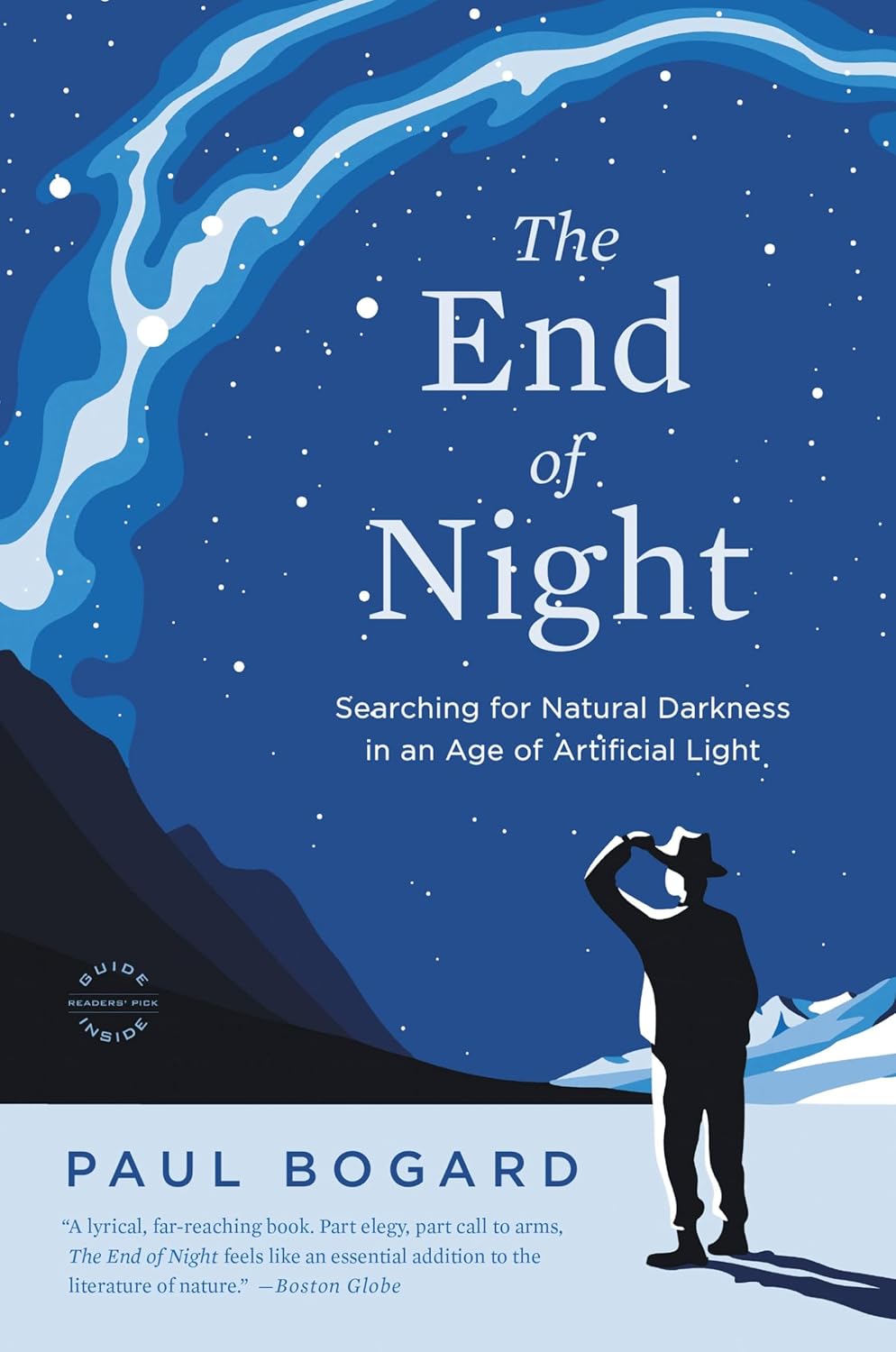
From Paul Bogard's previous book, The End of Night: Searching for Natural Darkness in an Age of Artificial Light.
The grant jury: Through the lens of recent advances in atmospheric science, meteorology, and satellite technology, Paul Bogard’s How to See the Sky reframes our understanding, just as Susan Casey’s The Underworld did for the ocean. Using this new “golden age of observation,” Bogard poetically transforms what we might once have considered an aerial emptiness into a vast ecosystem teeming with life and mystery. Grasping the sky as habitat is a leap for most of us, and Bogard helps us make it. He captures the wonder, significance, and precariousness of this historic moment.
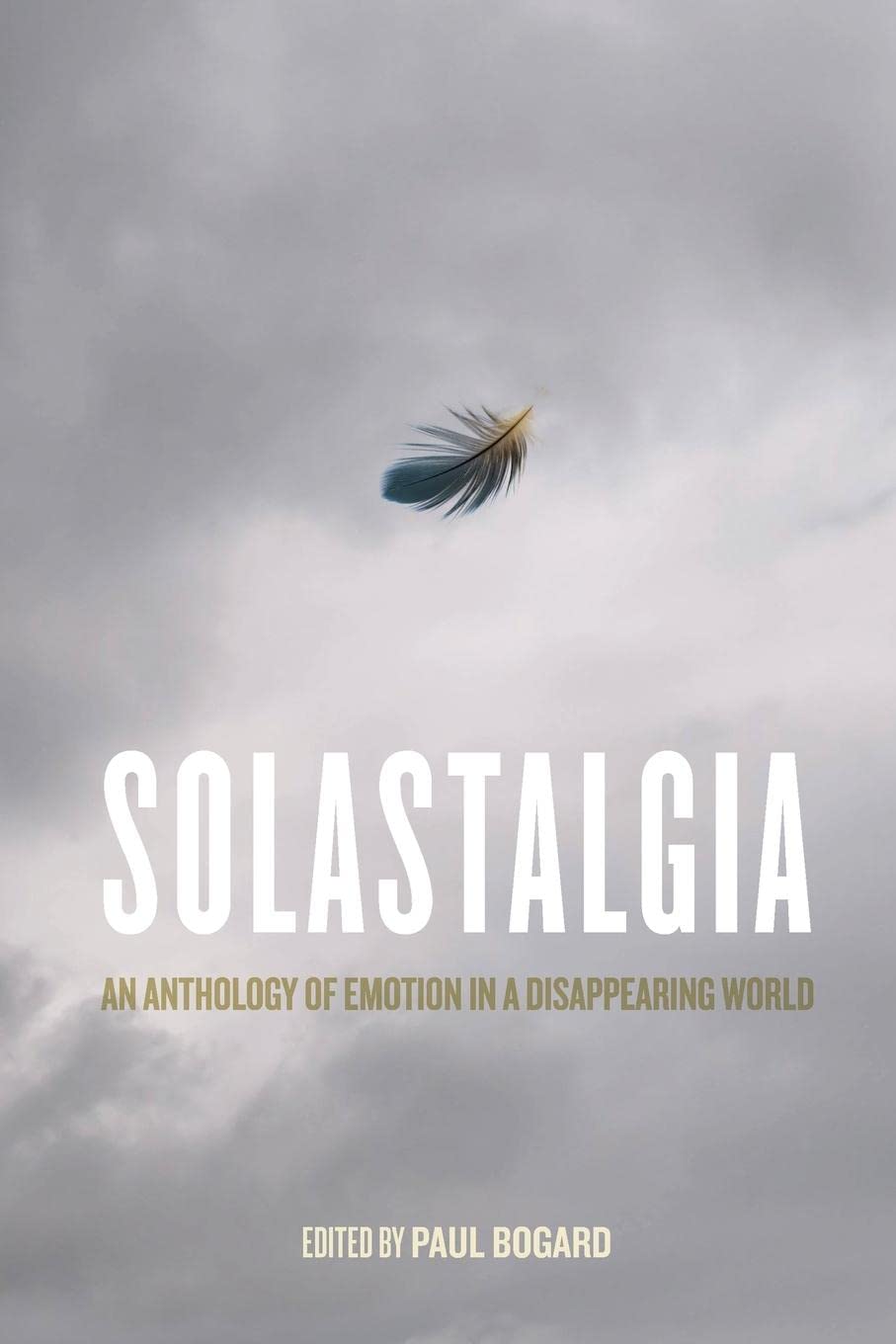
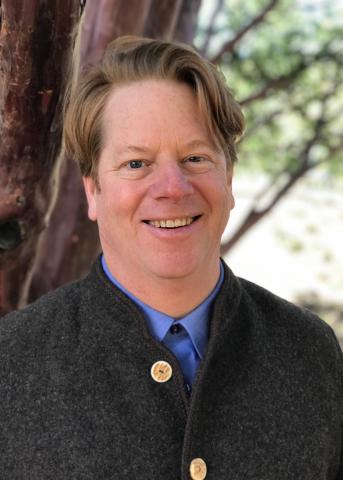
Paul Bogard is the author of The End of Night: Searching for Natural Darkness in an Age of Artificial Light, a finalist for the PEN/E. O. Wilson Literary Science Writing Award. His most recent works include Solastalgia: An Anthology of Emotion in a Disappearing World and the children’s book What if Night?. Paul is an associate professor of English at Hamline University in Saint Paul, Minnesota, where he teaches environmental literature and writing.
Selected Works