WHITING WHITING WHITING WHITING WHITING
  • Foundation ▼ ▲
    • Home
    • People
    • History
    • Contact
  • Literature ▼ ▲
    • Whiting Award
      • About
      • Current Winners
      • Browse Winners
      • Search All Winners
      • Keynotes
    • Nonfiction Grant
      • About
      • Grantees
    • Magazine Prizes
      • About
      • Winners
    • Discover Writing
      • New Books
      • Chapbooks
      • Videos
      • Random Winner
  • Humanities ▼ ▲
    • Preserving Heritage
    • High Schools
    • Past Programs
      • About
      • PEP Fellows
      • PEP Seed Grantees
      • Dissertation Fellows
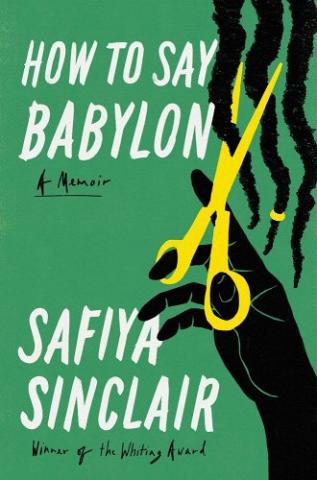
How to Say Babylon

Throughout her childhood, Safiya Sinclair’s father, a volatile reggae musician and militant adherent to a strict sect of Rastafari, became obsessed with her purity, in particular, with the threat of what Rastas call Babylon, the immoral and corrupting influences of the Western world outside their home. He worried that womanhood would make Safiya and her sisters morally weak and impure, and believed a woman’s highest virtue was her obedience. In an effort to keep Babylon outside the gate, he forbade almost everything. As Safiya watched her mother struggle voicelessly for years under the rigidity of her father’s beliefs, she increasingly used her education as a sharp tool with which to find her voice and break free. As Safiya’s voice grows, poetically, a collision course is set between them.

  • Print Books
  • Bookshop
On Czeslaw Milosz
Visions from the Other Europe

Czesław Miłosz (1911–2004) was a giant of twentieth-century literature, not least because he lived through and wrote about many of the most extreme events of that extreme century, from the world wars and the Holocaust to the Cold War. Over a seven-decade career, he produced an important body of poetry, fiction, and nonfiction, including classics such as The Captive Mind, a reflection on the hypnotic power of ideology, and Native Realm, a memoir. In this book, Eva Hoffman, like Miłosz a Polish-born writer who immigrated to the West, presents an eloquent personal portrait of the life and work of her illustrious fellow exile.

  • Print Books
  • Bookshop
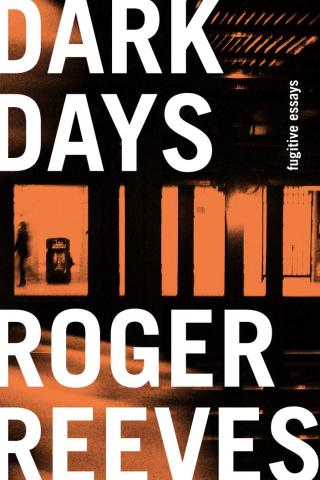
Dark Days
Fugitive Essays

In these essays, Reeves highlights a chapter in Toni Morrison’s Beloved to locate common purpose between Black and Indigenous peoples; he visits the realities of enslaved people on McLeod Plantation, where some of the descendants of those formerly enslaved lived into the 1990s; and he explores his own family history, his learning to read closely through the Pentecostal church tradition, and his passing on of reading as a pleasure, freedom, and solace to his daughter, who is frightened the police will gun them down. Together, these groundbreaking essays build a profound vision for how to see and experience the world in our present moment, and how to strive toward an alternative existence in intentional community underground.

  • Print Books
  • Bookshop
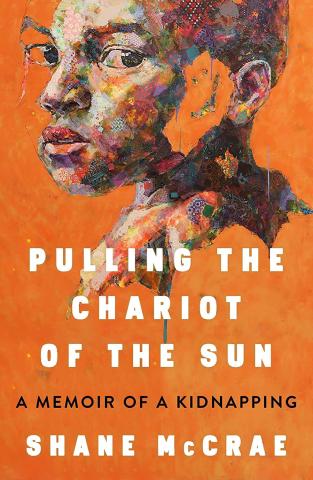
Pulling the Chariot of the Sun
A Memoir of a Kidnapping

When Shane McCrae was three years old, his grandparents kidnapped him and took him to suburban Texas. His mom was white and his dad was Black, and to hide his Blackness from him, his maternal grandparents stole him from his father. In the years that followed, they manipulated and controlled him, refusing to acknowledge his heritage. For their own safety and to ensure the kidnapping remained a success, Shane’s grandparents had to make sure that he never knew the full story, so he was raised to participate in his own disappearance. Despite this, Shane begins to reconstruct his own story and to forge his own identity. Gradually, the truth unveils itself, and with the truth, comes a path to reuniting with his father and finding his own place in the world.

  • Print Books
  • Bookshop
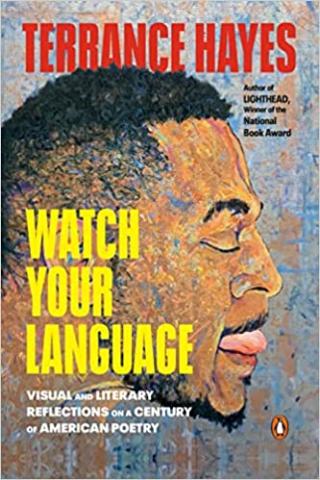
Watch Your Language

Canonized, overlooked, and forgotten African American poets star in Terrance Hayes's brilliant contemplations of personal, canonical, and allegorical literary development. Illustrated micro-essays, graphic book reviews, biographical prose poems, and nonfiction sketches make reading an imaginative and critical act of watching your language. Hayes has made a kind of poetic guidebook with more questions than answers. "If you don't see suffering's potential as art, will it remain suffering?" he asks in one of the lively mock poetry exam questions of this musing, mercurial collection. Hayes's astonishing drawings and essays literally and figuratively map the acclaimed poet's routes, roots, and wanderings through the landscape of contemporary poetry.

  • Print Books
  • Bookshop
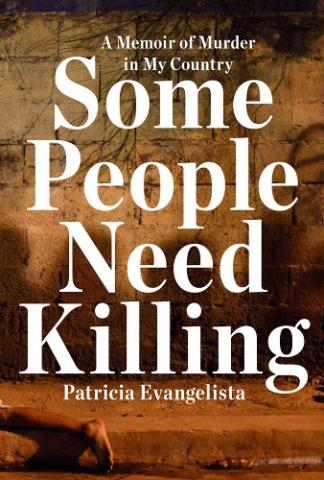
Some People Need Killing
A Memoir of Murder in My Country

For six years, Evangelista had the distinctive beat of chronicling the killings carried out by police and vigilantes in the name of Duterte’s war on drugs – a war that has led to the slaughter of thousands – immersing herself in the world of killers and survivors and capturing the atmosphere of fear created when an elected president decides that some lives are worth less than others. Some People Need Killing is Evangelista’s meticulously reported and deeply human chronicle of the Philippines’ drug war and Duterte’s assault on the country’s struggling democracy. 

  • Print Books
  • Bookshop
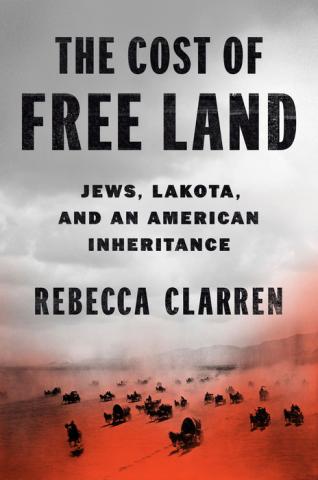
The Cost of Free Land
Jews, Lakota, and an American Inheritance

In The Cost of Free Land, Clarren melds investigative reporting with personal family history to reveal the intertwined stories of her family and the Lakota, and the devastating cycle of loss of Indigenous land, culture, and resources that continues today. With deep empathy and clarity of purpose, Clarren grapples with the personal and national consequences of this legacy of violence and dispossession. What does it mean to survive oppression only to perpetuate and benefit from the oppression of others?

  • Print Books
  • Bookshop
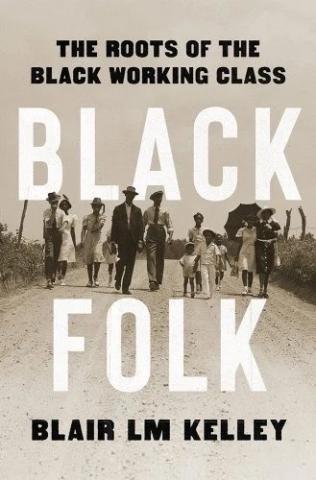
Black Folk
The Roots of the Black Working Class

In Black Folk, historian Blair LM Kelley restores the Black working class to the center of the American story. Spanning two hundred years—from one of Kelley’s earliest known ancestors, an enslaved blacksmith, to the essential workers of the Covid-19 pandemic—Black Folk highlights the lives of the Black working class as a force in the late nineteenth and early twentieth centuries.

  • Print Books
  • Bookshop
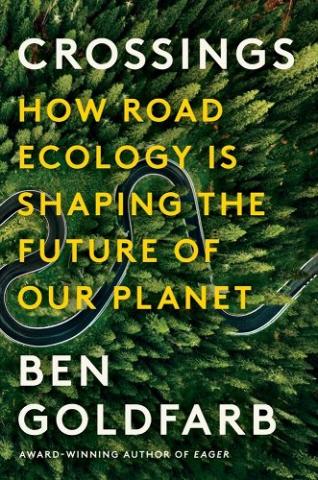
Crossings
How Road Ecology Is Shaping the Future of Our Planet

In Crossings, Ben Goldfarb delves into the new science of road ecology to explore how roads have altered the natural world, from fragmenting wildlife populations and disrupting migration to bending the arc of evolution itself. But road ecologists are seeking innovative solutions: Goldfarb meets with conservationists building bridges for mountain lions and tunnels for toads, engineers deconstructing logging roads, and citizens undoing the havoc highways have wreaked upon cities, all working toward a better future for all living beings.

  • Print Books
  • Bookshop
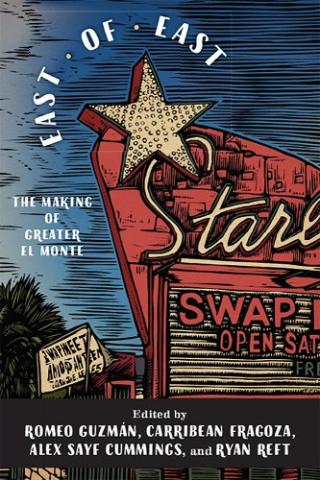
East of East
The Making of Greater El Monte

East of East: The Making of Greater El Monte, is an edited collection of thirty-one essays that trace the experience of a California community over three centuries, from eighteenth-century Spanish colonization to twenty-first century globalization. Employing traditional historical scholarship, oral history, creative nonfiction and original art, the book provides a radical new history of El Monte and South El Monte, showing how interdisciplinary and community-engaged scholarship can break new ground in public history. East of East tells stories that have been excluded from dominant historical narratives--stories that long survived only in the popular memory of residents, as well as narratives that have been almost completely buried and all but forgotten. Its cast of characters includes white vigilantes, Mexican anarchists, Japanese farmers, labor organizers, civil rights pioneers, and punk rockers, as well as the ordinary and unnamed youth who generated a vibrant local culture at dances and dive bars.

  • Print Books
  • Find your local bookstore (via IndieBound)
  • Bookshop

Pagination

  • Previous page ‹‹
  • Page 5
  • Next page ››
Subscribe to Nonfiction

Sitemap Menu

  • Foundation
    • Home
    • People
    • History
    • Contact
  • Literature
    • Whiting Award
    • Nonfiction Grant
    • Magazine Prizes
    • Discover Writing
  • Humanities
    • Preserving Heritage
    • High Schools
    • Past Programs


  • Accessibility Notice Accessibility Notice
  • PRIVACY & TERMS
  • © WHITING FOUNDATION
  •  
Site by PASTPRESENTFUTURE, with design by Language Arts