Acts of Engagement
Writings on Art, Criticism, and Institutions, 1993–2002
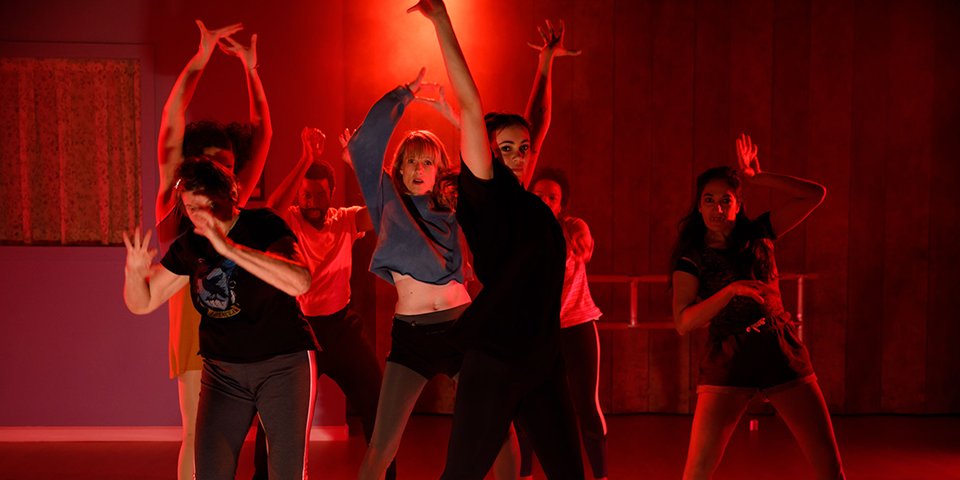
Somewhere in America, an army of pre-teen competitive dancers plots to take over the world. And if their new routine is good enough, they’ll claw their way to the top at the Boogie Down Grand Prix in Tampa Bay. But in Clare Barron’s raucous pageant of ambition and ferocity, these young dancers have more than choreography on their minds, because every plié and jeté is a step toward finding themselves, and a fight to unleash their power.
Cast: Purva Bedi, Eboni Booth, Camila Canó-Flaviá, Layla Khosh, Ellen Maddow, Christina Rouner, Thomas Jay Ryan, Lucy Taylor, and Ikechukwu Ufomadu; Director: Lee Sunday Evans
Cast: Brendan Cowell, Nancy Crane, Karla Crome, Miranda Foster, Sarah Hadland, Kayla Meikle, Irfan Shamji, Manjinder Virk, and Ria Zmitrowicz; Director: Bijan Sheibani
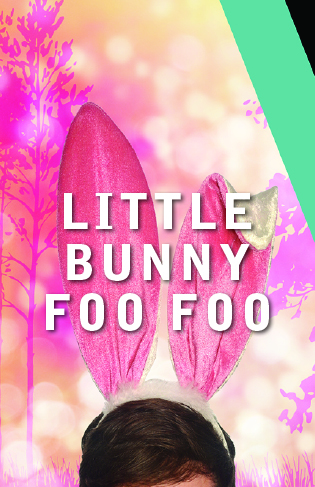
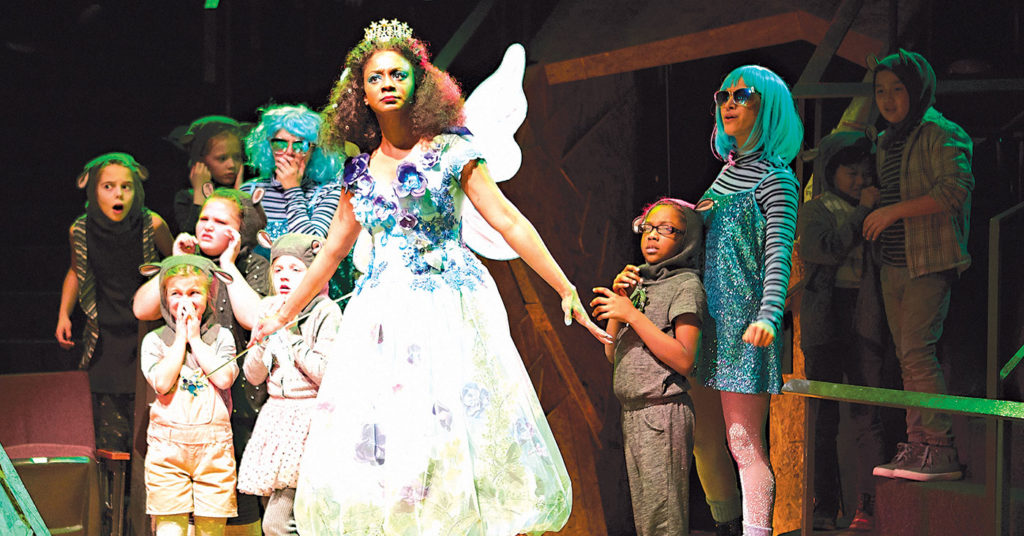
Butterflies are fluttering and breezes are blowing in the enchanted forest, and one saucy bunny just can’t stop boppin’ all the field mice on the head. Will the Blue Fairy be forced to curb his mischief and turn him into a Goon? In this fun-filled play with music, playwright Anne Washburn and Tony-nominated composer Dave Malloy—joined by a sensible Skink, a carnivorous Catmonster, and a band of Gentlemen Toads—spin an effervescently delightful entertainment.
Director: Les Waters
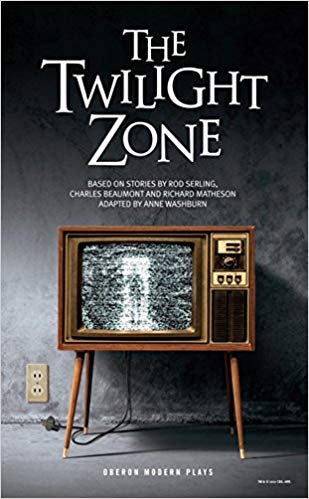
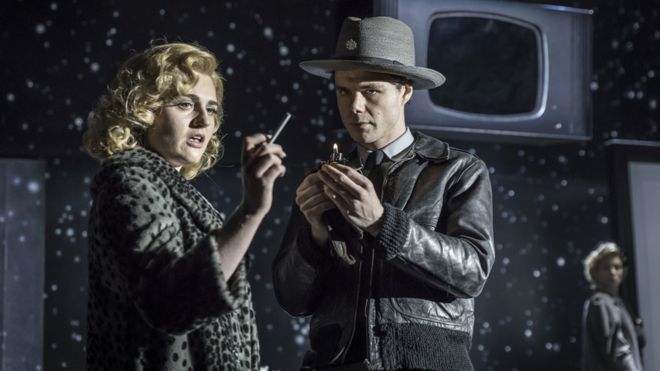
Between light and shadow, science and superstition, fear and knowledge, is a dimension of imagination. An area we call the Twilight Zone. In Anne Washburn’s adaptation, the acclaimed CBS Television Series lands on stage for the first time in its history. Or its present. Or its future. Stage magic and fantasy unite as the ordinary becomes extraordinary.
Cast: Oliver Alvin-Wilson, Franc Ashman, Adrianna Bertola, Lizzy Connolly, Amy Griffiths, Neil Haigh, Cosmo Jarvis, John Marquez, Matthew Needham, and Sam Swainsbury; Director: Richard Jones
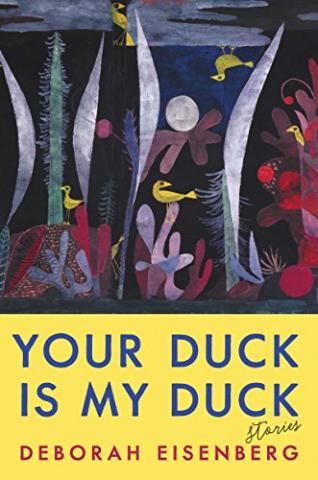
At times raucously hilarious, at times charming and delightful, at times as solemn and mysterious as a pond at midnight, Deborah Eisenberg’s stories gently compel us to confront the most disturbing truths about ourselves—from our intimate lives as lovers, parents, and children, to our equally troubling roles as citizens on a violent, terrifying planet.
Each of the six stories in Your Duck is My Duck, her first collection since 2006, has the heft and complexity of a novel. With her own inexorable but utterly unpredictable logic, and her uncanny ability to conjure the strange states of mind and emotion that constitute our daily consciousness, Eisenberg pulls us as if by gossamer threads through her characters—a tormented woman whose face determines her destiny; a group of film actors shocked to read a book about their past; a privileged young man who unexpectedly falls in love with a human rights worker caught up in an all-consuming quest that he doesn't understand. In Eisenberg’s world, the forces of money, sex, and power cannot be escaped, and the force of history, whether confronted or denied, cannot be evaded.
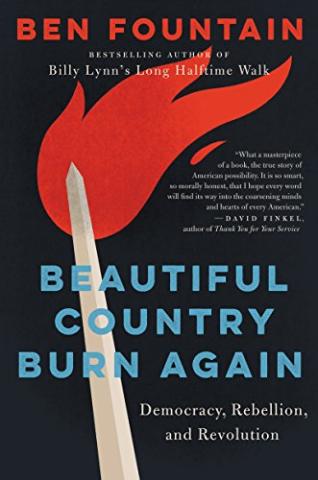
Beautiful Country Burn Again narrates a shocking year in American politics, moving from the early days of the Iowa Caucus to the crystalizing moments of the Democratic and Republican national conventions, and culminating in the aftershocks of the weeks following election night. Along the way, Fountain probes deeply into history, illuminating the forces and watershed moments of the past that mirror and precipitated the present, from the hollowed-out notion of the American Dream, to Richard Nixon’s southern strategy, to our weaponized new conception of American exceptionalism, to the cult of celebrity that gave rise to Donald Trump.
In an urgent and deeply incisive voice, Ben Fountain has fused history and the present day to paint a startling portrait of the state of our nation. Beautiful Country Burn Again is a searing indictment of how we came to this point, and where we may be headed.
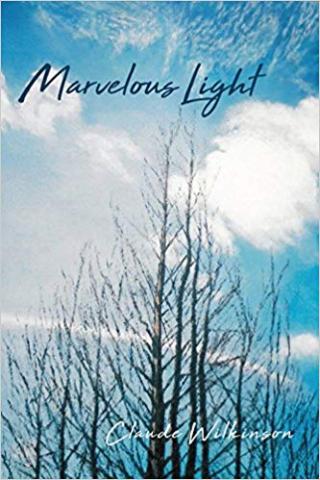
Similar to Antonio Vivaldi’s The Four Seasons, poems that compose the sections of Claude Wilkinson’s Marvelous Light explore nature’s cycles with respect to their parallels of, and import to, our human lives. Il cimento dell’armonia e dell’inventione, or The Contest between Harmony and Invention, a title under which Vivaldi’s work was first published, suggests part of an overarching theme that is implicit within Wilkinson’s collection—that is to say, his poems strive for a balance of euphony and the revelation of artistic rigor. Epigraphs from 1 Peter 2:9 and Henry James’s “The Middle Years” serve to enlighten readers as they read the poems that also image divinity’s role in the creative process.
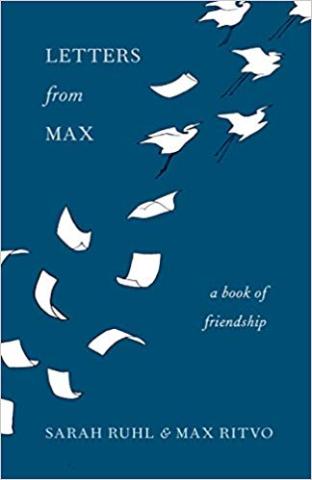
In 2012, Sarah Ruhl was a distinguished author and playwright, twice a finalist for the Pulitzer Prize. Max Ritvo, a student in her playwriting class at Yale University, was an exuberant, opinionated, and highly gifted poet. He was also in remission from pediatric cancer.
Over the next four years―in which Ritvo’s illness returned and his health declined, even as his productivity bloomed―the two exchanged letters that spark with urgency, humor, and the desire for connection. Reincarnation, books, the afterlife as an Amtrak quiet car, good soup: in Ruhl and Ritvo’s exchanges, all ideas are fair, nourishing game, shared and debated in a spirit of generosity and love. “We’ll always know one another forever, however long ever is,” Ritvo writes. “And that’s all I want―is to know you forever.”
Studded with poems and songs, Letters from Max is a deeply moving portrait of a friendship, and a shimmering exploration of love, art, mortality, and the afterlife.
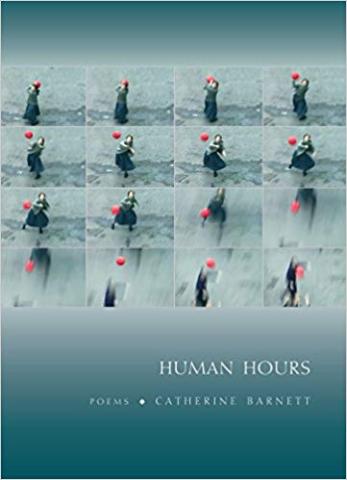
Catherine Barnett’s tragicomic third collection, Human Hours, shuttles between a Whitmanian embrace of others and a kind of rapacious solitude. Barnett speaks from the middle of hope and confusion, carrying philosophy into the everyday. Watching a son become a young man, a father become a restless beloved shell, and a country betray its democratic ideals, the speakers try to make sense of such departures. Four lyric essays investigate the essential urge and appeal of questions that are “accursed,” that are limited―and unanswered―by answers. What are we to do with the endangered human hours that remain to us? Across the leaps and swerves of this collection, the fevered mind tries to slow―or at least measure―time with quiet bravura: by counting a lover’s breaths; by remembering a father’s space-age watch; by envisioning the apocalyptic future while bedding down on a hard, cold floor, head resting on a dictionary. Human Hours pulses with the absurd, with humor that accompanies the precariousness of the human condition.
With these thirteen transfixing stories, Ben Marcus gives us timely dystopian visions of alienation in a modern world. In "The Grow-Light Blues," a hapless, corporate drone finds love after being disfigured testing his employer's newest nutrition supplement--the enhanced glow from his computer monitor. A father finds himself outcast from his family when he starts to suspect that his son's precocity has turned sinister in the chilling "Cold Little Bird." In "Blueprints for St. Louis," two architects in a flailing marriage consider the ethics of artificially inciting emotion in mourners at their latest assignment--a memorial to a terrorist attack.
In the bizarre but instantly recognizable universe of Ben Marcus's fiction, characters encounter both surreal new illnesses and equally surreal new cures. Marcus writes beautifully, hilariously, and obsessively, about sex and death, lust and shame, the indignities of the body, and the full parade of human folly. A heartbreaking collection of stories that showcases the author's compassion, tenderness, and mordant humor.