Cora is a slave on a cotton plantation in Georgia. Life is hellish for all the slaves, but Cora is an outcast even among her fellow Africans, and she is coming into womanhood; even greater pain awaits. Caesar, a recent arrival from Virginia, tells her about the Underground Railroad, and they plot their escape. Matters do not go as planned—Cora kills a young white boy who tries to capture her—but they manage to find a station and head north.
In Whitehead's ingenious conception, the Underground Railroad is not a metaphor—a secret network of tracks and tunnels has been built beneath the Southern soil. Cora and Caesar's first stop is South Carolina, where both find work in a city that at first seems like a haven. But the city’s placid surface masks an insidious scheme designed for its black denizens—and Ridgeway, the relentless slave-catcher sent to find her, arrives in town. Forced to flee again, Cora embarks on a harrowing journey, state-by-state, seeking true freedom.
Like Gulliver, Cora encounters different worlds at each stage of her journey—Whitehead brilliantly recreates the unique terrors for black people in states in the pre-Civil War era. The Underground Railroad is at once a kinetic adventure tale of one woman's ferocious will to escape the horrors of bondage, and a shattering, powerful meditation on the history we all share.
In her newest collection, Dana Levin uses humor, jump-cut imagery, and popular culture references in preparation for the approaching apocalypse. Against a backdrop of Facebook, cat memes, and students searching their smartphones for a definition of the soul, Levin draws upon a culture of limited attention spans as it searches for greater spiritual meaning. The poems in Banana Palace are elliptical by design, the lines often trailing off into a white space of their own making, as if flirting with and resolving in their own isolation.
It’s Wellington, now. Acoustic Engineer Michael Stirling’s old life is gone. He’s on the dating scene, learning te reo Maori, living in an upmarket apartment complex, and visiting his father who has dementia. Wearing his online dating disguise, Michael meets Chrissie, the widowed mother of a young son. Then his beloved adult daughter arrives from Auckland with a new attachment, an artist whose project will push them all towards key moments of risk and revelation.
Dad Art is a vibrant, funny new work from the leading chronicler of contemporary life in Aotearoa. Told with great verve, this novel is about the capacity for surprise and renewal.
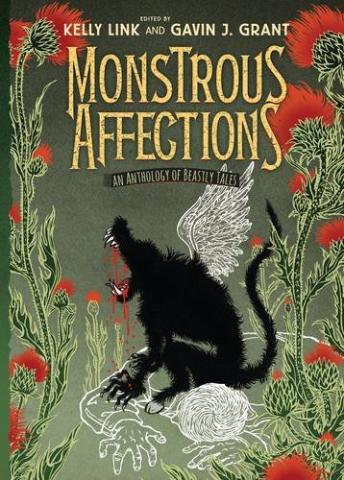
Fifteen top voices in speculative fiction explore the intersection of fear and love in a haunting, at times hilarious, darkly imaginative volume.
Predatory kraken that sing with—and for—their kin; band members and betrayed friends who happen to be demonic; harpies as likely to attract as repel. Welcome to a world where humans live side by side with monsters, from vampires both nostalgic and bumbling to an eight-legged alien who makes tea. Here you’ll find mercurial forms that burrow into warm fat, spectral boy toys, a Maori force of nature, a landform that claims lives, and an architect of hell on earth. Through these and a few monsters that defy categorization, some of today’s top young-adult authors explore ambition and sacrifice, loneliness and rage, love requited and avenged, and the boundless potential for connection, even across extreme borders.
Includes Kim's story, "Mother, Lock Up Your Daughters Because They Are Terrfying."
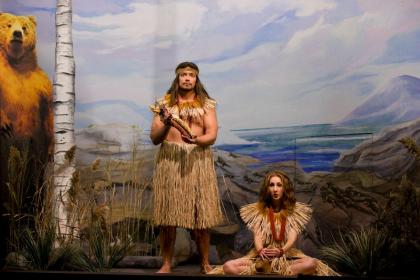
Dean Wreen is not having a good week. Her college is in dire financial straits and a plan to close its tiny, all-but-forgotten natural history museum is sending unexpected shock waves across campus and out into the local community. At home, her ex-lover, Greer, is staying with her—sending shock waves of a different sort through her relationship with her current (and much younger) girlfriend, Andromeda. Town-gown relations are in tatters! The local newspaper is erupting in violent protest! Even the awful, historically inaccurate dioramas in the museum have started mouthing off. A screwball sex comedy about the perils of monogamy, certainty, and academic administration.
Cast: Lauren Culpepper, Mercedes Herrero, Jon Hoche, Deirdre Madigan, Flor De Liz Perez, and Joel Van Liew
Director: Ken Rus Schmoll
Cast: Meighan Garachis, Steve Herson, Susaan Jamshidi, Kristen Magee, Casey Searles, and Laura T. Fisher
Director: Jeremy Wechsler
Mead’s fifth collection candidly and openly explores the long process that is death. These resonant poems discover what it means to live, die, and come home again. We’re drawn in by sorrow and grief, but also the joys of celebrating a long life and how simple it is to find laughter and light in the quietest and darkest of moments.
Not Even Then, the debut collection by Brian Blanchfield, introduces a poetry both compressed and musically fluid, beseechingly intimate and oddly authoritative. Blanchfield conducts readers through a unique, theatrical realm where concepts and personages are enlivened into action: Continuity, Coincidence, Symmetry, and Shame keep uneasy company there with Marcel Duchamp and Johnny Weissmuller, Lord Alfred Douglas and "Blue Boy" Master Lambton, Juliet’s Nurse and Althusser’s Moses.
With its kinked and suspensive language, Not Even Then draws on the lyric tradition, even as it complicates that tradition’s dualism of self and other. Likeness is always under investigation in the book’s irreducible arrangements of alterity. From "Red Habits": "I imagine the interferences explained / in don’t-think-twice and reverse advice / and by habits for both head and breast / hers and hers as red as mine at chamber check. / We are each herself a further interference." No answer rests unquestioned in its turn; even the book title’s cynicism is challenged by a poetics alive to possibility, where Possibility is—impetuously, ecstatically—companionable. "The listener you are," writes Blanchfield, "the less alone."
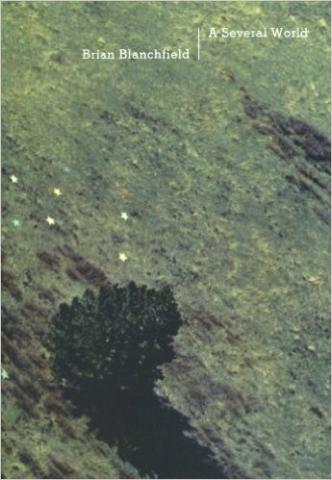
As in the title phrase—borrowed from a 17th century poem by Robert Herrick—in which “several” is used to individuate, questions of singularity and the plural, of subjectivity and the collective, pervade this dream-quick poetry. In A Several World there are glimpses of an “us down here”—in a city state, in a valley town, in an open clearing, in the understory—and, by various projections, there is frequent attainment of an aerial vantage, a supervisory perspective. The wish to be out of the weeds, to imagine one can see the thing in whole, and, conversely, the wish to be overseen, even to be overlooked, further animate the poetic shuttling between late pastoral and conceptual project. Landscape here is spatial theater and, blowing through like new weather, a choreography recruits certain standalone selves: solidarity beginning in an erotics of attunement, catching likenesses. “Pick me up can also be as frequency and antennae do.”