No
Poetry
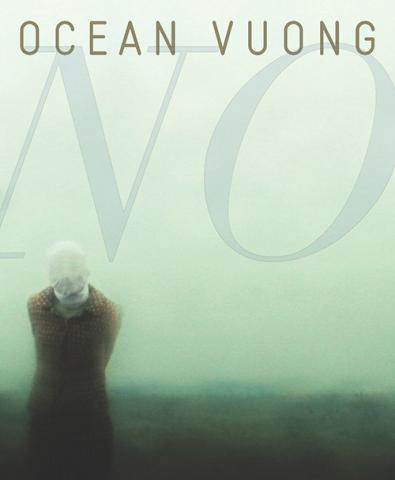
Vuong's second chapbook.
Vuong's second chapbook.
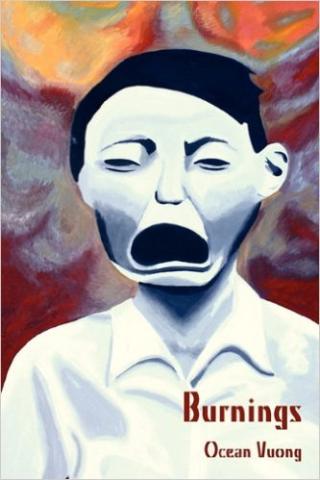
The poems of Burnings explore refugee culture, be the speaker a literal refugee from a torn homeland, or a refugee from his own skin, burning with the heat of awakening eroticism. In this world, we're all refugees from something. As two-time National Slam Champion Roger Bonair-Agard says: "Ocean manages to imbue the desperation of his being alive—with a savage beauty. It is not just that Ocean can render pain as a kind of loveliness, but that his poetic line will not let you forget the hurt or the garish brilliance of your triumph; will not let you look away. These poems shatter us detail by detail because Ocean leaves nothing unturned, because every lived thing in his poems demands to be fed by you; to nourish you in turn. You will not leave these poems dissatisfied. They will fill you utterly."
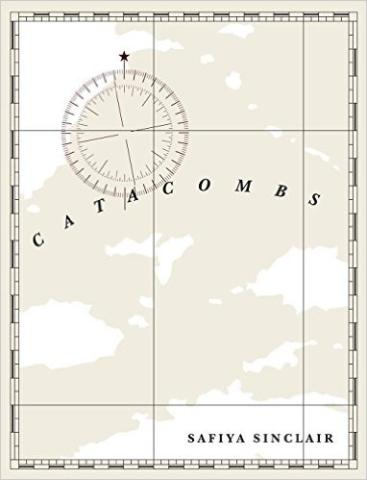
This perfect-bound chapbook showcases Safiya Sinclair's immense talents across a wide variety of genres, including poetry, memoir, and literary essay. Eddie Baugh writes, "Her mythopoeic imagination thrives on startling metaphors and combinations of images. Eschewing the naturalistic and consolatory, the poetry is alive in disturbing implosions of consciousness, drawn to cataclysm and apocalypse, whether in personal or communal histories."
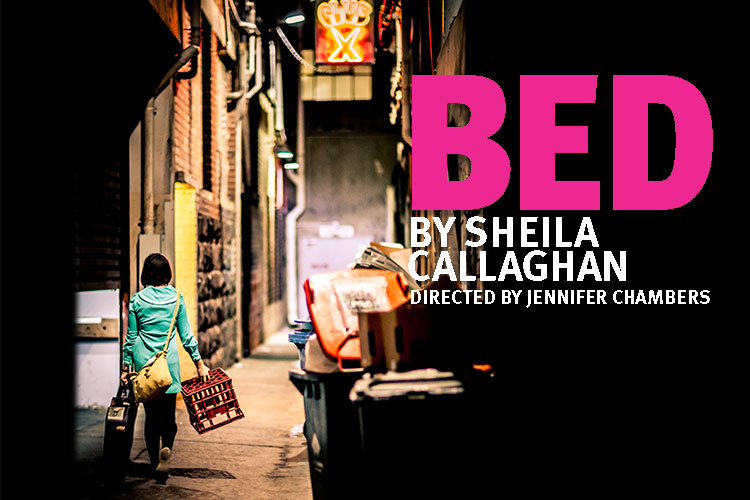
The world premiere of a funny, sexy and unconventional romance with music. Raw, racy, spanning 10 years in less than 90 minutes and featuring original songs, BED explores issues of love, abandonment and betrayal through the unique and inimitable lens of playwright Sheila Callaghan.
Cast: Kate Morgan Chadwick, TW Leshner, and Johnathan McClain; Director: Jennifer Chambers

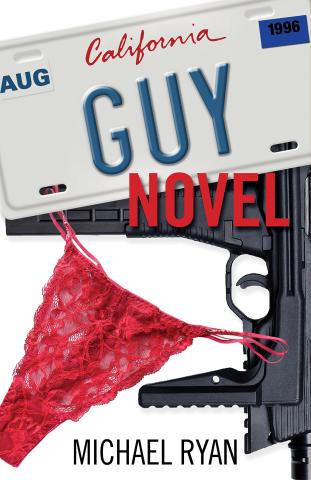
Guy Novel marries a thriller to a shameless love story and fun ride, what Graham Greene might have called "an entertainment." It takes place over one month in 1996, from early August to early September, as the Taliban were about to take over Afghanistan, Bill Clinton was running for re-election, most people still used answering machines, and HotMail became the latest new thing.
The story is told retrospectively but vividly by Robert Wilder, a less-than-successful LA comic who creates big problems for himself by picking up a gorgeous bank clerk on the afternoon of his wedding. These problems have the happy resolution of the conventional plot of comedy: boy meets girl, boy loses girl (twice), boy gets girl (and vice-versa), but there are lots of turns along the way and lots of jokes and lots of play with the gendered conventions of Romance. The political and historical moment enters with a vengeance halfway through the story, and spirits our he-roes to places as different as a five-star Paris hotel, Clinton's White House, and a yurt in Turkmenistan, while Robert learns something about loving another person for exactly who she is.
Not an easy lesson to learn—for him or for any of us—but the medicine goes down effortlessly with the clarity and grace and laugh-out-loud humor of Michael Ryan's widely-circulated, wildly-celebrated writing.
Dynamic poet, performer, librettist, and professor Douglas Kearney's works speak to those who are listening to what our living, material language has to say about race and history. At the hub of Buck Studies is a long mash-up of the stories of Herakles, the Greek bad-man, and that of Stagger Lee, the black bad-man. "Stagger Put Work In" examines the Twelve Labors Herakles performed to atone for murdering his family through Stagger Lee's murder of black man Billy Lyons. What is enacted by this appropriation is an exhaustion of forms—gangsta rap and its antecedent, the murder ballad.
only good one dead one we scold our mirror. should've been dead
before Stagger wrassled it bull-headed red-blind muscle-a-muscle.
bully and bull stagger the city levee round round round.
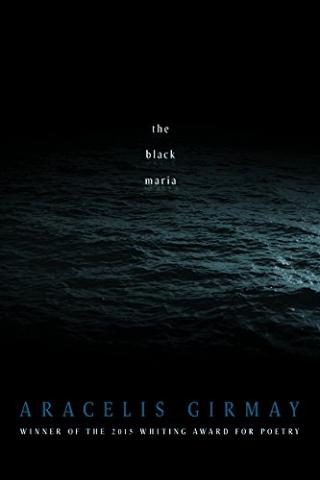
Taking its name from the moon's dark plains, misidentified as seas by early astronomers, The Black Maria investigates African diasporic histories, the consequences of racism within American culture, and the question of human identity. Central to this project is a desire to recognize the lives of Eritrean refugees who have been made invisible by years of immigration crisis, refugee status, exile, and resulting statelessness. The recipient of a 2015 Whiting Award for Poetry, Girmay's newest collection elegizes and celebrates life, while wrestling with the humanistic notion of seeing beyond: seeing violence, seeing grace, and seeing each other better.
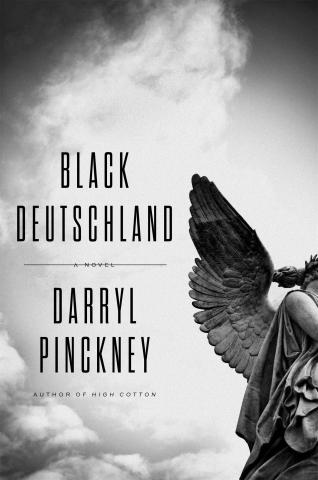
Jed—young, gay, black, out of rehab and out of prospects in his hometown of Chicago—flees to the city of his fantasies, a museum of modernism and decadence: Berlin. The paradise that tyranny created, the subsidized city isolated behind the Berlin Wall, is where he's chosen to become the figure that he so admires, the black American expatriate. Newly sober and nostalgic for the Weimar days of Isherwood and Auden, Jed arrives to chase boys and to escape from what it means to be a black male in America.
But history, both personal and political, can't be avoided with time or distance. Whether it's the judgment of the cousin he grew up with and her husband's bourgeois German family, the lure of white wine in a down-and-out bar, a gang of racists looking for a brawl, or the ravaged visage of Rock Hudson flashing behind the face of every white boy he desperately longs for, the past never stays past even in faraway Berlin. In the age of Reagan and AIDS in a city on the verge of tearing down its walls, he clambers toward some semblance of adulthood amid the outcasts and expats, intellectuals and artists, queers and misfits. And, on occasion, the city keeps its Isherwood promises and the boy he kisses, incredibly, kisses him back.
An intoxicating, provocative novel of appetite, identity, and self-construction, Darryl Pinckney's Black Deutschland tells the story of an outsider, trapped between a painful past and a tenebrous future, in Europe's brightest and darkest city.
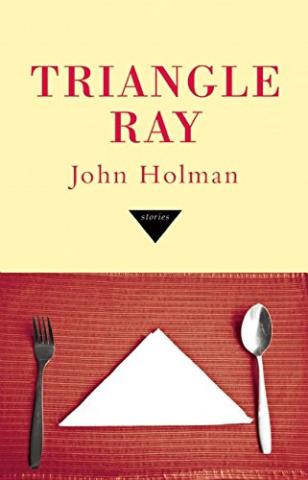
Triangle Ray is a collection of short stories linked by the character of Ray Fielding, introduced first as a young black man coming of age in the 1980s and infatuated with his schoolmate, Marie. Against the wishes of their families, the two marry just out of high school, but the marriage falls apart within a few years as time makes them strangers to each other.
Twenty years later, Ray is unmarried and still searching for a lasting romance, especially with Alma, whom he meets at the hotel where he works. Through his interactions with Marie, Alma, and others, Ray explores the motives behind the ways we retell our stories, and how we ignore or embrace the future that is already taking shape in the present.
A keen observer of social factors and class disparity, John Holman writes with sharp prose and startling insight, and employs diverse form and point of view to examine issues of race and class within the context of Ray’s romantic aspirations.