WHITING WHITING WHITING WHITING WHITING
  • Foundation ▼ ▲
    • Home
    • People
    • History
    • Contact
  • Literature ▼ ▲
    • Whiting Award
      • About
      • Current Winners
      • Browse Winners
      • Search All Winners
      • Keynotes
    • Nonfiction Grant
      • About
      • Grantees
    • Magazine Prizes
      • About
      • Winners
    • Discover Writing
      • New Books
      • Chapbooks
      • Videos
      • Random Winner
  • Humanities ▼ ▲
    • Preserving Heritage
    • High Schools
    • Past Programs
      • About
      • PEP Fellows
      • PEP Seed Grantees
      • Dissertation Fellows
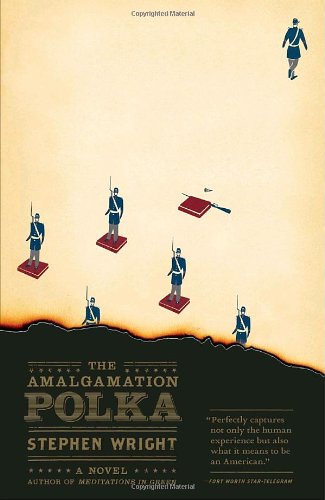
The Amalgamation Polka
A Novel

Born in 1844 in bucolic upstate New York, Liberty Fish is the son of fervent abolitionists as well as the grandson of Carolina slaveholders even more dedicated to their cause. Thus follows a childhood limned with fugitive slaves moving through hidden passageways in the house, and the inevitable distress that befalls his mother whenever letters arrive from her parents. In hopes of reconciling the familial disunion, Liberty escapes—first into the cauldron of war and then into a bedlam more disturbing still. In a vibrant display of literary achievement, Stephen Wright brings us a Civil War novel unlike any other.
  • Print Books
  • Find your local bookstore (via IndieBound)
  • Powell's
  • Barnes & Noble
  • Alibris
  • Abe Books
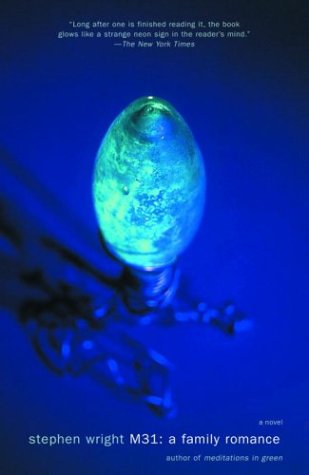
M31
A Family Romance

Dash and Dot—husband and wife; self-professed descendants of aliens from the M31 galaxy—are the world’s most in-demand lecturers on the UFO circuit. They live in a decommissioned church in the middle of America, with a radar dish on its steeple and a spaceship in the sanctuary. Their children have the run of the house when Dash and Dot are away. When a couple of UFO groupies show up looking for the extraterrestrial duo, they find instead a nuclear family—or rather, a family gone nuclear—whose comically discomforting world resembles our own as much as it does another world altogether.

  • Print Books
  • Find your local bookstore (via IndieBound)
  • Powell's
  • Barnes & Noble
  • Alibris
  • Abe Books
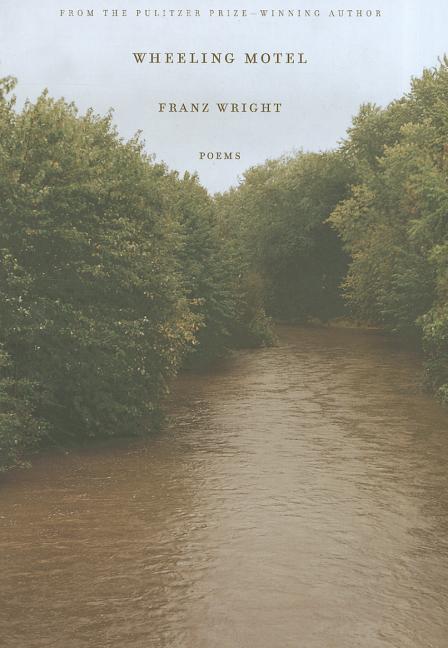
Wheeling Motel
Poems

In his tenth collection of poetry, Franz Wright gives us an exquisite book of reconciliation with the past and acceptance of what may come in the future. From his earliest years, he writes in “Will,” he had “the gift of impermanence / so I would be ready, / accompanied / by a rage to prove them wrong / . . . and that I too was worthy of love.” This rage comes coupled with the poet’s own brand of love, what he calls “one / strange alone / heart’s wish / to help all / hearts.” Poetry is indeed Wright’s help, and he delivers it to us with a wry sense of the daily in America: in his wonderfully local relationship to God (whom he encounters along with a catfish in the emerald shallows of Walden Pond); in the little West Virginia motel of the title poem, on the banks of the great Ohio River, where “Tammy Wynette’s on the marquee” and he is visited by the figure of Walt Whitman, “examining the tear on a dead face.”

Here, in Wheeling Motel, Wright’s poetry continues to surprise us with its frank appraisal of our soul, and with his own combustible loneliness and unstoppable joy.

  • Print Books
  • Find your local bookstore (via IndieBound)
  • Powell's
  • Barnes & Noble
  • Alibris
  • Abe Books
The Night World and the Word Night
Poems

“Wright’s combining of physical and spiritual, communal and solitary, past and present, life and death, provides a powerful distillation of this poet’s troubling and encompassing vision. What we finally take away from Franz Wright’s poems is not a sense of his personal concerns or preoccupations so much as a melancholy and oddly solacing knowledge of the risks and mysteries that go with being human, having memories, experiencing isolation even among friend and family, and loving the world despite its indifference to us.” —David Young

  • Print Books
  • Find your local bookstore (via IndieBound)
  • Powell's
  • Barnes & Noble
  • Alibris
  • Abe Books
The Catfish
Poems

Limited edition of 250 numbered copies.

A collection of 21 poems that rip through the world-weary, grieving daily life of a poet and a man. Reflecting Homer's Odyssey, Franz Wright reports with the language of poetry the story of his life, the relationship to his father, to his wife and the world inside and outside of him. With delicacy he interns himself in those worlds, sometimes overwhelmed by nostalgia and sometimes illuminated with an underglow of joy, as in "Elizabeth's Eyes," or quiet happiness, as in "The Catfish." As a wise Telemachus he walks, reflects and expresses a sovereign balance of mind in "unseen supervision," "between time of ingestion and time of departure: undisturbed, unafraid, as all things are passing—the unknown bird spoke: who will remember? And why should I care? I had my time. I got to be here."

  • Print Books
  • Find your local bookstore (via IndieBound)
  • Powell's
  • Barnes & Noble
  • Alibris
  • Abe Books
  • Marick Press
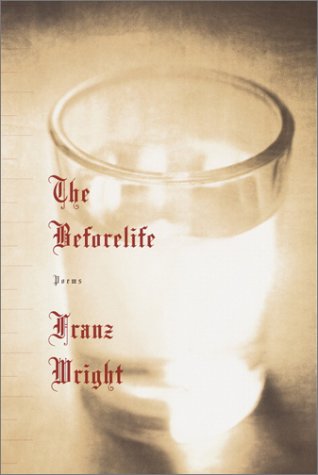
The Beforelife
Poems

In this stunning collection, Franz Wright chronicles the journey back from a place of isolation and wordlessness. After a period when it seemed certain he would never write poetry again, he speaks with bracing clarity about the twilit world that lies between madness and sanity, addiction and recovery. Wright negotiates the precarious transition from illness to health in a state of skeptical rapture, discovering along the way the exhilaration of love—both divine and human—and finding that even the most battered consciousness can be good company. Whether he is writing about his regret for the abortion of a child, describing the mechanics of slander ("I can just hear them on the telephone and keening all their kissy little knives"), or composing an ironic ode to himself ("To a Blossoming Nut Case"), Wright's poems are exquisitely precise. Charles Simic has characterized him as a poetic miniaturist, whose "secret ambition is to write an epic on the inside of a matchbook cover." Time and again, Wright turns on a dime in a few brief lines, exposing the dark comedy and poignancy of his heightened perception.

  • Print Books
  • Find your local bookstore (via IndieBound)
  • Powell's
  • Barnes & Noble
  • Alibris
  • Abe Books
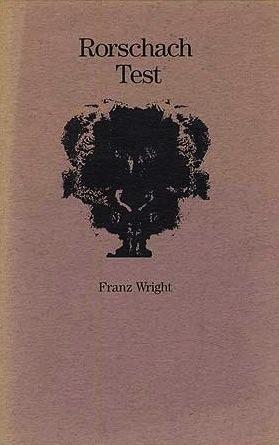
Rorschach Test
Poems
  • Print Books
  • Find your local bookstore (via IndieBound)
  • Powell's
  • Barnes & Noble
  • Alibris
  • Abe Books
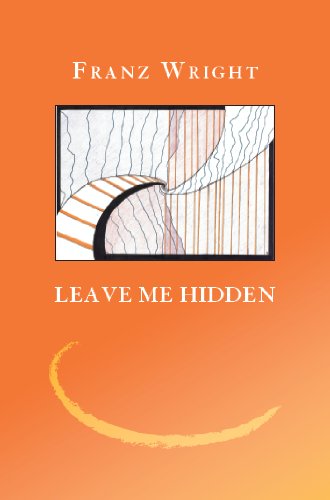
Leave Me Hidden
Poems

Poets speak metaphorically of poets of previous generations as their spiritual and artistic parents or grandparents. For Franz Wright, this is literally true: his father, James Wright, was one of the most influential American poets of the latter half of the twentieth century.

In this book Franz Wright is more intimate than ever before. His collection is a description of the struggle with the demons associated with following in the lineage of a great poet. We can find more of Wright himself in this collection, more of his identity, a grown up man who finally conquers the stigma of living in the shadow of his father. The memories of James Wright are clear and vivid but not a torment. In poems like "Recurring Dream," "Admonitions To Self," "The Future," "Untitled Poem in Three Parts," Franz Wright steps into a new phase of his own writing, he is more accessible to the reader and lets us pick and choose among his hopes and reflections. He alternates between memories of his family and present experiences in a rental apartment. He reveals the splendor and grandiosity of a friendship in the short poem "The Future" where we find a generous man taking care of a fallen friend.

  • Print Books
  • Find your local bookstore (via IndieBound)
  • Powell's
  • Barnes & Noble
  • Alibris
  • Abe Books
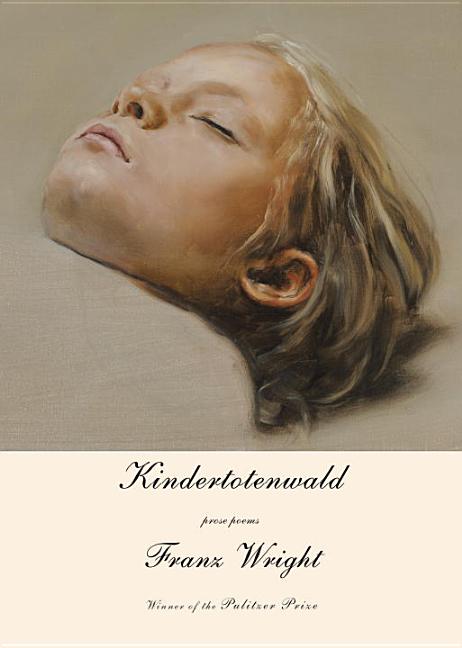
Kindertotenwald
Prose Poems

A genre-bending collection of prose poems from Pulitzer Prize–winner Franz Wright brings us surreal tales of childhood, adolescence, and adult awareness, moving from the gorgeous to the shocking to a sense of peace.

Wright’s most intimate thoughts and images appear before us in dramatic and spectral short narratives: mesmerizing poems whose colloquial sound and rhythms announce a new path for this luminous and masterful poet. In these journeys, we hear the constant murmured “yes” of creation—“it will be packing its small suitcase soon; it will leave the keys dangling from the lock and set out at last,” Wright tells us. He introduces us to the powerful presences in his world (the haiku master Basho, Nietzsche, St. Teresa of Avila, and especially his father, James Wright) as he explores the continually unfolding loss of childhood and the mixed blessings that follow it. Taken together, the pieces deliver the diary of a poet—“a fairly good egg in hot water,” as he describes himself—who seeks to narrate his way through the dark wood of his title, following the crumbs of language. “Take everything,” Wright suggests, “you can have it all back, but leave for a little the words, of all you gave the most mysteriously lasting.” With a strong presence of the dramatic in every line, Kindertotenwald pulls us deep into this journey, where we too are lost and then found again with him.

  • Print Books
  • Find your local bookstore (via IndieBound)
  • Powell's
  • Barnes & Noble
  • Alibris
  • Abe Books
God's Silence
Poems

In this luminous new collection of poems, Franz Wright expands on the spiritual joy he found in his Pulitzer Prize-winning Walking to Martha’s Vineyard.

Wright, whom we know as a poet of exquisite miniatures, opens God’s Silence with “East Boston, 1996,” a powerful long poem that looks back at the darker moments in the formation of his sensibility. He shares his private rules for bus riding (“No eye contact: the eyes of the terrified / terrify”), and recalls, among other experiences, his first encounter with a shotgun, as an eight-year-old boy (“In a clearing in the cornstalks . . . it was suggested / that I fire / on that muttering family of crows”). Throughout this volume, Wright continues his penetrating study of his own and our collective soul. He reaches a new level of acceptance as he intones the paradox “I have heard God’s silence like the sun,” and marvels at our presumptions: We speak of Heaven who have not yet accomplished even this, the holiness of things precisely as they are, and never will! Though Wright often seeks forgiveness in these poems, his black wit and self-deprecation are reliably present, and he delights in reminding us that “literature will lose, sunlight will win, don’t worry.” But in this book, literature wins as well. God’s Silence is a deeply felt celebration of what poetry (and its silences) can do for us.

  • Print Books
  • Find your local bookstore (via IndieBound)
  • Powell's
  • Barnes & Noble
  • Alibris
  • Abe Books

Pagination

  • Previous page ‹‹
  • Page 50
  • Next page ››
Subscribe to M

Sitemap Menu

  • Foundation
    • Home
    • People
    • History
    • Contact
  • Literature
    • Whiting Award
    • Nonfiction Grant
    • Magazine Prizes
    • Discover Writing
  • Humanities
    • Preserving Heritage
    • High Schools
    • Past Programs


  • Accessibility Notice Accessibility Notice
  • PRIVACY & TERMS
  • © WHITING FOUNDATION
  •  
Site by PASTPRESENTFUTURE, with design by Language Arts