WHITING WHITING WHITING WHITING WHITING
  • Foundation ▼ ▲
    • Home
    • People
    • History
    • Contact
  • Literature ▼ ▲
    • Whiting Award
      • About
      • Current Winners
      • Browse Winners
      • Search All Winners
      • Keynotes
    • Nonfiction Grant
      • About
      • Grantees
    • Magazine Prizes
      • About
      • Winners
    • Discover Writing
      • New Books
      • Chapbooks
      • Videos
      • Random Winner
  • Humanities ▼ ▲
    • Preserving Heritage
    • High Schools
    • Past Programs
      • About
      • PEP Fellows
      • PEP Seed Grantees
      • Dissertation Fellows
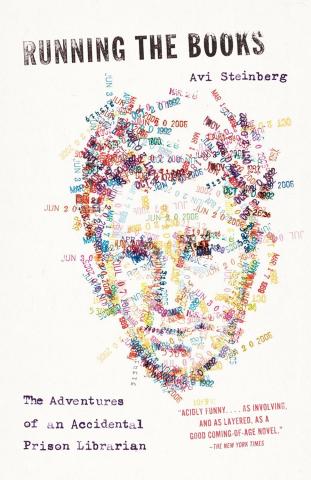
Running the Books
The Adventures of an Accidental Prison Librarian

Avi Steinberg is stumped. After defecting from yeshiva to attend Harvard, he has nothing but a senior thesis on Bugs Bunny to show for himself. While his friends and classmates advance in the world, Steinberg remains stuck at a crossroads, his “romantic” existence as a freelance obituary writer no longer cutting it.

Seeking direction (and dental insurance) Steinberg takes a job running the library counter at a Boston prison. He is quickly drawn into the community of outcasts that forms among his bookshelves—an assortment of quirky regulars, including con men, pimps, minor prophets, even ghosts—all searching for the perfect book and a connection to the outside world. Steinberg recounts their daily dramas with heartbreak and humor in this one-of-a-kind memoir—a piercing exploration of prison culture and an entertaining tale of one young man’s earnest attempt to find his place in the world.
  • Print Books
  • Bookshop
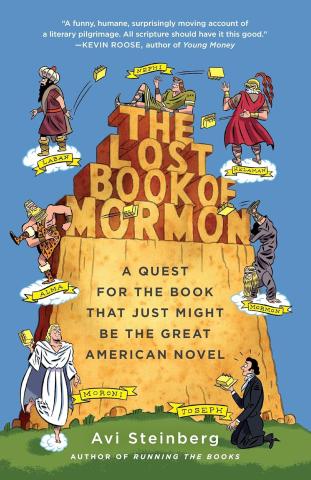
The Lost Book of Mormon
A Quest for the Book That Just Might Be the Great American Novel

Is The Book of Mormon a Great American Novel? Avi Steinberg thinks so. In this quirky travelogue—part fan nonfiction, part personal quest—he follows the trail laid out in Joseph Smith’s book. From Jerusalem to the ruined Mayan cities of Central America to upstate New York and, finally, to Jackson County, Missouri—the spot Smith identified as the site of the Garden of Eden—Steinberg traces The Book’s unexpected path and grapples with Joseph Smith’s demons—and his own. Literate and funny, personal and provocative, the genre-bending The Lost Book of Mormon boldly explores our deeply human impulse to write books, and affirms the abiding power of story.

  • Print Books
  • Bookshop
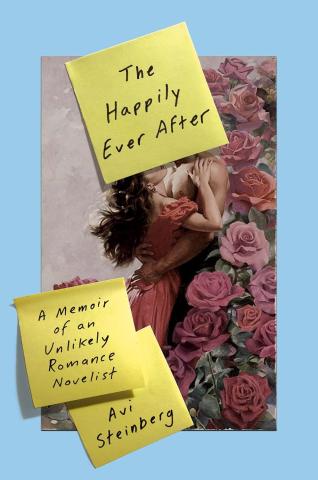
The Happily Ever After
A Memoir of an Unlikely Romance Novelist

Is romance dead? Is that why there are so many vampires in today's romance novels? When Avi Steinberg's love life took a grim turn, he did what he always does: He consulted his old books, the usual cast of Great (Very Serious, Usually Male) Authors. And he immediately realized that these books were part of the problem. Instead, he began to read romances, the books he—like so many of us—have been conditioned to dismiss as "trashy." What he discovered was a genre that was tremendously diverse and daring, along with a vast network of innovative writers who were keeping the novel as alive as ever. His own relationship problems, he realized, came down to a failure of his imagination. And so he set out on a quest to write and publish a romance novel and to find real-life love.

A hybrid of memoir, travelogue, and critical essay, The Happily Ever After chronicles an adventure in a brave new world of literature. Steinberg offers a report from the trenches of romance, moving between major industry conferences and writing groups at the local bar as he works and reworks his romance novel idea. He reveals the inside scoop from a major romance publishing house, crisscrosses the country meeting mysterious ghostwriters and Fabio's great unsung rival, and offers a running take on the fascinating history of romance writing, the genre that invented, and continues to reinvent, the modern novel. Along the way he meets many readers, each of whom sheds light on why we are so fascinated by—and phobic of—romance fiction and what the vitality and fractiousness of our biggest genre says about us.

  • Print Books
  • Bookshop
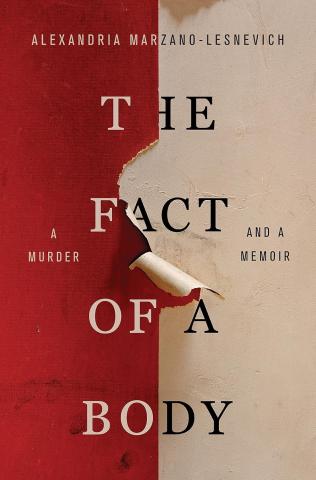
The Fact of a Body
A Murder and a Memoir

When law student Alex Marzano-Lesnevich is asked to work on a death-row hearing for convicted murderer and child molester Ricky Langley, they find themself thrust into the tangled story of his childhood. As they dig deeper and deeper into the case, they realizes that, despite their vastly different circumstances, something in his story is unsettlingly, uncannily familiar.

The Fact of a Body is both an enthralling memoir and a groundbreaking, heart-stopping investigation into how the law is personal, composed of individual stories, and proof that arriving at the truth is more complicated, and powerful, than we could ever imagine.

  • Print Books
  • Bookshop
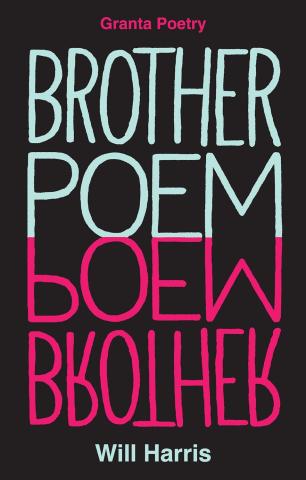
Brother Poem

At the heart of Brother Poem is a sequence addressed to a fictional brother. Through these fragments, Will Harris attempts to reckon with the past while mourning what never existed.

The text moves, cloud-like, through states of consciousness, beings and geographies, to create a moving portrait of contemporary anxieties around language and the need to communicate. With pronominal shifts, broken dialogisms, and obsessive feedback loops, it reflects on the fictions we tell ourselves, and in our attempts to live up to the demands of others.

From a dimension uncannily like our own, intuited through signs, whispers, and glitches, Brother Poem is shadowed by the loss of what can’t be seen. Telling stories of bizarre familial reckonings and difficult relationships, about love and living with others, it is a deeply sensitive coming-of-age poetics.

  • Print Books
  • Bookshop
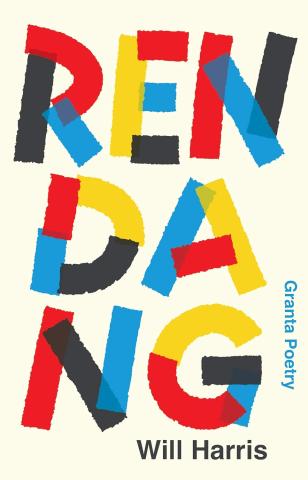
RENDANG

Using long poems, ekphrasis, and ruptured forms, RENDANG is a startling new take on the self, and how an identity is constructed. Drawing on his Anglo-Indonesian heritage, Will Harris shows us new ways to think about the contradictions of identity and cultural memory. He creates companions that speak to us in multiple languages. They deftly ask us to consider how and what we look at, as well as what we don't look at and why. It is intellectual and accessible, moving and experimental, and combines a linguistic innovation with a deep emotional rooting.

  • Print Books
  • Bookshop
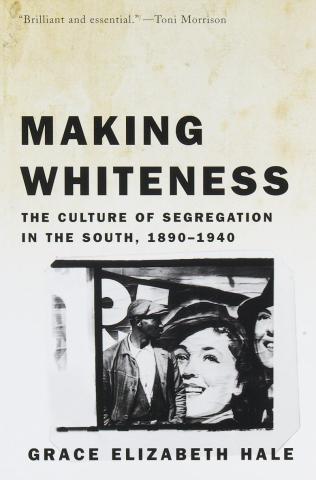
Making Whiteness
The Culture of Segregation in the South, 1890-1940

Making Whiteness is a profoundly important work that explains how and why whiteness came to be such a crucial, embattled—and distorting—component of twentieth-century American identity. In intricately textured detail and with passionately mastered analysis, Grace Elizabeth Hale shows how, when faced with the active citizenship of their ex-slaves after the Civil War, white southerners re-established their dominance through a cultural system based on violence and physical separation.  And in a bold and transformative analysis of the meaning of segregation for the nation as a whole, she explains how white southerners' creation of modern "whiteness" was, beginning in the 1920s, taken up by the rest of the nation as a way of enforcing a new social hierarchy while at the same time creating the illusion of a national, egalitarian, consumerist democracy.

By showing the very recent historical "making" of contemporary American whiteness and by examining how the culture of segregation, in all its murderous contradictions, was lived, Hale makes it possible to imagine a future outside it. Her vision holds out the difficult promise of a truly democratic American identity whose possibilities are no longer limited and disfigured by race.

  • Print Books
  • Bookshop
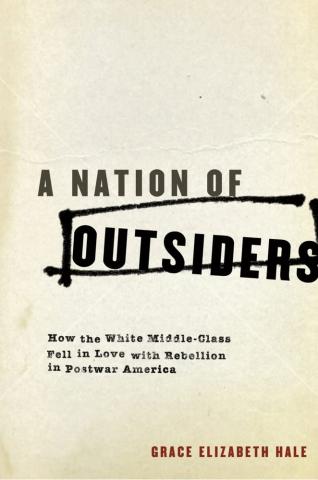
A Nation of Outsiders
How the White Middle Class Fell in Love with Rebellion in Postwar America

In this wide-ranging and vividly written cultural history, Grace Elizabeth Hale sheds light on why so many white middle-class Americans chose to re-imagine themselves as outsiders in the second half of the twentieth century and explains how this unprecedented shift changed American culture and society. Love for outsiders launched the politics of both the New Left and the New Right. From the mid-sixties through the eighties, it flourished in the hippie counterculture, the back-to-the-land movement, the Jesus People movement, and among fundamentalist and Pentecostal Christians working to position their traditional isolation and separatism as strengths. It changed the very meaning of "authenticity" and "community."

Ultimately, the romance of the outsider provided a creative resolution to an intractable mid-century cultural and political conflict-the struggle between the desire for self-determination and autonomy and the desire for a morally meaningful and authentic life.

  • Print Books
  • Bookshop
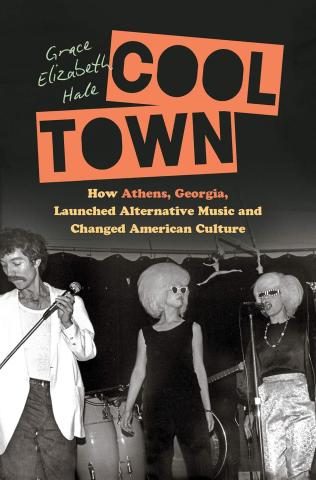
Cool Town
How Athens, Georgia, Launched Alternative Music and Changed American Culture

In Athens in the eighties, if you were young and willing to live without much money, anything seemed possible. Cool Town reveals the passion, vitality, and enduring significance of a bohemian scene that became a model for others to follow. Grace Elizabeth Hale experienced the Athens scene as a student, small-business owner, and band member. Blending personal recollection with a historian's eye, she reconstructs the networks of bands, artists, and friends that drew on the things at hand to make a new art of the possible, transforming American culture along the way. In a story full of music and brimming with hope, Hale shows how an unlikely cast of characters in an unlikely place made a surprising and beautiful new world.

  • Print Books
  • Bookshop
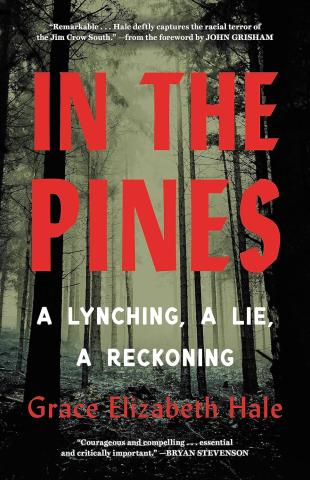
In the Pines
A Lynching, A Lie, A Reckoning

Grace Hale was home from college when she first heard the family legend. In 1947, while her beloved grandfather had been serving as a sheriff in the Piney Woods of south-central Mississippi, he prevented a lynch mob from killing a Black man who was in his jail on suspicion of raping a white woman—only for the suspect to die the next day during an escape attempt. It was a tale straight out of To Kill a Mockingbird, with her grandfather as the tragic hero. This story, however, hid a dark truth.

Years later, as a rising scholar of white supremacy, Hale revisited the story about her grandfather and Versie Johnson, the man who died in his custody. The more she learned about what had happened that day, the less sense she could make of her family's version of events. With the support of a Carnegie fellowship, she immersed herself in the investigation. What she discovered would upend everything she thought she knew about her family, the tragedy, and this haunted strip of the South—because Johnson's death, she found, was actually a lynching. But guilt did not lie with a faceless mob.

A story of obsession, injustice, and the ties that bind, In the Pines casts an unsparing eye over this intimate terrain, driven by a deep desire to set straight the historical record and to understand and subvert white racism, along with its structures, costs, and consequences—and the lies that sustain it.

  • Print Books
  • Bookshop

Pagination

  • Page 1
  • Next page ››
Subscribe to Y

Sitemap Menu

  • Foundation
    • Home
    • People
    • History
    • Contact
  • Literature
    • Whiting Award
    • Nonfiction Grant
    • Magazine Prizes
    • Discover Writing
  • Humanities
    • Preserving Heritage
    • High Schools
    • Past Programs


  • Accessibility Notice Accessibility Notice
  • PRIVACY & TERMS
  • © WHITING FOUNDATION
  •  
Site by PASTPRESENTFUTURE, with design by Language Arts