WHITING WHITING WHITING WHITING WHITING
  • Foundation ▼ ▲
    • Home
    • People
    • History
    • Contact
  • Literature ▼ ▲
    • Whiting Award
      • About
      • Current Winners
      • Browse Winners
      • Search All Winners
      • Keynotes
    • Nonfiction Grant
      • About
      • Grantees
    • Magazine Prizes
      • About
      • Winners
    • Discover Writing
      • New Books
      • Chapbooks
      • Videos
      • Random Winner
  • Humanities ▼ ▲
    • Preserving Heritage
    • High Schools
    • Past Programs
      • About
      • PEP Fellows
      • PEP Seed Grantees
      • Dissertation Fellows
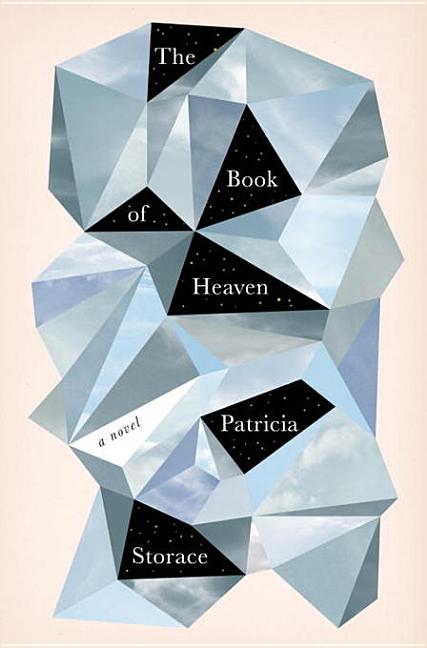
The Book of Heaven
A Novel

From the author of the acclaimed Dinner with Persephone comes a radically original novel about four women who invite us to imagine the divine anew: what if “a woman’s point of view” were also God’s? Patricia Storace’s Eve begins by telling us her version of what happened in Eden, and by revealing that our familiar constellations conceal other heavens we have never allowed ourselves to see. Each of the four subsequent chapters is the story of one of these new zodiacs, featuring images central to women: a knife, a cauldron, a garden, a pair of embracing lovers. The four women whose stories they tell are Job’s daughter, the Queen of Sheba, a polytheistic cook, and a transformed Sarah, wife of Abraham. Storace brilliantly reimagines the worlds of these women, freeing them from the old tales in which they were trapped and putting them in the foreground of their stories and of the Old Testament itself.
  • Print Books
  • Find your local bookstore (via IndieBound)
  • Powell's
  • Barnes & Noble
  • Alibris
  • Abe Books
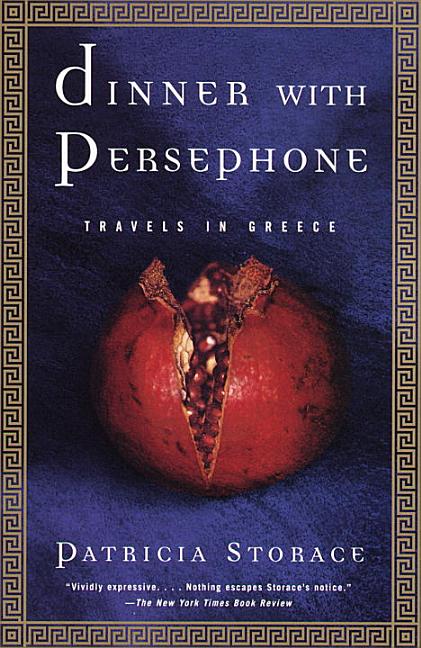
Dinner with Persephone
Travels in Greece

"I lived in Athens, at the intersection of a prostitute and a saint."

So begins Patricia Storace's astonishing memoir of her year in Greece. Mixing affection with detachment, rapture with clarity, this American poet perfectly evokes a country delicately balanced between East and West. Whether she is interpreting Hellenic dream books, pop songs, and soap operas, describing breathtakingly beautiful beaches and archaic villages, or braving the crush at a saint's tomb, Storace, winner of the Whiting Award, rewards the reader with informed and sensual insights into Greece's soul. She sees how the country's pride in its past coexists with profound doubts about its place in the modern world. She discovers a world in which past and present engage in a passionate dialogue. Stylish, funny, and erudite, Dinner with Persephone is travel writing elevated to a fine art—and the best book of its kind since Henry Miller's The Colossus of Maroussi.

  • Print Books
  • Find your local bookstore (via IndieBound)
  • Powell's
  • Barnes & Noble
  • Alibris
  • Abe Books
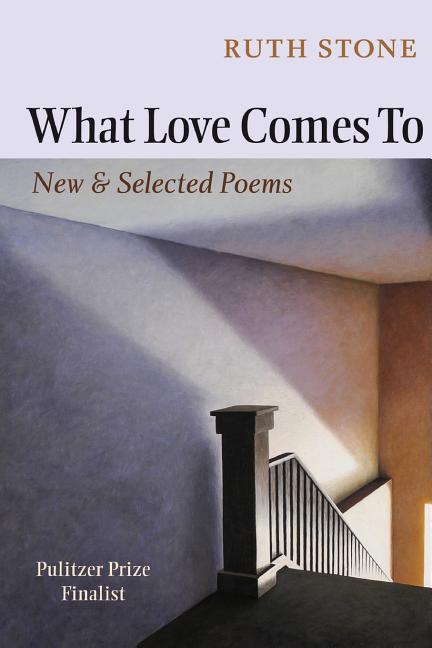
What Love Comes To
New & Selected Poems

What Love Comes To, a finalist for the 2009 Pulitzer Prize in poetry, gathers nearly half a century of poems from a National Book Award-winning poet who, over the course of her career, has written in a wide range of voices and forms. Drawing from eleven previous volumes, this collection offers a trajectory through that career, presenting Ruth Stone from her early formal lyrics, through fierce feminist and political poems, to her most recent meditations on blindness and aging. Stone, at age ninety-two, returns often to the theme of loss in her work, all the while maintaining what the Vermont poet laureate nominations committee calls “a sense of survival surpassing poverty and grief . . . Her poetry’s irrepressible humor and intellectual curiosity are unique among contemporary American poets.”

What Love Comes To is the perfect entry point into Stone’s world of serious laughter; of uncertainty and insight; of mystery and acceptance.

  • Print Books
  • Find your local bookstore (via IndieBound)
  • Powell's
  • Barnes & Noble
  • Alibris
  • Abe Books
  • Copper Canyon Press
In the Next Galaxy
Poems

Ruth Stone has rightly been called America’s Akhmatova, and she is considered "Mother Poet" to many contemporary writers. In this, her eighth volume, she writes with crackling intelligence, interrogating history from the vantage point of an aging and impoverished woman. Wise, sardonic, crafty, and misleadingly simple, Stone loves heavy themes but loathes heavy poems.

  • Print Books
  • Find your local bookstore (via IndieBound)
  • Powell's
  • Barnes & Noble
  • Alibris
  • Abe Books
  • Copper Canyon Press
By All Means
Poems & Assimilations

In Frank Stewart's fourth book, poetry has become fundamentally an act of association and correspondence with others, and art is understood as a form of empathy that overcomes history, time, nation and language. Poet Nick Bozanic observes that these are the "deliberate motions of a sensibility seeking not to reveal itself, but to rediscover and renew something precious on the very lip of loss." Sensuously arresting and shot through with a soft, sweet aching, these "lapidary lines move with the skill, finesse, and acuity of a master" —Arthur Sze.

  • Print Books
  • Find your local bookstore (via IndieBound)
  • Powell's
  • Barnes & Noble
  • Alibris
  • Abe Books
A Natural History of Nature Writing

A Natural History of Nature Writing is a penetrating overview of the origins and development of a uniquely American literature. Essayist and poet Frank Stewart describes in rich and compelling prose the lives and works of the most prominent American nature writers of the 19th and 20th centuries, including:

•Henry D. Thoreau, the father of American nature writing.

•John Burroughs, a schoolteacher and failed businessman who found his calling as a writer and elevated the nature essay to a loved and respected literary form.

•John Muir, founder of Sierra Club, who celebrated the wilderness of the Far West as few before him had.

•Aldo Leopold, a Forest Service employee and scholar who extended our moral responsibility to include all animals and plants.

•Rachel Carson, a scientist who raised the consciousness of the nation by revealing the catastrophic effects of human intervention on the Earth's living systems.

•Edward Abbey, an outspoken activist who charted the boundaries of ecological responsibility and pushed these boundaries to political extremes.

Stewart highlights the controversies ignited by the powerful and eloquent prose of these and other writers with their expansive—and often strongly political—points of view. Combining a deeply-felt sense of wonder at the beauty surrounding us with a rare ability to capture and explain the meaning of that beauty, nature writers have had a profound effect on American culture and politics. A Natural History of Nature Writing is an insightful examination of an important body of American literature.

  • Print Books
  • Find your local bookstore (via IndieBound)
  • Powell's
  • Barnes & Noble
  • Alibris
  • Abe Books
  • Island Press
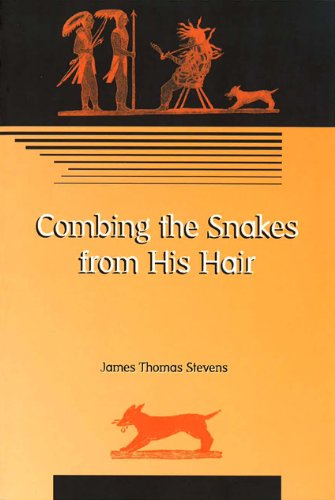
Combing the Snakes from His Hair
Poems

The title, Combing the Snakes from His Hair, alludes to an Iroquois story of healing. Atatarho, the Onondaga leader, had a crooked body and a head covered with snakes. In order to achieve peace, Atatarho had to be healed: his mind straightened, his body straightened, the snakes combed from his hair. Similarly, during the writing of these poems, Stevens experienced a healing, a setting straight of his life and a setting straight of the record.

The collection, written between 1993 and 1999, is comprised of five sections. The opening section, written as a way to explore new natural surroundings, is accompanied by the author's drawings of prairie flora. The second section is a series of love poems. The third section examines the relationship between European music and Native American music and observes that both should be viewed equally as expressive of each culture. And the fourth section consists of short poems—translations, if you will—of Iroquois stories and songs. The final section consists of a long poem studying the effects of colonization coupled with an emotional contemplation of nature and one's place within it. It is concerned with language—who controls it, who possesses it, and how it is used by the colonizer to erase indigenous cultures.

  • Print Books
  • Find your local bookstore (via IndieBound)
  • Powell's
  • Barnes & Noble
  • Alibris
  • Abe Books
  • Michigan State University Press
A Bridge Dead in the Water
Three Poems

This collection by Mohawk poet, James Thomas Stevens explores the effects of colonization on either side of the Bering Strait—China and North America. Three long poems focus on mapping, post-colonial emergencies and propaganda, while the short poems are personal experiences in China and Native America. Includes "dis(Orient)," "The Mutual Life," and "Alphabets of Letters."

  • Print Books
  • Find your local bookstore (via IndieBound)
  • Powell's
  • Barnes & Noble
  • Alibris
  • Abe Books
  • Salt Publishing
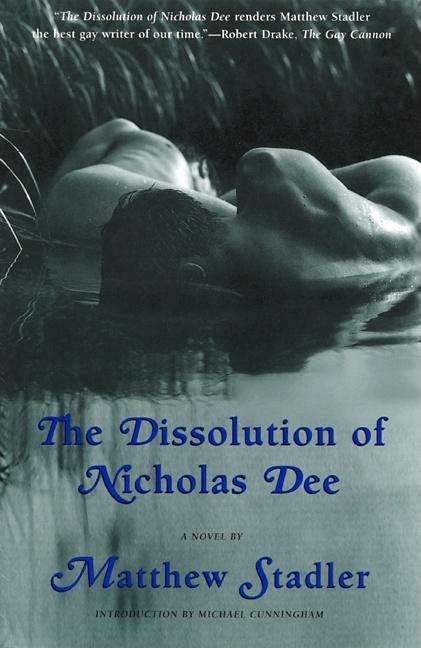
The Dissolution of Nicholas Dee
A Novel

This darkly comic novel chronicles the life of Nicholas Dee, an earnest young historian whose crippling fear of loss has become his undoing. Lulled to sleep at night by the city's constant clatter of police choppers, Nicholas parlays his fear of losing everything into a promising idea for an academic grant: He will write a "History of Insurance." In this glittering, unidentified city of high culture and hideous crime, Nicholas can find no safe haven for the orderly life he desires. At night he is haunted by memories of his dead father; by day the devilish machinations of the university and the police ensnare him. His book, already evolving from a history of insurance into a compelling narrative tale (chronicling the creation of an opera house in seventeenth-century Holland), becomes his only refuge.

But his fragile stability cannot hold. While the city, washing away under ceaseless storms, descends into its midwinter carnival, Nicholas receives a phone call from the police. A curiously "gifted" illiterate boy named Oscar Vega has been arrested, and Nicholas becomes his custodian. The novel moves from stark realism into a kind of Kafkaesque grotesquerie as the real power behind these manifold changes reveals itself to him: Amelia Weathered, an ageless imperious dwarf, has set this vortex turning—it is into her seductions that he has fallen. Gradually, and with supreme intelligence, Amelia takes possession of Nicholas—and his book.
  • Print Books
  • Find your local bookstore (via IndieBound)
  • Powell's
  • Barnes & Noble
  • Alibris
  • Abe Books
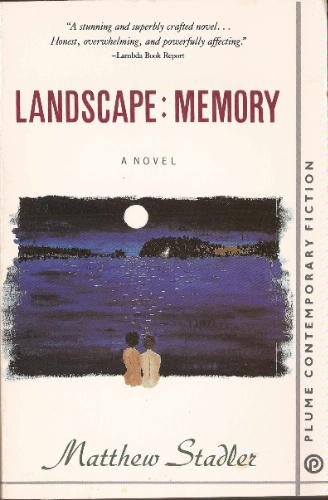
Landscape: Memory
A Novel

This stunningly crafted novel takes place in the years of a boy's passage to manhood in the shimmering, vibrant San Francisco of 1914. The son of a suffragette mother and eccentric ornithologist father, Maxwell Field Kosegarten keeps a poignant record of discovery and loss in the diary his mother gives him for his sixteenth birthday. Even as he and his half-Persian friend, Duncan, explore the ruins left behind by the 1906 earthquake, the gala World's Fair, and the erotic, soul-shaking feelings of first love, the romantic glow of this interlude between boyhood and maturity is tarnished first by accounts of the carnage in France and then by the swift, tragic ending of Max and Duncan's love affair. As memory and reality entwine, as ideas mutate through introspection, and as feelings sturggle for life on paper, Landscape: Memory becomes a lyrical, beautifully written narrative—an impressive debut for a gifted young writer.

  • Print Books
  • Find your local bookstore (via IndieBound)
  • Powell's
  • Barnes & Noble
  • Alibris
  • Abe Books

Pagination

  • Previous page ‹‹
  • Page 42
  • Next page ››
Subscribe to Y

Sitemap Menu

  • Foundation
    • Home
    • People
    • History
    • Contact
  • Literature
    • Whiting Award
    • Nonfiction Grant
    • Magazine Prizes
    • Discover Writing
  • Humanities
    • Preserving Heritage
    • High Schools
    • Past Programs


  • Accessibility Notice Accessibility Notice
  • PRIVACY & TERMS
  • © WHITING FOUNDATION
  •  
Site by PASTPRESENTFUTURE, with design by Language Arts