WHITING WHITING WHITING WHITING WHITING
  • Foundation ▼ ▲
    • Home
    • People
    • History
    • Contact
  • Literature ▼ ▲
    • Whiting Award
      • About
      • Current Winners
      • Browse Winners
      • Search All Winners
      • Keynotes
    • Nonfiction Grant
      • About
      • Grantees
    • Magazine Prizes
      • About
      • Winners
    • Discover Writing
      • New Books
      • Chapbooks
      • Videos
      • Random Winner
  • Humanities ▼ ▲
    • Preserving Heritage
    • High Schools
    • Past Programs
      • About
      • PEP Fellows
      • PEP Seed Grantees
      • Dissertation Fellows
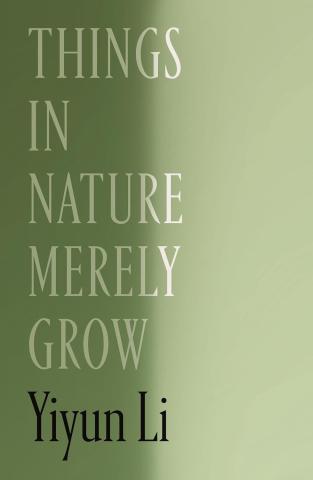
Things in Nature Merely Grow

“There is no good way to say this,” Yiyun Li writes at the beginning of this book.

“There is no good way to state these facts, which must be acknowledged. My husband and I had two children and lost them both: Vincent in 2017, at sixteen, James in 2024, at nineteen. Both chose suicide, and both died not far from home.”

This is a book for James, but it is not a book about grieving or mourning. As Li writes, “The verb that does not die is to be. Vincent was and is and will always be Vincent. James was and is and will always be James. We were and are and will always be their parents. There is no now and then, now and later, only, now and now and now and now.” Things in Nature Merely Grow is a testament to Li’s indomitable spirit.
  • Print Books
  • Bookshop
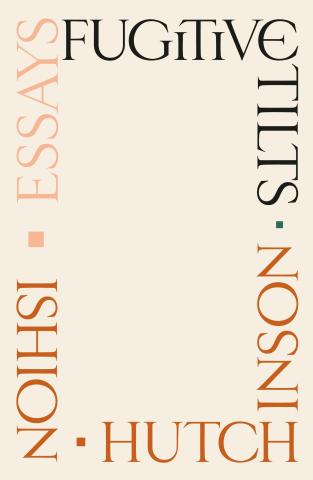
Fugitive Tilts
Essays

In Fugitive Tilts, the poet Ishion Hutchinson turns to prose to create an incomplete biography of love: love of poetry, discovered in childhood; love of home, with its continual disconnections and returns; and love of the works and artists—from Treasure Island, to John Coltrane, to the Jamaican music of his youth—that look over him with an angel’s aura.

Drawing inspiration from Derek Walcott’s notion that “the sea is history,” Fugitive Tilts is suffused with the sea, present whether Hutchinson is recalling a trip to Senegal or memorializing his grandmother in a meditation on a painting by Édouard Vuillard. With this fresh, archipelagic sensibility Hutchinson confronts the fraught questions of inheritances and influences, “acknowledging,” in his words, “something outside our view.” These essays, varied in their forms and ranging across time and place, allow Hutchinson to build a space from which the suffering of the past and the present can be reckoned with and survived.

  • Print Books
  • Bookshop
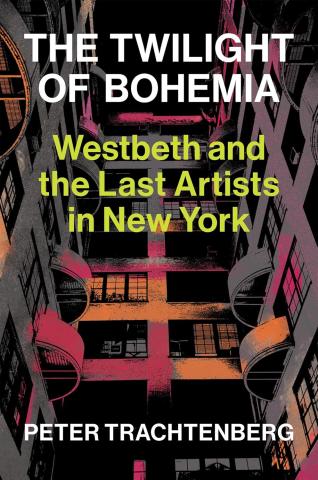
The Twilight of Bohemia
Westbeth and the Last Artists in New York

An intimate history of America’s first publicly funded artists’ housing project and its residents that casts light on the precarious place of art-makers in a changing New York. Westbeth Artists Housing was founded in 1970 to provide affordable housing for artists and their families. It occupies a full city block in what back then was one of New York’s less desirable neighborhoods, the desolate far-West Village. Over the next fifty years, the building complex served as a Great Society for bohemians, home at any one time to more than three hundred and eighty creators, who included the pioneering video artist Nam June Paik, jazz great Gil Evans, and the photographer Diane Arbus, who took her life in her apartment in 1971, barely a year after she’d moved in.

  • Print Books
  • Bookshop
Bibliophobia
A Memoir

Books can seduce you. They can, Sarah Chihaya believes, annihilate, reveal, and provoke you. And anyone incurably obsessed with books understands this kind of unsettling literary encounter. Sarah calls books that have this effect “Life Ruiners”.

Bibliophobia is an alternately searing and darkly humorous story of breakdown and survival told through books. Delving into texts such as Anne of Green Gables, Possession, A Tale for the Time Being, The Last Samurai, Chihaya interrogates her cultural identity, her relationship with depression, and the intoxicating, sometimes painful, ways books push back on those who love them.

  • Print Books
  • Bookshop
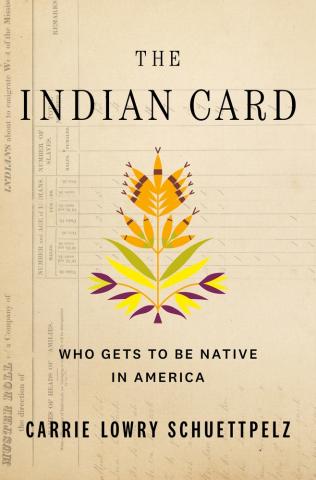
The Indian Card
Who Gets to Be Native in America

To be Native American is to live in a world of contradictions. In The Indian Card, Carrie Lowry Schuettpelz grapples with these contradictions. Through in-depth interviews, archival research, and reckoning with her own identity—the story of her enrollment and the enrollment of her children—she investigates the cultural, racial, and political dynamics of today's Tribal identity policing. With this intimate perspective of the ongoing fight for Native sovereignty, The Indian Card sheds light on what it looks like to find a deeper sense of belonging.

  • Print Books
  • Bookshop
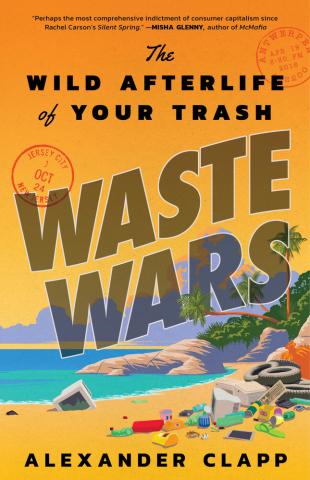
Waste Wars
The Wild Afterlife of Your Trash

Waste Wars is a jaw-dropping exposé of how and why, for the last forty years, our garbage—the stuff we deem so worthless we think nothing of throwing it away—has spawned a massive, globe-spanning, multi-billion-dollar economy, one that offloads our consumption footprints onto distant continents, pristine landscapes, and unsuspecting populations.

  • Print Books
  • Bookshop
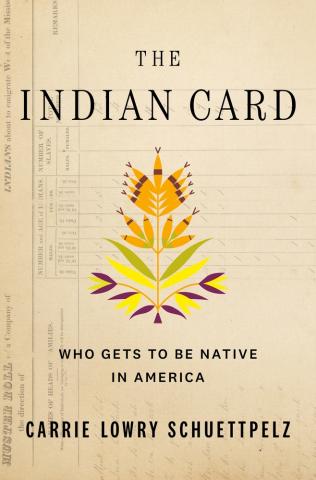
The Indian Card
Who Gets to Be Native in America

To be Native American is to live in a world of contradictions. In The Indian Card, Carrie Lowry Schuettpelz grapples with these contradictions. Through in-depth interviews, archival research, and reckoning with her own identity—the story of her enrollment and the enrollment of her children—she investigates the cultural, racial, and political dynamics of today's Tribal identity policing. With this intimate perspective of the ongoing fight for Native sovereignty, The Indian Card sheds light on what it looks like to find a deeper sense of belonging.

  • Print Books
  • Bookshop
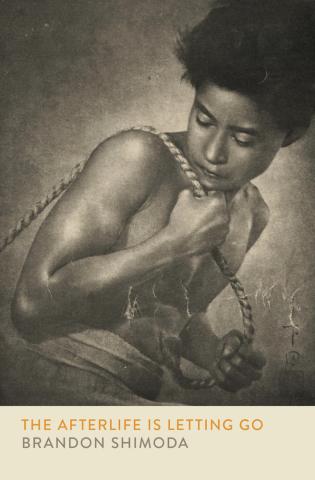
The Afterlife Is Letting Go

In a series of reflective, multi-layered, and sometimes multi-voiced essays, poet Brandon Shimoda explores the “afterlife” of the U.S. government’s forced removal and mass incarceration of Japanese immigrants and Japanese Americans during WWII, excavating the ways these events continue to resonate today—in storytelling and silence, in literature and art, in legislation and protest. Informed by personal/familial history, years of research and travel, including visits to museums, memorials and the ruins of incarceration sites, these essays take us on both a physical and a metaphysical journey. What becomes increasingly clear are the infinite connections between the treatment of Japanese Americans and other forms of oppression, criminalization, dispossession, and state violence enacted by the United States, past, present, and ongoing.

  • Print Books
  • Bookshop
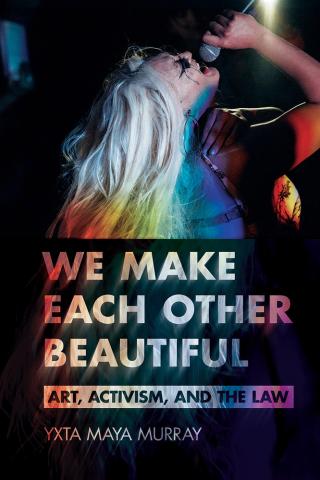
We Make Each Other Beautiful
Art, Activism, and the Law

We Make Each Other Beautiful focuses on women of color, queer artists of color, and artist collectives who engage in direct political action as a part of their art practice. Defined by public protest, rule-breaking, rebellion, and resistance to governmental and institutional abuse, direct-action "artivism" draws on the aims, radical spirit, and tactics of the civil rights and feminist movements and on the struggles for disability rights, queer rights, and immigrant rights to seek legal and social change. Yxta Maya Murray profiles the work and lives of four contemporary artivists—Carrie Mae Weems, Young Joon Kwak, Tanya Aguiñiga, and Imani Jacqueline Brown—and the artivist collective Drawn Together, combining new oral histories with sharp analyses of how their diverse and expansive artistic practices bear important aesthetic and politicolegal meanings that address a wide range of injustices.

  • Print Books
  • Bookshop
  • Cornell University Press
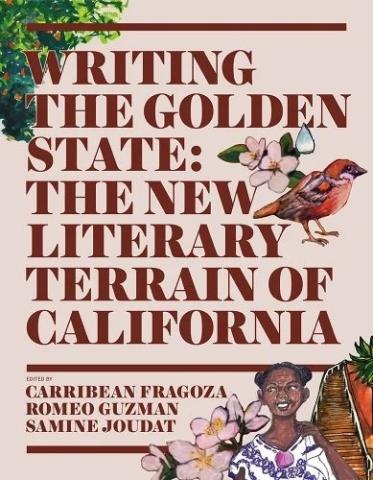
Writing the Golden State
The New Literary Terrain of California

Writing the Golden State: The New Literary Terrain of California explores California through twenty-five essays that look beyond the clichés of the "California Dream," portraying a state that is deviant and recalcitrant, proud and humble, joyful and communal. It is a California that reclaims the beauty of the unwanted, the quotidian, and the out-of-place. Collectively, the essays demonstrate how individuals and towns have weathered some of the social, political, and economic changes of the twentieth and twenty-first centuries.

  • Print Books
  • Bookshop

Pagination

  • Previous page ‹‹
  • Page 2
  • Next page ››
Subscribe to Nonfiction

Sitemap Menu

  • Foundation
    • Home
    • People
    • History
    • Contact
  • Literature
    • Whiting Award
    • Nonfiction Grant
    • Magazine Prizes
    • Discover Writing
  • Humanities
    • Preserving Heritage
    • High Schools
    • Past Programs


  • Accessibility Notice Accessibility Notice
  • PRIVACY & TERMS
  • © WHITING FOUNDATION
  •  
Site by PASTPRESENTFUTURE, with design by Language Arts